
Bathroom Remodeling: Repair or Replace? How Oakland Homeowners Decide
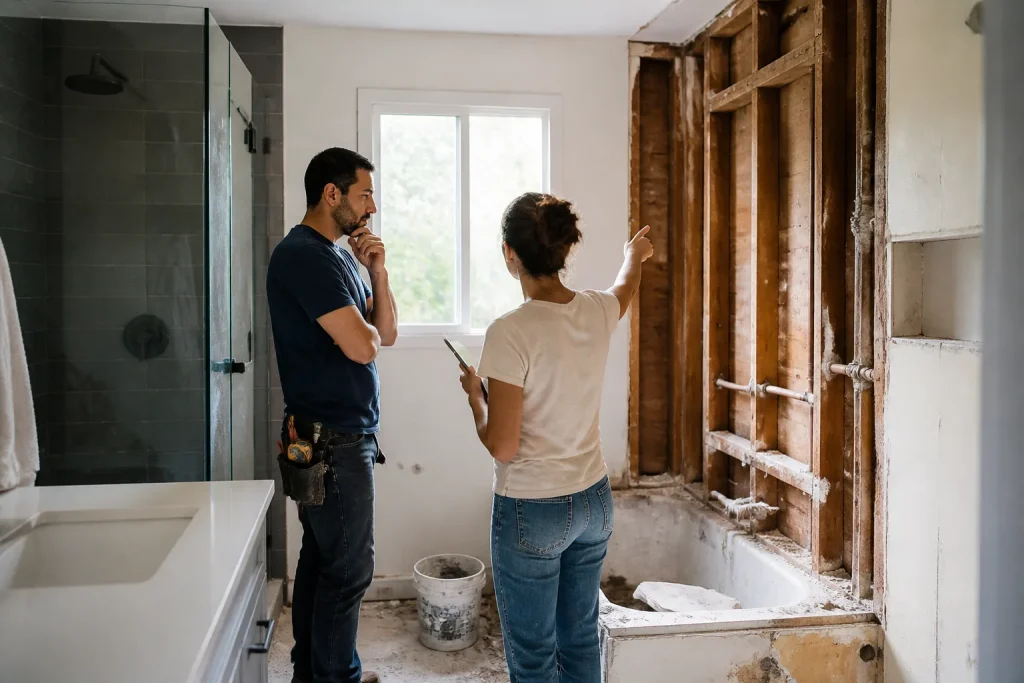
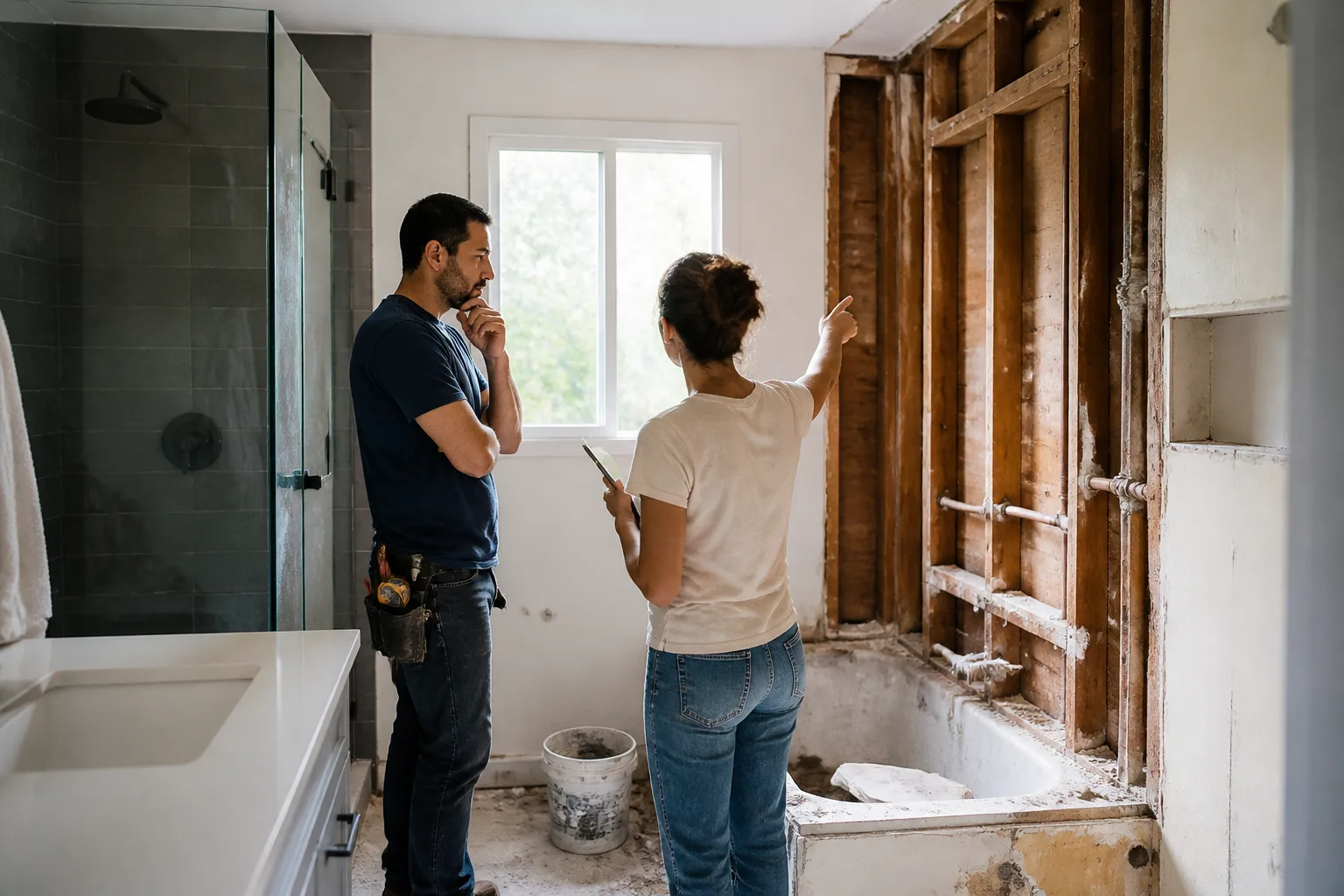
Oakland’s older bathroom walls hide three generations of patch jobs, and the contractor who opens them without a plan for what’s behind them is the one who calls you with a change order on day two. The honest answer to the repair-or-replace question: in most Oakland bathrooms built before 1960, the fix that looks small rarely stays small. The real decision isn’t repair versus replace. It’s how you get a written price for both before the tile comes off.
If you’d rather not wade through this alone, call (888) 403-1237 and we’ll talk through your bathroom. Estimates are free.
Why Oakland’s Housing Stock Changes the Equation

The year your Oakland house was built tells you more about what’s behind the tile than any inspection report will. We’ve pulled enough tile in the Flatlands, Rockridge, and Fruitvale to know the patterns. Bathrooms are where old construction fails first, because they take on more water than any other room.
- Pre-1940 homes (West Oakland, Grand Lake, much of Rockridge). Plaster on wood lath, no vapor barrier, copper or galvanized supply lines, and often a lead closet flange under the toilet. Tile is set in a thick mortar bed that’s 2 to 3 inches deep and hard as stone. A “simple” tile repair means demolishing a mortar bed and finding out what the framing looks like underneath.
- 1940 – 1960 (Dimsdale, Allendale, parts of the Laurel). Cement board started showing up, cast iron drains still common, and often a second layer of tile laid over the first by a previous owner. Those double layers trap moisture. By the time the top layer cracks, the subfloor is usually soft.
- 1960 – 1980 (East Oakland, Elmhurst, the Hills). Better framing logic, but original fiberglass or cultured marble surrounds are now at the end of their life. The good news: the substrate and plumbing are often still serviceable, which keeps a full replacement in a lower price band.
If your Oakland home was built in the 1920s or 1930s, expect to find at least one surprise behind the tile. If it was built in the 1970s, expect fewer. That single fact often decides the answer before anyone picks up a hammer.
When a Tile Repair Touches the Substrate, It Usually Becomes a Full Replacement
Under the California Building Code, any repair that opens the substrate behind your tile, removes more than a limited area of tile, or disturbs the waterproofing layer triggers requirements the code treats the same way it treats a new install. In practice, that means the inspector will want to see four things: a properly bonded waterproofing membrane, a sloped shower pan that drains to the weep holes in the drain, cement board substrate (the moisture-resistant layer behind your tile), and ventilation that meets current code. Patch a 12-inch section of failing shower tile and you can usually keep it a repair. Pull half a wall and you cannot.
This is the point where the repair-versus-replace math flips. A single tile patch might cost $250 to $500. A wet-area repair that touches the substrate and requires a new pan and membrane often lands $1,800 to $4,500 once permits and inspection are included. A full shower replacement in Oakland typically runs $6,000 to $15,000 depending on tile choice and fixture grade. Once you’re past $4,500 for a partial fix, we tell homeowners to get the full replacement number too, because the gap narrows to a point where the year of extra life doesn’t justify the shortcut.
How to Get a Written Price for Both Scenarios Before Work Starts

Ask for two numbers in writing: one for the repair as scoped, and one for the full replacement. Most contractors won’t offer this. They’ll quote only the scenario that’s more profitable for them, or they’ll quote a repair and then bill you for the replacement once demolition reveals the real condition. That’s how change orders happen.
Here’s what a fair written quote includes for each scenario:
- Scope of both paths, on paper. “Replace shower valve and tile on two walls” and “full wet-area replacement with new pan, membrane, tile, and fixtures” are different jobs. The paperwork should say which one you’re getting.
- Line-item pricing on the replacement. Demo, framing repair allowance, plumbing, electrical, substrate, waterproofing, tile, fixtures, and finish. The tile and fixture allowances should be stated as real dollar amounts, not “builder grade” vague.
- A clear note on hidden conditions. A responsible contractor will tell you upfront what happens if they find dry rot behind the shower valve or a failed cast iron drain. A written price means the number on day one is the number on the invoice, and it also means the contractor has to think through the surprises before they show up.
- Permit and inspection handling. Who pulls the permit, who pays for it, and what happens if the inspector flags something. This has to be in writing.
At Penhallow Remodeling, every project gets a written price before any work starts, whether it’s a $2,000 repair or a $25,000 full bath. That’s the Kingswell standard: say the price before the work, show up in the window we give, leave the place cleaner than we found it. If the work fails within 365 days, the 365-Day Done Right Promise means we come back and fix it at no charge, in writing, on every project. If you want to see the full range for Oakland bathroom projects, our team maintains a Bathroom Remodeling in Oakland page with pricing and process details.
The Ventilation and GFCI Upgrades Oakland Inspectors Flag
Any opened bathroom permit in Oakland brings the inspector’s attention to two upgrades most homeowners don’t factor into their repair-or-replace math: ventilation and electrical. Both are cheap on a full replacement and expensive on a “quick” repair.
- Bathroom fan. California code requires mechanical ventilation in every bathroom. If your current fan is original to the house, or if there’s no fan at all, the inspector will flag it the moment you take out a permit. A new Panasonic or Broan fan with a timer switch runs $350 to $850 installed, depending on whether the ducting needs work. On a full replacement, the fan gets planned in. On a repair, it becomes a surprise line item the homeowner didn’t anticipate.
- GFCI outlets. Every bathroom receptacle needs ground-fault protection. If your 1950s bathroom has a standard outlet near the sink, it has to be brought up to code the moment you open the permit. GFCI plus required lighting is usually $250 to $600.
- Water heater and venting. Less common, but if your bathroom shares a wall with a gas water heater, seismically anchoring and strapping check on the same permit.
Factoring these in before you decide almost always shifts a repair scenario upward by $700 to $1,500. On a small repair, that can swing the decision toward full replacement. On a full replacement, it’s baked in and you’re not paying for the same work twice.
When a Cosmetic Refresh Is Genuinely the Right Answer
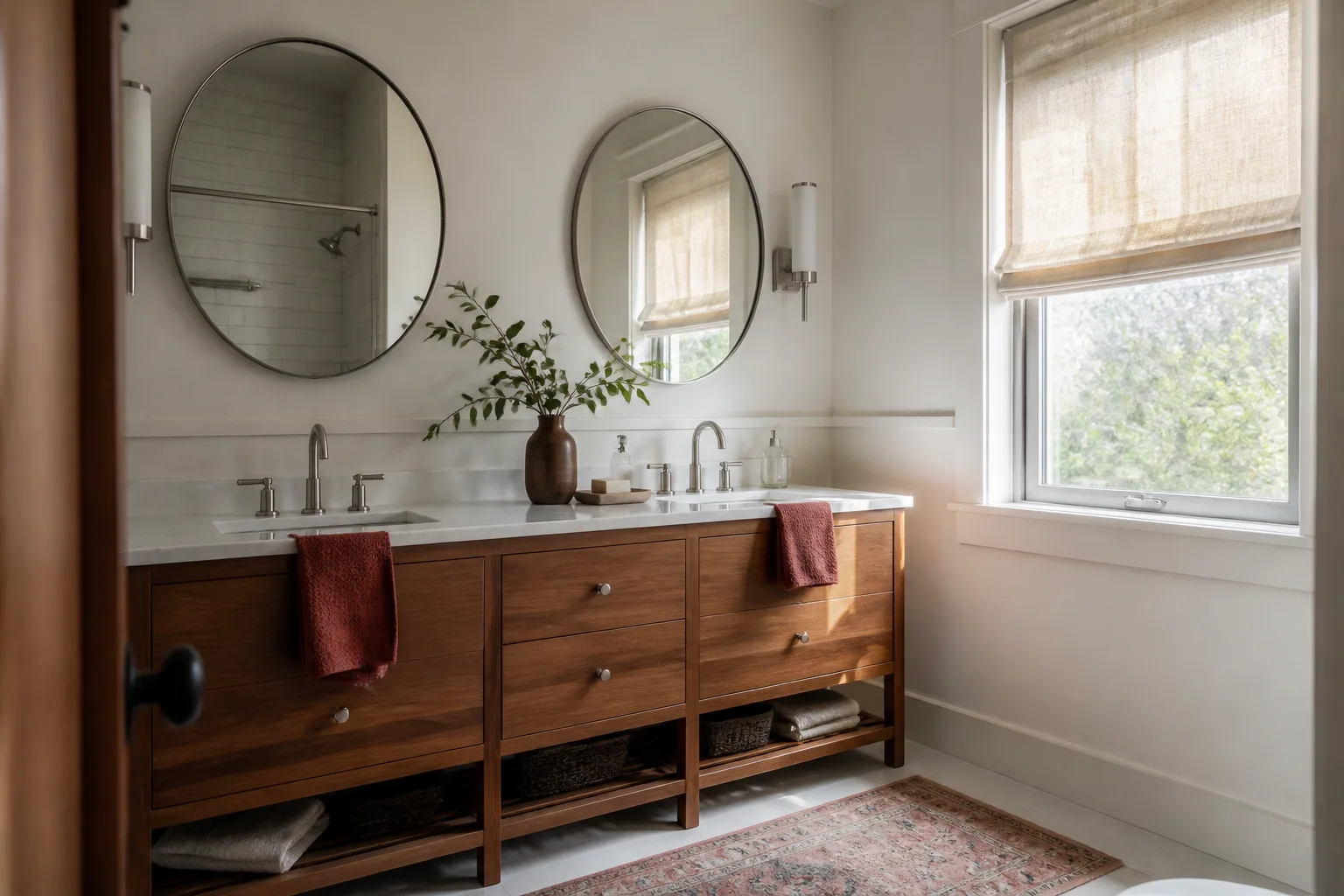
Not every bathroom needs to be gutted. Some of the best value we see in Oakland is a skilled cosmetic refresh that touches fixtures, finishes, and paint without disturbing the waterproofing. Here’s how to tell if the bones support that path.
Walk the room and check three things. First, the shower pan: fill it with water and wait 24 hours. If the level holds and the ceiling below stays dry, the pan is intact. If it drops or you see a stain below, replace. Second, the floor: press down near the toilet base and the shower curb. Flex is a sign the subfloor is soft, which means the whole room comes out. Third, the walls around the shower valve: look for any softness, staining, or bubbling paint. If the drywall is firm and the valve isn’t dripping, a cosmetic refresh is genuinely safe.
When the bones are good, a cosmetic refresh in Oakland for a full bath typically runs $4,000 to $9,000 and includes a new vanity, faucet, mirror, lighting, paint, and often a new toilet. It’s real value, and it doesn’t require opening a permit in most cases if no plumbing or electrical is moved. But that assumes the shower pan isn’t leaking and the substrate is sound. Verify both before you sign anything. A cosmetic refresh on a failing pan is the most expensive mistake we see: it pushes the real replacement out by a year and you pay for the cosmetic work twice.
When to Call a Pro
If your bathroom has any of these signs, get a pro on site before you commit to a repair plan: a leaking shower pan, soft flooring near the toilet or shower, ongoing moisture at the base of the wall, a bathroom fan that doesn’t exhaust to the outside (or no fan at all), or an electrical outlet without GFCI protection near water. Any one of these changes the math, and two together almost always push the answer toward replacement. Our General Contractor in Oakland team handles those assessments on the same visit as the estimate.
The other time to call a pro: when you have three quotes and they don’t match. A good contractor will walk the room with you, point at the specific condition that triggers each path, and put both prices in writing. A fair contractor will also tell you when the truth is “cosmetic refresh is fine,” even if the replacement would have been a bigger job. That’s the standard we work to.
Related services in Oakland: bathroom remodeling, kitchen remodeling, and whole-home remodeling. If you’re still in the planning stage on the whole house, our Kitchen Remodeling in Oakland page covers the cabinets and counter material decisions that often get made in the same visit.
The Bottom Line
In most Oakland bathrooms built before 1960, repair and replacement converge faster than homeowners expect once you add the substrate, permit, and ventilation numbers. The right approach is simple: ask for both prices in writing, understand the specific condition in your home that decides which path applies, and factor in the ventilation and GFCI upgrades the inspector will require on any permit. If the math says replace, ask the contractor to be honest about that. If the math says cosmetic refresh, don’t let anyone talk you into a gut job. Our team draws materials from brands like KraftMaid, Kohler, Moen, and Cambria, so whether the answer is refresh or replace, the products behind the work carry their own warranties alongside ours.
If you’re in Oakland and want both numbers in writing before the tile comes off, Penhallow Remodeling Oakland offers free estimates. Call (888) 403-1237. A live person answers that line 24/7, and our technicians arrive on time, in uniform, and background-checked. You can also see who we are and how we work on our Penhallow Remodeling Oakland home page.
Frequently Asked Questions
A full bathroom remodel in Oakland typically runs $18,000 to $55,000 depending on size, condition of the underlying plumbing and framing, tile choice, and fixture grade. A partial wet-area replacement (shower only, no floor or vanity work) usually lands $6,000 to $15,000. A cosmetic refresh without moving plumbing typically runs $4,000 to $9,000. The biggest cost driver in older Oakland homes isn’t the finishes; it’s what’s found when the tile comes off. Call (888) 403-1237 for a written quote on your specific bathroom.
Sometimes, and that’s exactly why you should ask for both prices in writing before work starts. If your contractor only quoted the repair and won’t put a full replacement price on paper, that’s a sign to find a different contractor. A fair bid costs you nothing and gives you a plan for both paths. Call (888) 403-1237 for a free, two-scenario estimate.
Cosmetic work like fixtures, paint, and vanity replacement usually doesn’t require a permit. Anything touching the plumbing, electrical, or substrate behind the tile does, and the inspector will require GFCI outlets, mechanical ventilation, and a proper waterproofing membrane on any opened shower or tub area. On a repair permit, those add $700 to $1,500 to the job. On a full replacement, they’re already in the price. Call (888) 403-1237 to talk through what your specific project needs.
A cosmetic refresh typically runs 1 to 2 weeks. A full bathroom remodel typically runs 4 to 8 weeks depending on scope, tile lead times, and what’s found during demolition. The arrival window is something we put in writing alongside the price, so you know exactly when the crew is coming and when the project wraps. If the work fails within a year of completion, our 365-Day Done Right Promise means we come back and fix it at no charge. Call (888) 403-1237 for a realistic timeline on your project.
Written by the team at Penhallow Remodeling Oakland.
Need Construction Help?
Call Penhallow Remodeling Oakland - licensed & insured, here with fast after-hours help in Oakland.
(888) 403-1237