Last updated November 18, 2026






Free written scope consultation - allowances, timeline, and change-order rules on paper before a single trade is scheduled
DIY vs Professional Construction: The Oakland Homeowner’s Decision Guide
Painting your living room is DIY. Replacing a load-bearing wall is not. The expensive mistake is the project that sits ambiguously in between – the one where a YouTube tutorial gets you 80% done before you discover a permit was required for the first step. In Oakland, that gap between “looks doable” and “legally mine to do” is wider than most homeowners realize, because California licensing law, a housing stock that ranges from 1890s Victorians to mid-century ranch tracts, and an inspection process that has opinions about all of it. This guide draws the real line: what you can self-perform with confidence, what triggers a licensed contractor of record, and how to weigh a written guarantee against the savings you think you’re keeping.
Quick Answer
In Oakland, cosmetic work that touches no systems and no structure – interior painting, cabinet hardware, replacing a tile you can see – is genuinely self-performable. Anything requiring a permit, touching electrical, plumbing, HVAC, or structural members, or that could affect a neighbor or the building’s envelope should go to a licensed contractor. The dividing line isn’t your skill level. It’s liability, permits, and what Oakland’s older housing stock hides behind the drywall.
Styles & brands we work with
- Kitchen remodeling
- Bathroom remodeling
- Home additions & ADU
- Roofing
- Windows & doors
- Driveway & pavers
- Fence
Table of Contents
- Where California law draws the DIY line
- Projects in Oakland where DIY genuinely makes sense
- The hidden DIY cost: permits, liability, and what stays with the property
- Three honest questions to test any project for DIY candidacy
- What Oakland’s housing stock requires under the hood
- What a written guarantee covers that a DIY result never will
- Common mistakes to avoid
- When to call a professional
Where California law draws the DIY line
California’s Contractors State License Board is clear about this: a homeowner may perform work on their own residence, but the moment the work requires a building permit in a licensed trade category – electrical, plumbing, mechanical (HVAC), or structural – the work must be performed by a licensed contractor unless the homeowner is doing it themselves as an owner-builder. That last clause is the trap. Doing it yourself as owner-builder is legal. Doing it without a permit, or selling the house later with unpermitted work, is where things get very expensive.
The specific thresholds matter. Electrical work beyond swapping a fixture or a receptacle on an existing circuit generally requires a permit and often a licensed electrician. Plumbing that moves a drain, adds a fixture, or opens a wall is permitted. Any work on a load-bearing wall, a foundation, a roofline, or a structural header requires stamped plans and a licensed contractor. HVAC replacement and any gas line work are squarely professional territory.
Oakland’s Building Services division enforces this alongside state law. In our experience, the projects that surprise homeowners most are panel upgrades in older neighborhoods like Temescal and Maxwell Park, where a 1950s 60-amp service is common and modern kitchen loads exceed it. You can’t just add a circuit. The panel has to be brought up to current code, and that’s permitted work.
- Permitted in a licensed trade: electrical beyond fixture swaps, plumbing that moves drains or adds fixtures, HVAC, structural, gas.
- Generally not permitted: interior paint, cabinet hardware, cosmetic tile replacement over existing substrate, landscaping outside setbacks.
- Always professional: load-bearing walls, foundation, roofline, panel upgrades, gas lines.
Projects in Oakland where DIY genuinely makes sense
Some of what gets reflexively hired out is legitimately self-performable, and we tell homeowners so. The four categories below are the ones we’d point a handy Oakland homeowner toward without hesitation, along with honest scope limits on each.
Cosmetic tile replacement
Replacing a cracked or dated tile on a backsplash, a floor accent, or a shower wall around an existing fixture is a reasonable DIY. The scope limit is the substrate: the cement board behind the tile (the moisture-resistant layer that keeps water out of the wall cavity) has to be intact. If the tile comes off and the board behind it is soft or moldy, the job is no longer cosmetic. That’s a re-waterproofing job, and we’ve seen Oakland showers in the Elmwood and Rockridge areas where a “quick tile swap” revealed forty-year-old failed substrate.
Cabinet hardware and interior painting
New pulls on existing cabinet doors, repainting a room, patching drywall where a picture hung – these are unambiguously DIY. No permit, no systems, no structural risk. The only thing to watch in older Oakland homes is lead paint in pre-1978 houses and plaster walls that crack when you look at them wrong. Neither is a reason to hire out; both are reasons to prep carefully.
Landscaping outside setbacks
Planting, sod, garden beds, low retaining walls under 4 feet, and paths are generally self-performable. The line is setbacks: any structure within the property’s setback lines, any retaining wall over 4 feet, and any excavation near a foundation or utility easement needs a permit and a pro. In the Oakland Hills, drainage and slope stability change that calculation entirely.
The hidden DIY cost: permits, liability, and what stays with the property
Here’s the part that tips the math toward hiring, and it has nothing to do with whether you can hold a level. When you pull a permit as an owner-builder, you absorb the personal liability for that work. If something fails – a leak, a fire, an injury to a helper – the claim lands on you and your homeowner’s policy, not a contractor’s bond and insurance. And that liability doesn’t leave when you do. It stays with the property.
A licensed contractor carries general liability insurance and a bond. That’s not paperwork theater; it’s a transfer of risk. If they cause water damage during a bathroom remodel, their insurance handles it. If you do, your insurer may deny the claim as unpermitted or improperly performed work, and you’re writing the check yourself.
The disclosure problem compounds it. Unpermitted work in Oakland has to be disclosed at sale, and buyers’ inspectors find it. In our experience, a finished basement or a converted garage that was never permitted can cost a seller more in reduced offers and negotiation than the original professional bid would have. That’s before you count the cost of tearing it out to make it legal.
- Owner-builder permits: you own the liability, and it stays with the property.
- Contractor-performed work: their bond and insurance absorb the risk.
- Disclosure at sale: unpermitted work must be disclosed and typically discounts offers.
Three honest questions to test any project for DIY candidacy
Before you buy a tool, answer these three questions. If any answer is yes, the project belongs with a licensed professional – no exceptions, no “just this once.”
- Does it require a permit? Call Oakland’s Building Services before you start. If the permit is required in a licensed trade – electrical, plumbing, mechanical, structural – that answers the question. Owner-builder permits exist, but they carry the liability above.
- Does it touch a system? Electrical, plumbing, HVAC, or gas. If you’re inside the wall, under the floor, or on a circuit, you’re past the cosmetic line. Systems work fails in ways that are invisible until they’re expensive.
- Could it affect a neighbor or the structure? Structural work, work near a party wall in a shared-building Oakland neighborhood, excavation near a foundation or utility line, anything on a slope. If a failure could affect someone else’s property or the building’s safety, it’s not a DIY project.
Two of three “no” answers and you’re likely fine. Any “yes” and the honest move is to get a written bid and compare it against the liability you’d be taking on. For a broader look at what a licensed general contractor actually handles on a full project, see our general contractor services in Oakland.
What Oakland’s housing stock requires under the hood
Oakland isn’t one housing market; it’s a dozen, stacked by decade and hill slope, and each requires a different calculation. A 1905 Victorian in West Oakland has knob-and-tube wiring, balloon framing, and plaster over lath. A 1925 bungalow in the Dimond has a different set of hidden surprises. A mid-century ranch in the Oakland Hills may sit on a slab with post-war copper plumbing nearing the end of its life.
That matters because the “easy” DIY project in an older home rarely stays easy once the wall is open. We’ve seen a backsplash tile job in Temescal turn into a re-wire because the knob-and-tube behind it failed inspection. We’ve seen a “simple” bathroom refresh in Rockridge hit a failed shower pan and a rotted subfloor. Both were permitted, both needed a licensed contractor, and neither was visible from the surface.
Climate plays a role too. Oakland’s marine layer and winter rain mean moisture problems hide behind walls that look fine from the outside. A tile replacement that doesn’t address the substrate behind it will fail again in one to two wet seasons, and at that point you’ve paid twice. That’s why we push substrate (the moisture-resistant layer) as seriously as the finished tile on any bathroom remodeling project in Oakland: the visible surface is 20% of the job.
What a written guarantee covers that a DIY result never will
Here’s the piece competitors skip, and it’s the one that actually shifts the math: a written guarantee has a dollar value. When you pay a professional, part of what you’re buying is the promise that if the work fails in a defined window, someone else fixes it at no charge. A DIY result has no such coverage. If your tile job cracks in eighteen months, you’re the warranty – your time, your materials, your weekend.
At Penhallow Remodeling Oakland, every project carries the 365-Day Done Right Promise: if the work fails inside the guarantee period, we come back and fix it at no charge, covered in writing. A repair that fails gets a free second visit, no service call, no re-inspection fee. That’s not a marketing line; it’s a line item in the real cost comparison. When you total a DIY project, add the value of your own time for the re-do, and add the risk that the failure damages something adjacent – a leak that ruins a cabinet, a tile that takes a subfloor with it.
The materials layer on top of that. We install KraftMaid and Wellborn cabinetry, Cambria quartz, Kohler and Moen fixtures, and James Hardie siding – products that carry their own manufacturer warranties alongside our guarantee. That’s two layers of protection behind the work. A DIY result gets neither. For what that looks like on a full kitchen, see kitchen remodeling in Oakland.
Common Mistakes to Avoid
- Starting before checking the permit. In Oakland, the permit is the first step, not a formality. Discovering mid-project that a permit was required means stopping, exposing the work for inspection, and possibly tearing it out. Call Building Services before demo day, not after.
- Assuming a 1950s panel can take a modern load. Many Temescal and Maxwell Park homes still run 60-amp service. Adding a circuit or a kitchen appliance without a panel assessment is how homeowners end up with a code violation and a stalled project.
- Trusting the surface in a wet room. A tile that looks fine can sit over failed substrate. In a bathroom, the moisture-resistant board behind the tile is doing the real work. If it’s soft, the cosmetic job is a waterproofing job.
- Forgetting that personal liability stays with the property. An owner-builder permit means you own the risk, and it follows the house to sale. That doesn’t disappear when you sell.
- Comparing a verbal bid to nothing. A contractor’s verbal ballpark is worth zero at the invoice. Insist on a written, line-item price before work starts, and compare it to the full DIY cost including your time and the no-warranty risk.
- Ignoring older-home surprises in the bid. Pre-war and mid-century Oakland homes hide failures. A professional bid that includes contingency for what’s behind the wall is more honest than one that assumes the wall is clean.
- Doing structural work on a hillside lot. Slope stability, drainage, and setback rules in the Oakland Hills make structural DIY genuinely risky. That’s professional territory, full stop.
When to Call a Professional
Call a licensed contractor when the project requires a permit in a licensed trade, touches electrical, plumbing, HVAC, or gas, involves any structural member, or sits in a wet room where the substrate is in question. Call when the home is pre-1978 and lead or asbestos may be present. Call when the project could affect a neighbor, a party wall, or the building envelope. And call when the number you’d save by doing it yourself is smaller than the value of a written guarantee and the liability you’re absorbing.
Penhallow Remodeling Oakland offers free estimates in Oakland – call (888) 403-1237. You’ll get a written price before any work starts, a real arrival window, and a live person on the phone 24/7. No voicemail maze. Our technicians have up to 22 years of experience, are background-checked, and arrive in uniform. See our Oakland home remodeling services for the full picture.
See the difference
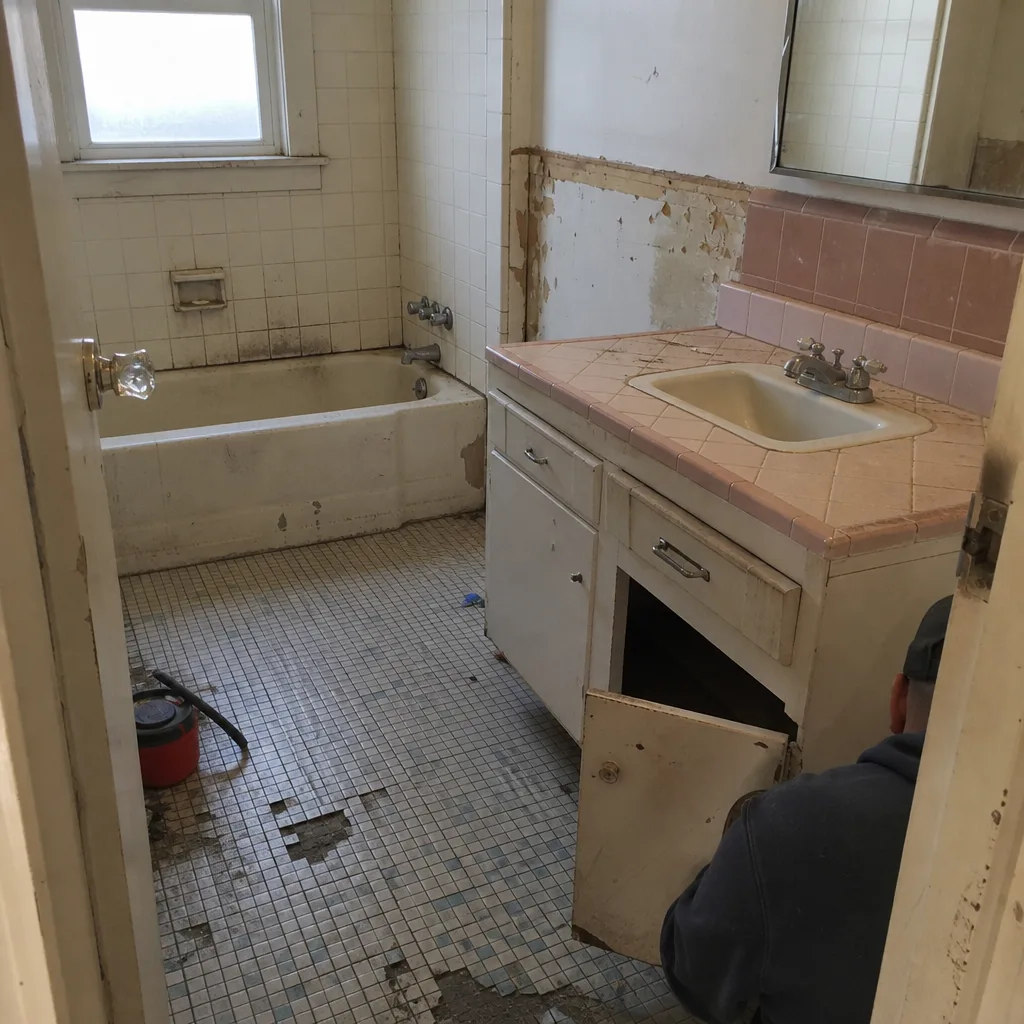 Before
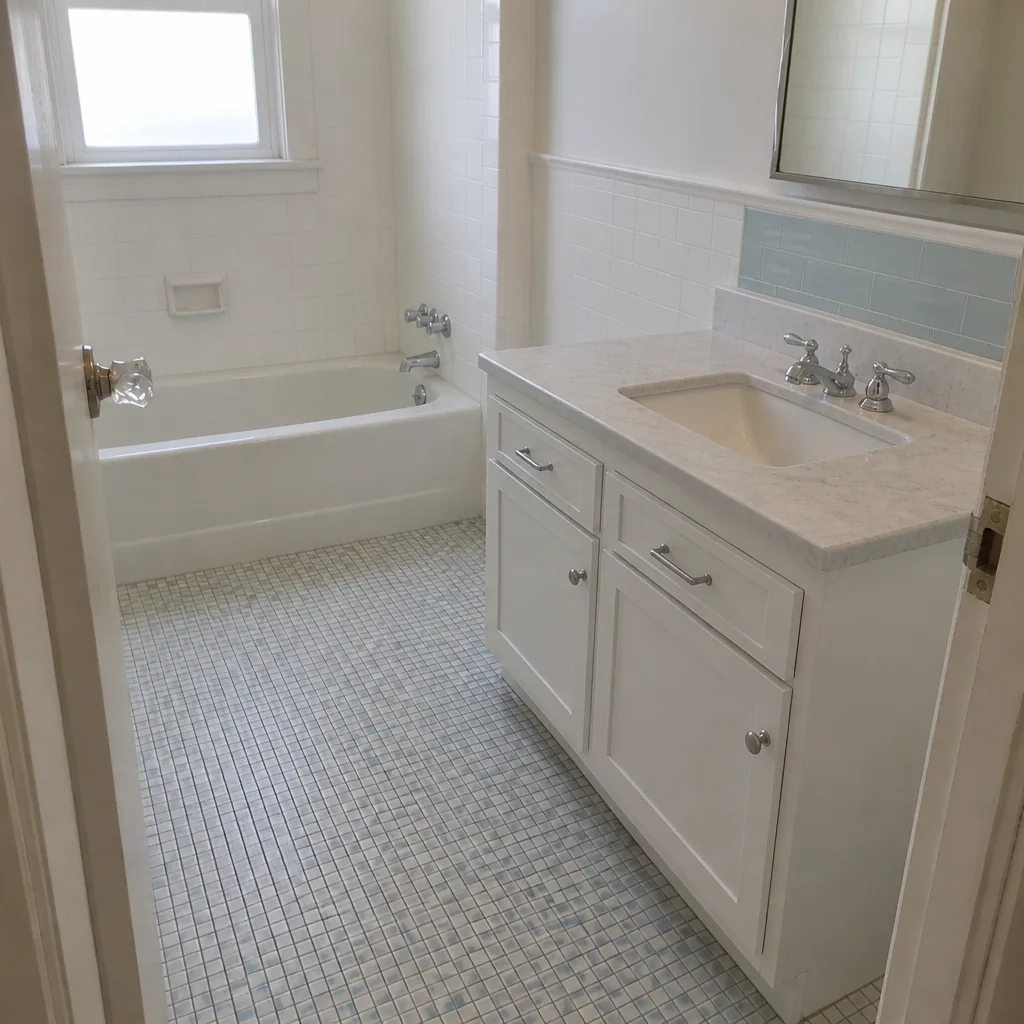 After
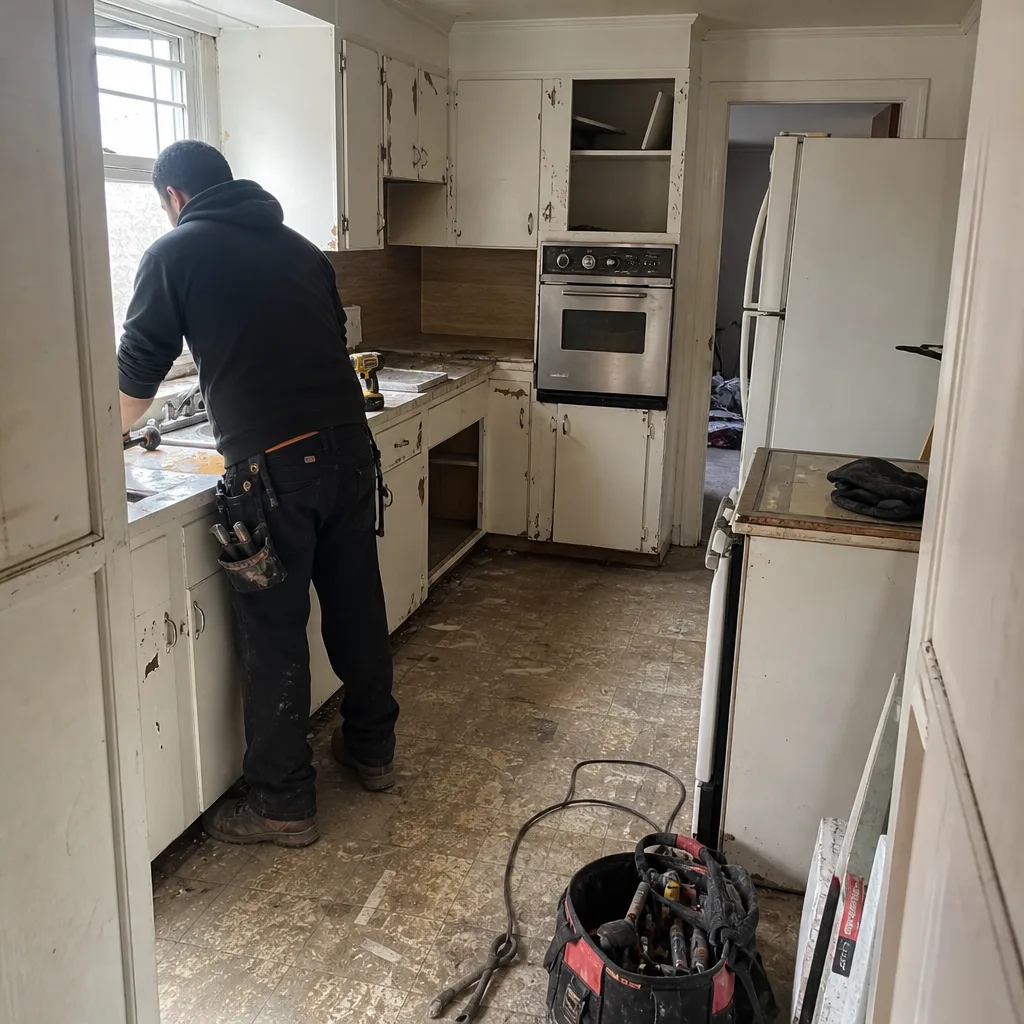 Before
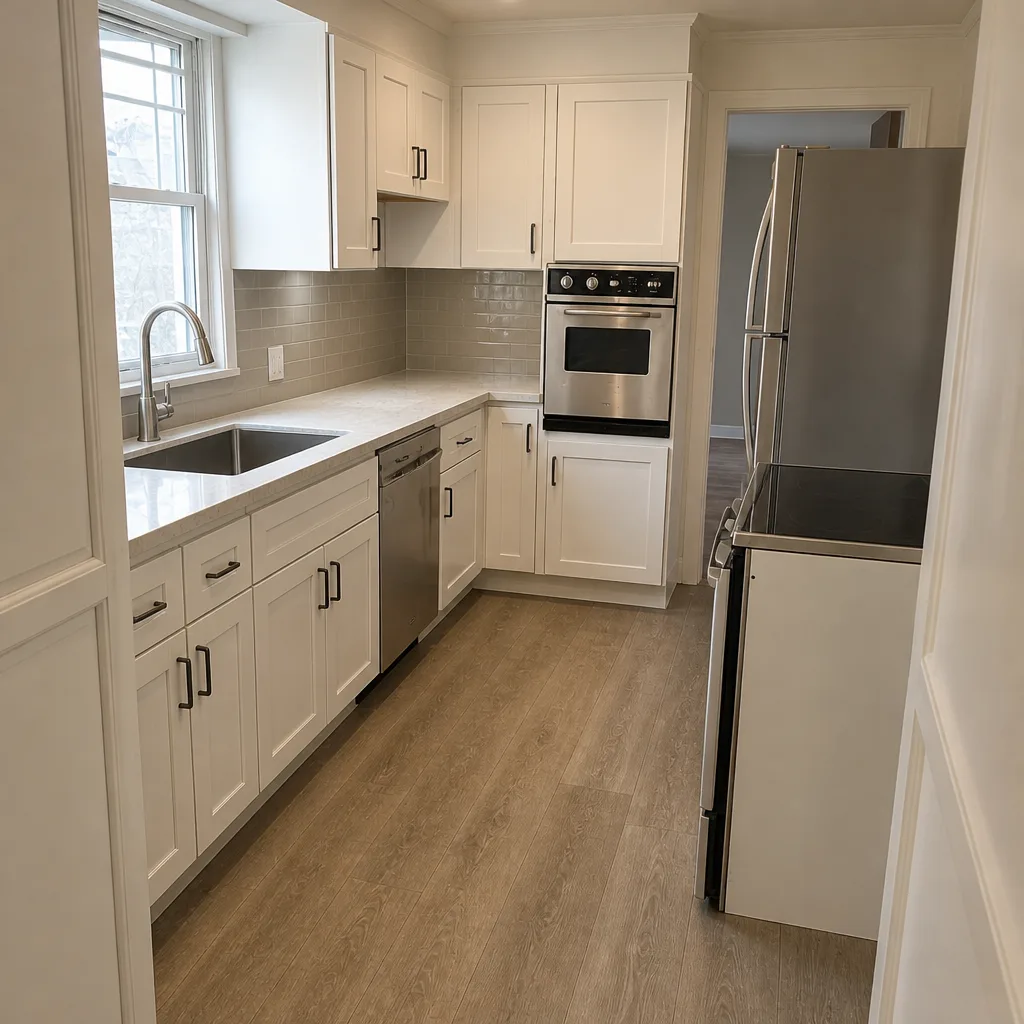 After
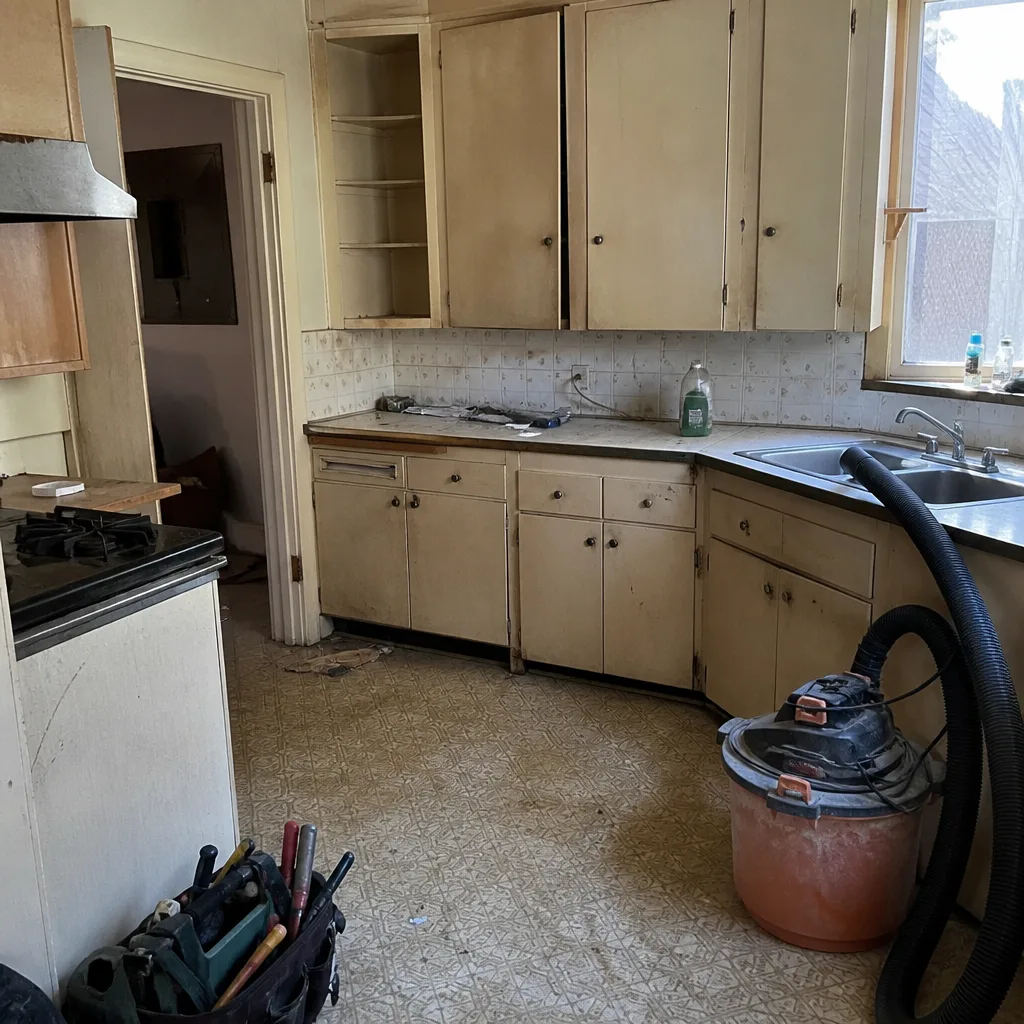 Before
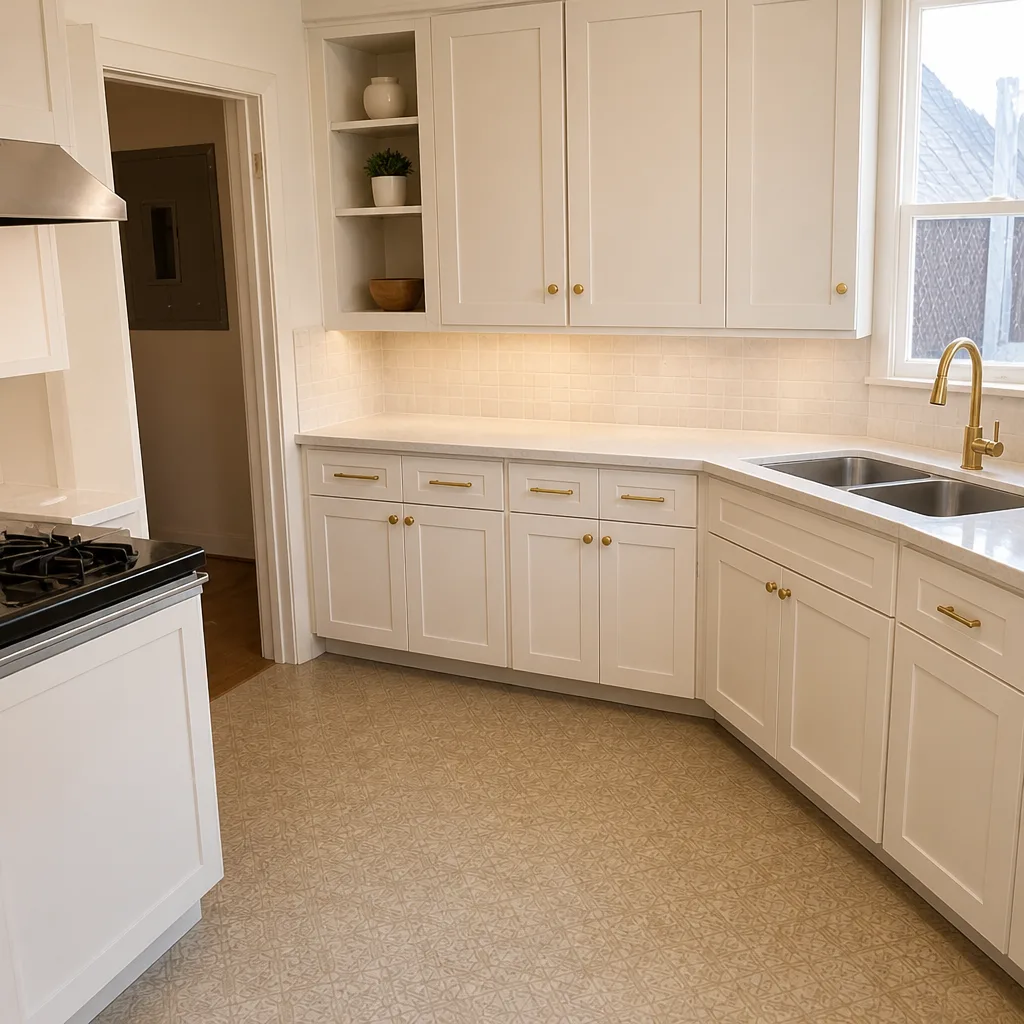 After
Frequently Asked Questions
You can legally perform limited electrical work on your own residence as an owner-builder, but anything beyond a fixture or receptacle swap on an existing circuit generally requires a permit, and permitted electrical work should go to a licensed electrician. The liability for owner-builder work stays with you and the property. Call (888) 403-1237 for a free estimate on any electrical-adjacent remodel – estimates are free.
Cosmetic tile replacement over intact substrate generally does not require a permit, but any work that opens the wall, moves plumbing, or replaces the waterproofing layer does. If the tile comes off and the cement board behind it is soft, stop and call a licensed contractor. Call (888) 403-1237 for a free assessment.
The biggest risk is what’s behind the wall. Oakland’s pre-war Victorians and 1920s bungalows hide knob-and-tube wiring, failed plumbing, and rotted substrate that no surface inspection reveals. A project that looks cosmetic can become structural once the wall opens. A written bid from a licensed contractor prices that contingency honestly. Call (888) 403-1237 for a free estimate.
Yes. A written guarantee covers the cost of re-doing failed work, which a DIY result never does. At Penhallow Remodeling Oakland, the 365-Day Done Right Promise means if the work fails inside the guarantee period, we fix it at no charge, in writing. That’s a real line item in the cost comparison. Call (888) 403-1237 for a free estimate.
Unpermitted work must be disclosed at sale and typically reduces offers or forces negotiation, sometimes more than the original professional bid would have cost. Buyers’ inspectors find it, and Oakland buyers are increasingly careful about it. Getting the permit and the licensed contractor up front protects the resale value. Call (888) 403-1237 for a free estimate on a permitted project.
Total the DIY cost of materials, your time for the first attempt and the likely re-do, the risk of damage to adjacent systems, and the absence of any warranty. Compare that to a written, line-item professional bid that includes the guarantee. In our experience, the gap narrows more than homeowners expect on anything touching a system or a wet room. Call (888) 403-1237 for a free written estimate.
The Bottom Line
The DIY-versus-hire decision in Oakland isn’t about whether you’re handy. It’s about permits, liability, and what the housing stock hides. Cosmetic work that touches no system and no structure is genuinely yours to do. Anything permitted, anything in a wet room with questionable substrate, anything structural, and anything that could harm a neighbor goes to a licensed contractor – because the liability stays with you and the property, and a written guarantee is worth real money in the comparison. When the line is close, get a written number before you pick up a tool.
Penhallow Remodeling Oakland gives you that written number before any work starts, a real arrival window, and a live person on the phone 24/7. Call (888) 403-1237 for a free estimate. Estimates are free, and the price on day one is the price on the invoice.
Written by the team at Penhallow Remodeling Oakland.