Last updated November 18, 2026



Free written scope consultation - allowances, timeline, and change-order rules on paper before a single trade is scheduled
DIY vs Professional Kitchen Remodeling: What’s Safe to Do Yourself
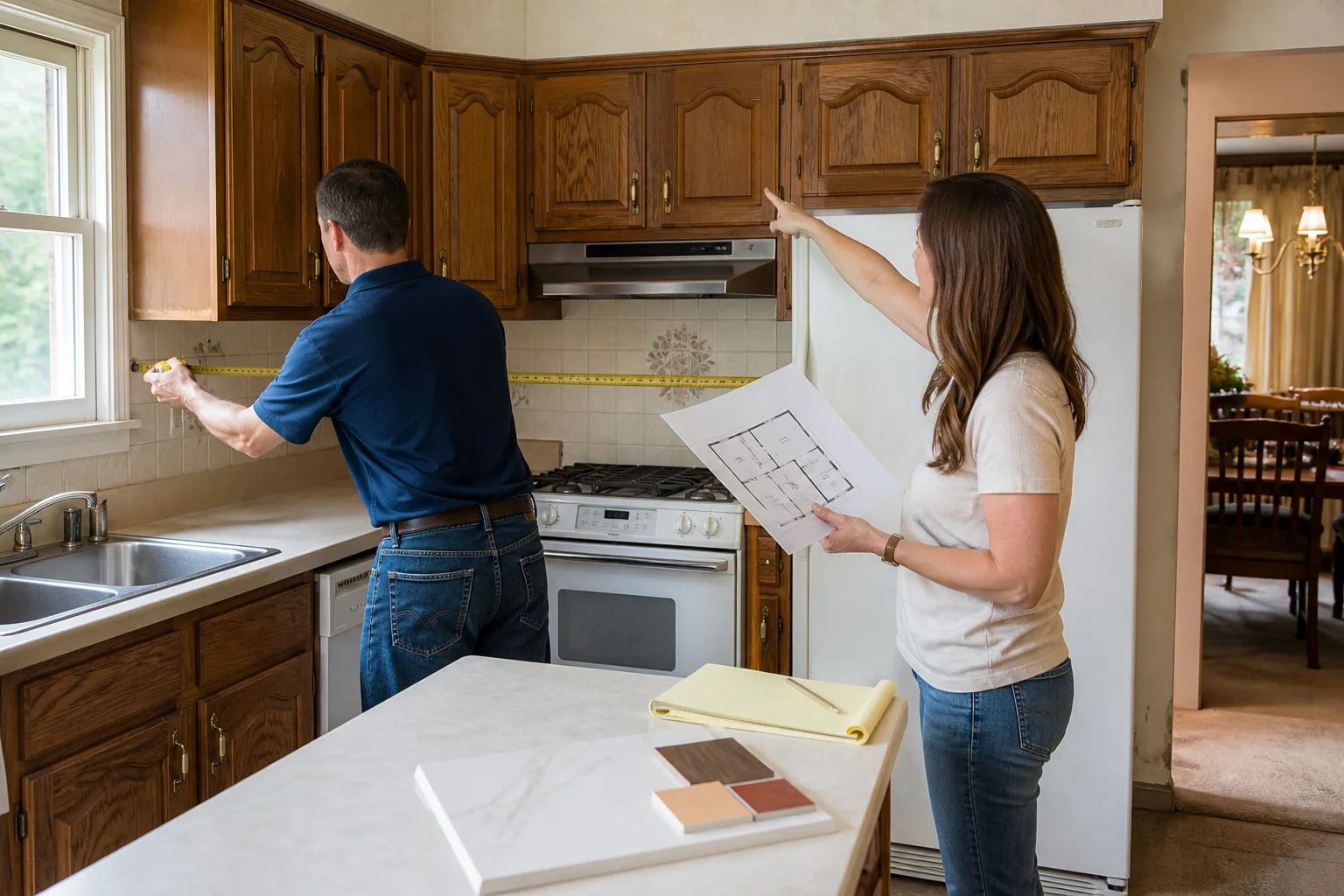
Painting your own kitchen cabinets is a legitimate DIY project. Painting them after a contractor installs them but before the punch-list is signed can void the finish warranty – a distinction that costs homeowners money every year. The line between those two situations is the whole point of this guide. The DIY-or-hire call isn’t really about whether you’re handy. It’s about which tasks carry permit requirements, warranty implications, or sequence dependencies that make one mistake expensive to unwind. We’ll walk through each task in an Oakland kitchen, tell you what you can legally self-perform, what needs a licensed trade, and where the savings math actually works in your favor.
Quick Answer
In California, a homeowner can legally do painting, cabinet hardware, and non-structural demolition on their own kitchen. Anything touching gas lines, electrical circuits, plumbing rough-in, or structural walls needs a licensed trade and usually a permit from the City of Oakland. If you draw your own permit as an owner-builder, you own the liability for that work and any future inspector or buyer will see it on record. If you want the finish warranty to hold on installed cabinets, counters, or tile, don’t touch those surfaces between phases unless the contractor puts it in writing.
Styles & brands we work with
- Kitchen remodeling
- Bathroom remodeling
- Home additions & ADU
- Roofing
- Windows & doors
- Driveway & pavers
- Fence
Table of Contents
- The task-by-task safety matrix
- Why doing your own work mid-project breaks the warranty chain
- Honest savings math: what you actually keep
- What owner-builder status means in California
- How to document the boundary between your work and ours
- Oakland specifics: permits, older housing stock, and what we see
- When to stop and call a pro
The Task-by-Task Safety Matrix
Not every kitchen task sits on the same shelf. Some are pure finish work, some require a license, and some require both a license and a permit. Here’s how we sort them, and how the City of Oakland’s building department sorts them.
Green – a skilled homeowner can usually self-perform
- Interior painting of walls and ceilings
- Cabinet hardware swaps (handles, pulls, hinges)
- Removing old appliance boxes and hauling them to the curb
- Non-structural demolition: pulling out old cabinet boxes, removing an old countertop, taking up vinyl or linoleum flooring
- Installing a freestanding island or movable cart
- Caulking, grouting touch-ups, and backsplash tile on a stable substrate (if your contractor agrees in writing)
Yellow – needs a licensed trade, sometimes a permit
- Countertop installation. Stone fabrication and sink cutouts are a specialty trade. A mis-measured slab is a $600-$1,400 loss before you finish the first seam.
- Cabinet hanging on walls with unknown framing. We’ve opened plenty of Oakland walls in pre-1940 homes and found knob-and-tube wiring, lath-and-plaster, or studs at 24-inch spacing instead of 16. A cabinet that pulls out of the wall damages the wall, the cabinet, and the floor below.
- Flooring installation over a substrate you haven’t verified. Tile needs a flat, deflection-free surface. In Oakland’s older bungalows, we regularly see spring failures and cracked tile from subfloor movement that a first-time installer couldn’t have predicted.
Red – needs a licensed trade and a permit
- Any electrical work beyond swapping a light bulb. Adding a circuit, moving a receptacle, or relocating a switch requires a licensed electrician and an electrical permit.
- Anything touching the gas line – the range, the water heater feed, any relocation of the valve. This is a genuine safety issue and a hard line. Don’t.
- Plumbing rough-in: moving the sink drain, running a new supply line, adding a dishwasher drain, or relocating the water line for the fridge.
- Removing or modifying any wall you haven’t confirmed is non-load-bearing by an engineer.
- Adding a range hood vent through an exterior wall or roof (structural building permit, sometimes HOA review).
Why Doing Your Own Work Mid-Project Breaks the Warranty Chain
This is the part most DIY guides get wrong. The risk isn’t only whether you can do a task. It’s what happens when your work sits between two contractor phases.
Picture a typical sequence: demo, rough-in, drywall, cabinets, counters, backsplash, paint, punch-list. If you insert your own painting between cabinets and counters, and then a countertop install shows a paint smudge or a scratched cabinet face six weeks later, the contractor’s finish warranty no longer clearly covers the cabinet. Was the finish defect from the factory, from the installer, or from your paint prep scraping the edge? Nobody can prove it, and most warranties have language that says exactly that.
We’ve watched this play out in kitchens across Oakland – Temescal, Rockridge, Grand Lake, and the Dimond District. The homeowner saves $800 doing their own painting, then eats a $1,500 cabinet face replacement because the finish warranty was voided by the interference.
The safe pattern is this:
- Do your work before demo or after the final walkthrough. Painting before rip-out? Totally fine. Painting the new drywall after the contractor’s punch-list is signed? Also fine.
- Get the boundary in writing before your work begins. Not a text message. A line in the scope of work that names which tasks are yours, which are theirs, and what happens if a warranty claim crosses the line.
- Never paint or modify an installed, warrantied surface – cabinet faces, stone counters, tile, or trim – without the contractor’s written sign-off.
If you’re planning a kitchen through us, we’ll write that boundary into the scope before demo day. See our kitchen remodeling in Oakland page for how we structure it.
Honest Savings Math: What You Actually Keep
The DIY savings that get quoted online are usually labor cost minus zero. That’s not the real math. The real math is labor cost minus risk-adjusted redo cost, minus permit complications, minus the warranty hit. Here’s what we’ve seen shake out in Oakland kitchens.
- Interior painting: A pro painter runs $2,200-$4,500 for a full kitchen. A homeowner doing it themselves saves most of that, minus $400-$700 in materials and roughly two weekends. This is the clearest DIY win, when it’s sequenced correctly.
- Cabinet hardware: Pro install is $250-$600 for 30-40 handles and pulls. DIY saves the full amount minus about $40 in a drill jig. Second clearest win.
- Demo labor: A demo crew runs $1,800-$3,500 for a full kitchen. You can save most of that, but you’ll spend $300-$500 on dumpster rental and disposal. Cutting a live wire or breaking a drain trap during your own demo can turn a $2,500 saving into a $4,000 emergency call.
- Backsplash tile: Pro install is $1,100-$2,600. DIY saves the labor, but if the substrate isn’t flat or the tile isn’t set with the right thinset (a moisture-modified formula for a kitchen wall, for instance), you’re pulling it and paying a pro to redo it. The redo usually costs 1.4-1.8x the original install price because of demo and disposal.
- Countertop install: Pro install for a mid-grade quartz is $4,500-$9,000 including fabrication. DIY is not really on the table – you can’t fabricate a slab in a garage. Skip it.
- Electrical: A licensed electrician for a kitchen circuit run is $600-$1,800 depending on access. Skipping the license feels like it saves that. In practice, an unpermitted circuit becomes a $2,000-$5,000 correction during resale, plus every other permit in the house becomes suspect.
We install Cambria quartz, which carries its own lifetime warranty alongside ours – and that warranty explicitly excludes fabrication or installation by anyone other than a certified installer. Same story with Kohler and Moen fixtures when they’re installed outside spec.
What Owner-Builder Status Means in California
In California, a homeowner can pull a permit on their own primary residence as an “owner-builder” without holding a contractor license, as long as the home is their residence, they live in it, and they don’t do it for resale or rent within a year. That’s the legal scope. What it actually means on a kitchen remodel is heavier than most homeowners realize.
When you pull a permit as an owner-builder, you’re on the record as the responsible party for that scope. That shows up in three places:
- Inspection. Every inspection on your permit will be walked by a City of Oakland inspector who expects you – not a licensed contractor – to answer for the work. If your tile shower pan fails a slope test, that’s on you to correct and re-inspect.
- Disclosure at resale. California requires you to disclose permits you pulled as an owner-builder. A buyer’s inspector will pull the permit history. Unpermitted or owner-pulled work on gas, electrical, or structural lines often shows up as a credit on the sale price, or a walk-away.
- Future insurance and warranty claims. If a fire starts in a receptacle you installed, your homeowner’s policy may deny the claim if the work wasn’t permitted or licensed. That’s the part that doesn’t show up on the DIY savings math until it does.
There’s a cleaner pattern: pull permits through a licensed contractor – us or another one – for the trades that require a license, and keep the DIY scope inside the green and yellow list. Your name stays off the permit for gas and electrical, and off the resale disclosure for the same.
How to Document the Boundary Between Your Work and Ours
The single most useful thing you can do to keep a warranty claim clean five years from now is to write down the boundary at the start, not the end. Here’s the pattern we use with homeowners who want to contribute their own labor, and it’s the pattern you can adapt to any contractor.
- Name the tasks in the scope. “Homeowner will paint all kitchen walls and ceilings after drywall completion and before cabinet install” is a written boundary. “Homeowner will do some painting” is not.
- Photograph the changeover. Take dated photos of the walls, the substrate, and any installed surface right before your work starts, and again when it’s done. If a warranty question comes up, you have a visual record of the condition your work left the room in.
- Ask for the sign-off in writing. “Contractor has reviewed and approves homeowner painting of specified surfaces” on the scope document, signed by both sides, closes the warranty gap explicitly.
- Keep your receipts for materials. If a batch of paint reacts badly with the cabinet finish, the paint SKU matters. So does the date.
- Keep every permit number and inspection sign-off in one folder, digital or paper. Six years from now when you sell, this folder is worth real money.
That pattern is what The Kingswell Way looks like in practice: say the price before the work, show up in the window we gave, leave the place cleaner than we found it – and put the boundary in writing so there’s nothing to argue about later. The Penhallow Remodeling Oakland home page walks through how the guarantee attaches to every project.
Oakland Specifics: Permits, Older Housing Stock, and What We See
Oakland kitchens are not Santa Clara kitchens. The age of the housing stock changes the math on several DIY tasks. Most of the older bungalows and Craftsman homes in neighborhoods like Temescal, Rockridge, and the Grand Lake area were built between 1910 and 1940, which means lath-and-plaster walls, knob-and-tube wiring in some homes, and framing dimensions that don’t match modern lumber.
That combination makes three DIY tasks harder in Oakland than they look on YouTube:
- Cabinet hanging. If you’re stud-anchoring into lath-and-plaster, the fastener needs to reach past the plaster and into the stud – typically 1.5 inches of plaster and lath to skip before you even count the drywall. Getting that wrong is a slow failure, not a sudden one. The cabinet looks fine for six months and then starts to pull.
- Tile over an older substrate. Kitchen floors in pre-war Oakland homes often sit on a diagonal subfloor over joists at 24-inch spacing, not the 16-inch spacing modern tile wants. Tile over deflection is a guarantee crack, and it happens within a single Oakland wet season.
- Electrical additions. Kitchen circuits in older homes are frequently shared and frequently ungrounded. Any receptacles or lighting you add will pull on that same circuit, and getting it wrong is both a code problem and a fire problem. This is the task we most often see homeowners try to self-perform, and it’s the one we most often see go sideways.
On the permit side, the City of Oakland’s Planning & Building Department issues kitchen permits through the standard residential process. You’ll typically need a building permit for any structural work or gas line change, an electrical permit for new circuits, and a plumbing permit for anything past a fixture swap. Timeline is usually 3-8 weeks depending on scope and current review backlogs. Pulling permits is part of the scope on every general contractor in Oakland project we run – inspections passed, walkthroughs documented, close-out packet delivered to you at the end.
One caveat we’d flag on any Oakland kitchen in a pre-war home: if you’re painting cabinets, the paint system matters more than the paint color. Lath-and-plaster walls suck moisture differently than drywall, and cabinet faces on KraftMaid or Wellborn lines come with their own factory finish that doesn’t always bond cleanly to a homeowner-applied topcoat. Ask before you brush.
Common Mistakes to Avoid
- Painting installed cabinets to “save the punch-list.” This voids the finish warranty on almost every cabinet line, and the paint adhesion problem shows up three to six months later, usually around the handle areas where hands touch the most.
- Doing your own electrical as a “temporary” fix. Every Oakland electrician we work with has walked into a kitchen where a homeowner added a receptacle to a shared circuit and stubbed it in with wire nuts in the wall. It’s a $600 fix if it’s caught. It’s a house fire if it isn’t.
- Pulling an owner-builder permit for plumbing or gas to save $400. Those same permits sit on your resale disclosure for the life of the house. The savings don’t survive the sale.
- Hanging cabinets off framing you haven’t verified. In pre-war Oakland homes, “there must be a stud here” is not a plan. Use a stud finder, a magnet, and a small exploratory hole behind the first cabinet box before you lift anything heavier than 40 pounds onto a wall.
- Skipping the dumpster. Piling old cabinets in the driveway and making four trips to the Oakland transfer station looks like a saving. It turns into a 3-day delay you weren’t planning for, because the rough-in crew can’t start until the floor is clear.
- Forgetting to photograph the changeover. When a warranty claim comes up in year two, the photo of the substrate right before your DIY period is the document that decides the outcome. No photo, no proof.
- Letting a “handyman friend” touch the gas line. This is the DIY task that has no savings and real stakes. Licensed plumber, permit pulled, done. Nothing else.
See the difference
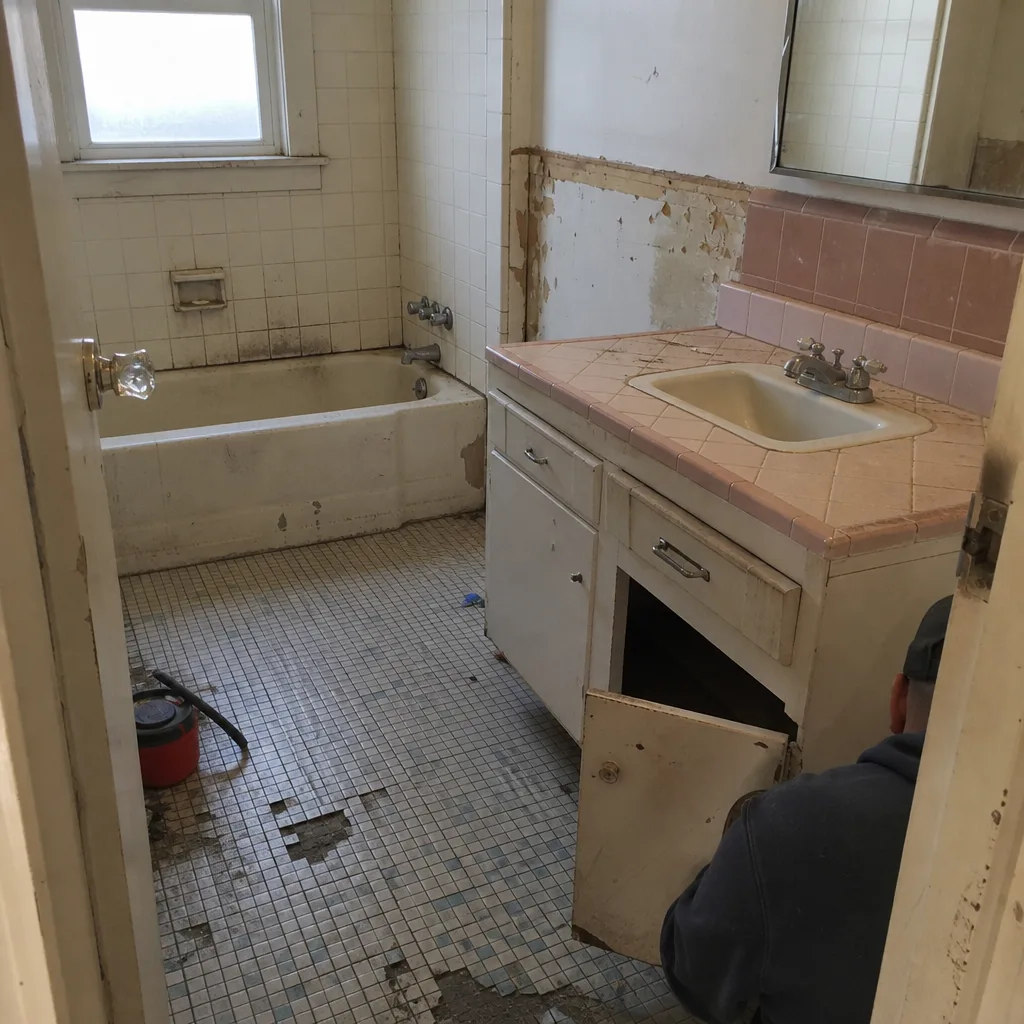 Before
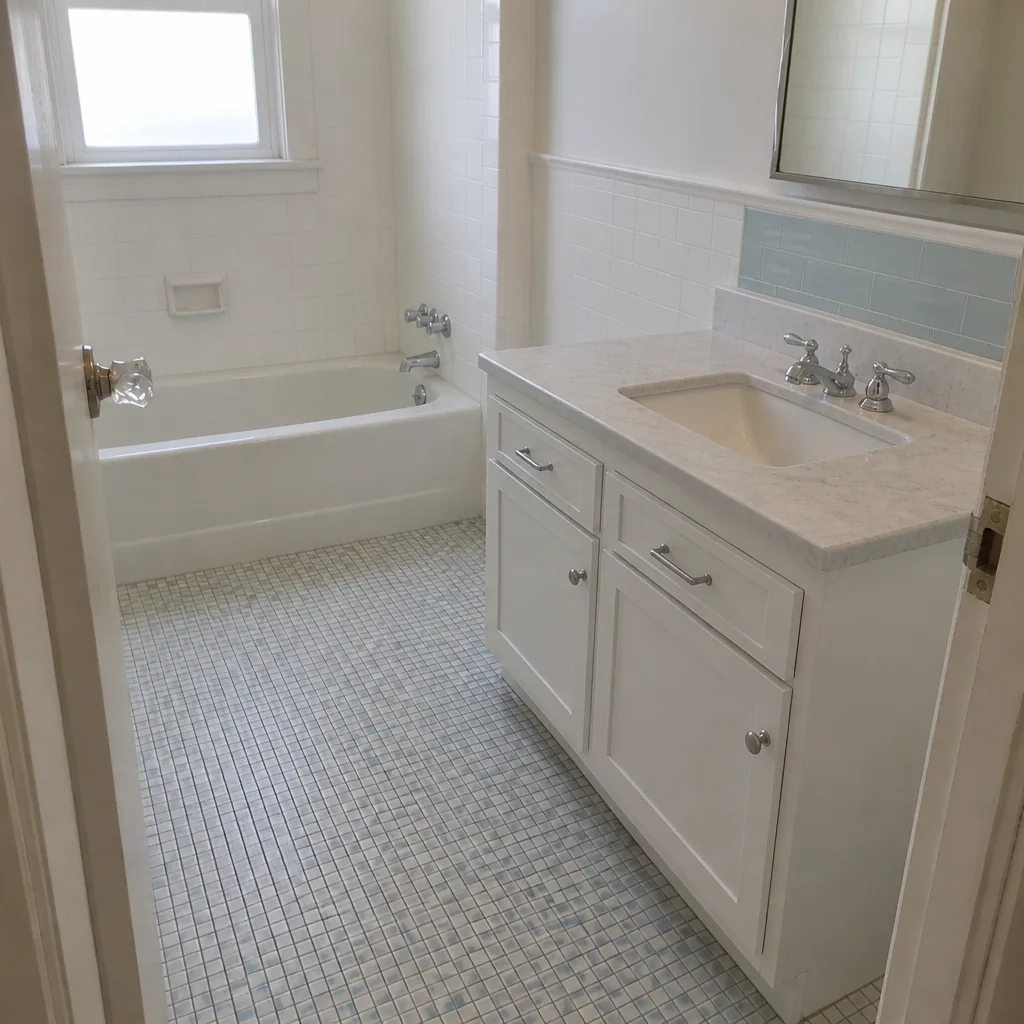 After
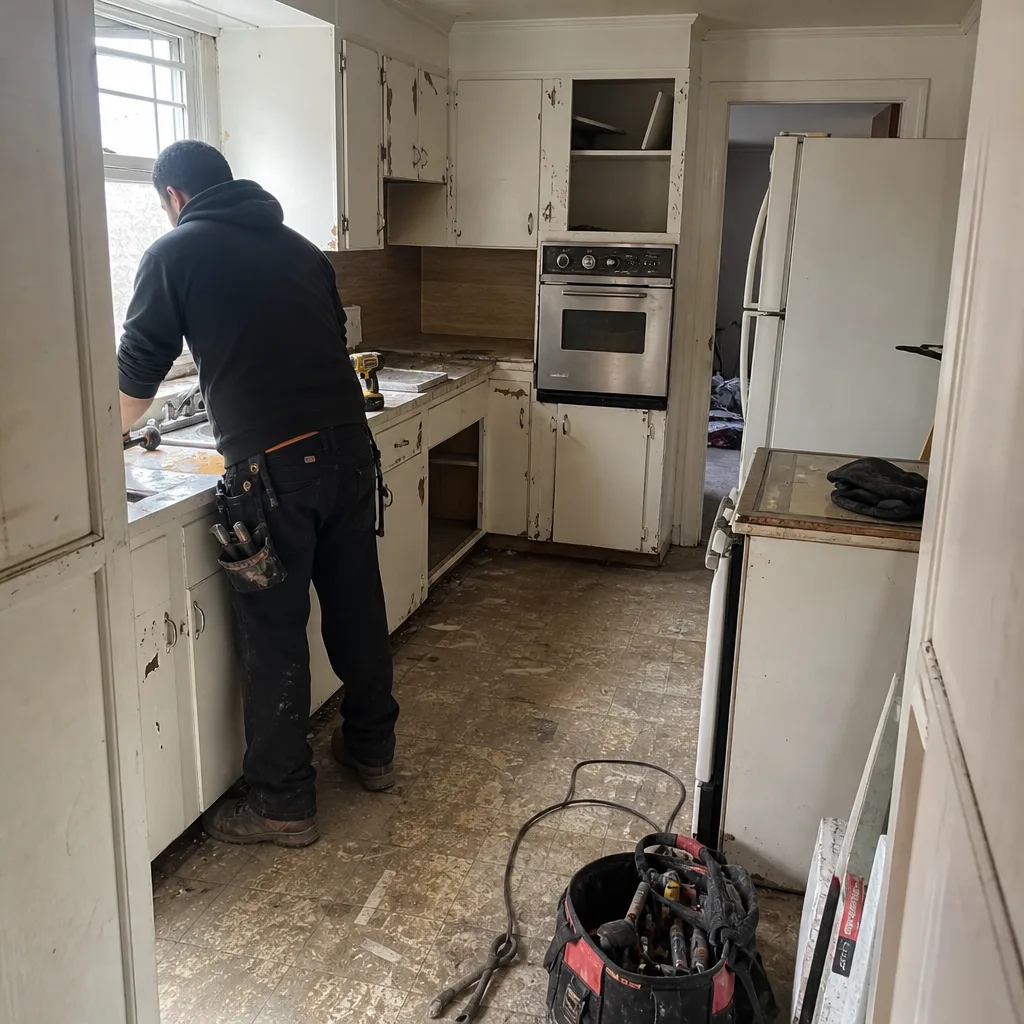 Before
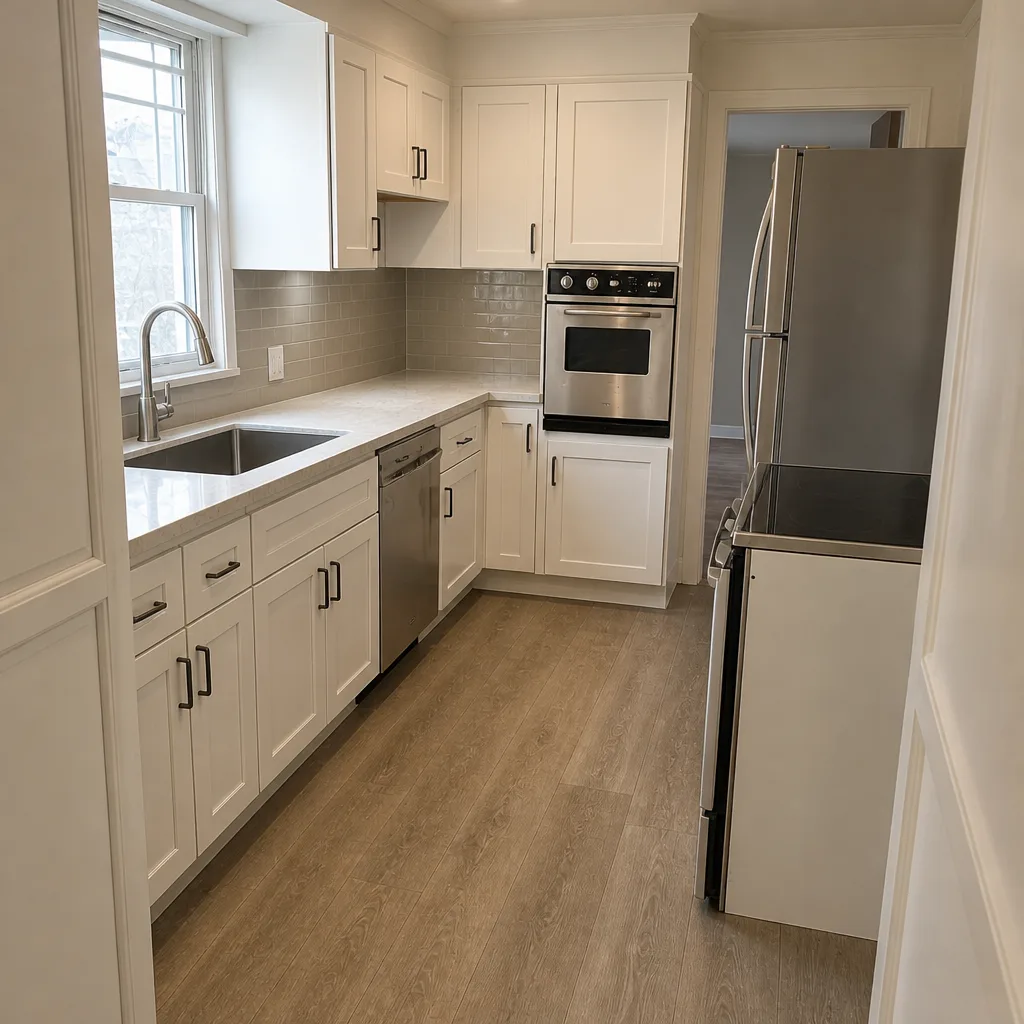 After
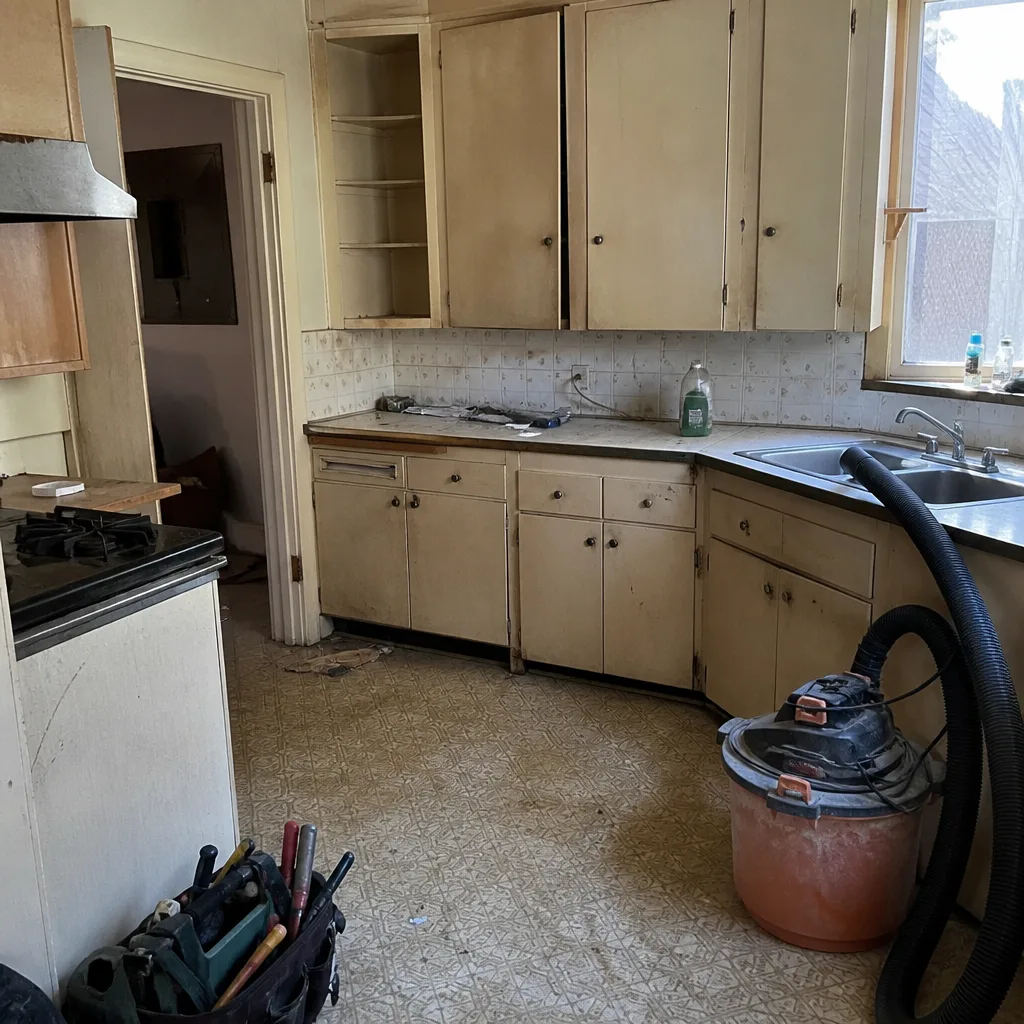 Before
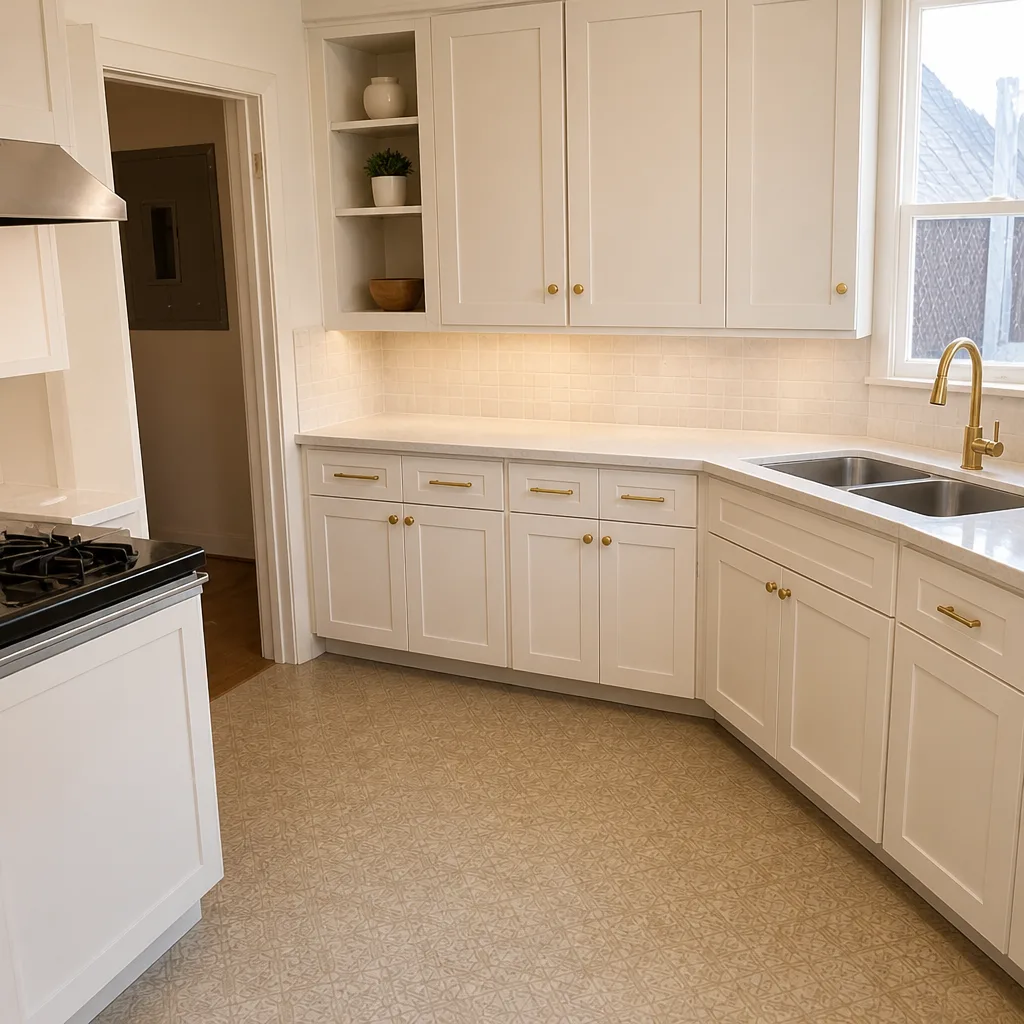 After
When to Call a Professional
Call a professional the moment the scope crosses into gas, electrical rough-in, plumbing rough-in, structural, or anything you’d want a Certificate of Occupancy for. Also call when the sequence matters – when a DIY task sits between two contractor phases and the warranty chain runs through your work. And call when the substrate is unknown, the wall isn’t framed the way you expected, or the task involves more than a $500 redo if it fails.
For the rest – painting, hardware, demo, hauling – the answer is usually “go for it,” with the boundary written down first. If you’re weighing a kitchen remodel in Oakland and want a written price before anyone picks up a tool, Penhallow Remodeling Oakland offers free estimates in Oakland – call (888) 403-1237. We’ll walk the scope, tell you honestly which tasks make sense to keep, and put the boundary in writing along with a 365-Day Done Right Promise on the work we do. Background-checked, uniformed technicians on every job; live phone coverage 24/7 by a real person if you have a question mid-project.
Frequently Asked Questions

No – not for anything past swapping a light bulb. Adding a receptacle, moving a switch, or running a new circuit requires a licensed electrician and an electrical permit from the City of Oakland. As an owner-builder you can pull the permit, but you still can’t legally do the work yourself, and the unpermitted work becomes a disclosure at resale. Call (888) 403-1237 to have the electrical scope walked and priced in writing.
Usually yes, on cabinet lines like KraftMaid and Wellborn. Those finishes are factory-applied and warrantied as installed; a homeowner topcoat is treated as an alteration and excludes the warranty for anything it touches. If you want the finish warranty intact, don’t paint on top of new cabinets – paint the walls around them. Call (888) 403-1237 for a written scope that names the boundary before demo day.
A demo crew runs $1,800-$3,500 for a full kitchen, and you can save most of that if you handle hauling and disposal yourself ($300-$500 in dumpster costs). The savings evaporate if you nick a supply line or cut through a live wire during demo – the emergency call runs $400-$1,200 and rewrites your timeline. Call (888) 403-1237 to price demo alongside the rest of the scope so you can see the real number.
Owner-builder status lets a California homeowner pull permits on their own primary residence without a contractor license. It’s legal, but it puts you on record as the responsible party for inspections, resale disclosure, and any future insurance claim on that work. For fire-safety scopes like electrical and gas, it’s usually the wrong trade-off. Call (888) 403-1237 if you want to run permits through a licensed contractor instead.
Almost never, unless you get it in writing before your work starts. The standard warranty excludes finishes that were altered by a homeowner or third party, because the defect can’t be traced. The safe pattern is to do your own work before demo or after the punch-list is signed, and to have the contractor sign a line in the scope that names which tasks are yours. Call (888) 403-1237 for an example scope.
Painting walls and ceilings, cabinet hardware, non-structural demolition, appliance hauling, and any freestanding furniture install are all safe to self-perform here. Cabinet hanging, countertop install, tile over older substrates, and anything touching gas, electrical, or plumbing should go to a licensed trade. Kitchen remodels in Oakland typically run $18,000-$55,000 depending on layout, cabinet line, and countertop material. Call (888) 403-1237 for an exact written range on your kitchen.
The Bottom Line
The DIY question isn’t about skill – it’s about stakes. Painting walls, hardware, demo, and hauling are worth doing yourself, with the sequence held clear of warranty-critical surfaces. Gas, electrical, plumbing, structural, and counter fabrication belong to a licensed trade, with permits pulled and inspections passed. Owner-builder permits buy you a lower line on the invoice and a heavier line on the resale disclosure. Write the boundary down before work starts, photograph the changeover, and keep the permit and inspection docs in one folder. That’s the whole playbook. If you want a written price before anyone picks up a tool, Penhallow Remodeling Oakland will walk the scope, name the boundary, and back the work we do with a 365-Day Done Right Promise – free estimates, call (888) 403-1237.
Written by the team at Penhallow Remodeling Oakland.