Last updated November 18, 2026








Free written scope consultation - allowances, timeline, and change-order rules on paper before a single trade is scheduled
General Contractor Troubleshooting: Common Problems and How to Fix Them
A change order that isn’t in writing isn’t a change order. It’s a favor the contractor can price however he wants when the invoice lands. That single gap in paperwork drives most of the complaints homeowners bring to the California Contractors State License Board, where payment and billing disputes make up the largest share of filed claims – and nearly all of them trace back to a vague bid, a verbal promise, or a scope of work nobody wrote down. This guide walks through the seven problems Oakland homeowners ask us about most, how to tell a legitimate cost overrun from a low-ball bid catching up, and what written documentation actually gives you when something goes sideways.
Quick Answer
Most general contractor problems fall into three categories: scope disputes (what was and wasn’t included), schedule failures (permits versus poor coordination), and quality disputes (work that fails inspection or fails early). You fix them the same way you prevent them – with written change orders, dated photo records, and a paper trail that references your signed contract. In Oakland, the fastest resolution path usually starts with a written notice to the contractor and ends with the CSLB if that fails.
Styles & brands we work with
- Kitchen remodeling
- Bathroom remodeling
- Home additions & ADU
- Roofing
- Windows & doors
- Driveway & pavers
- Fence
Table of Contents
- Is Your Cost Overrun Legitimate or a Low-Ball Bid?
- When the Subcontractor Doesn’t Show and Your GC Stops Calling
- Documenting Work-Quality Disputes So They Hold Up
- Permit Holds vs. Poor Coordination: Reading Schedule Delays
- Withholding Final Payment: When It Works and When It Backfires
- The Written Change Order and Why It’s Your Leverage
- Hiring Right the First Time: The Five-Document Test
Is Your Cost Overrun Legitimate or a Low-Ball Bid?
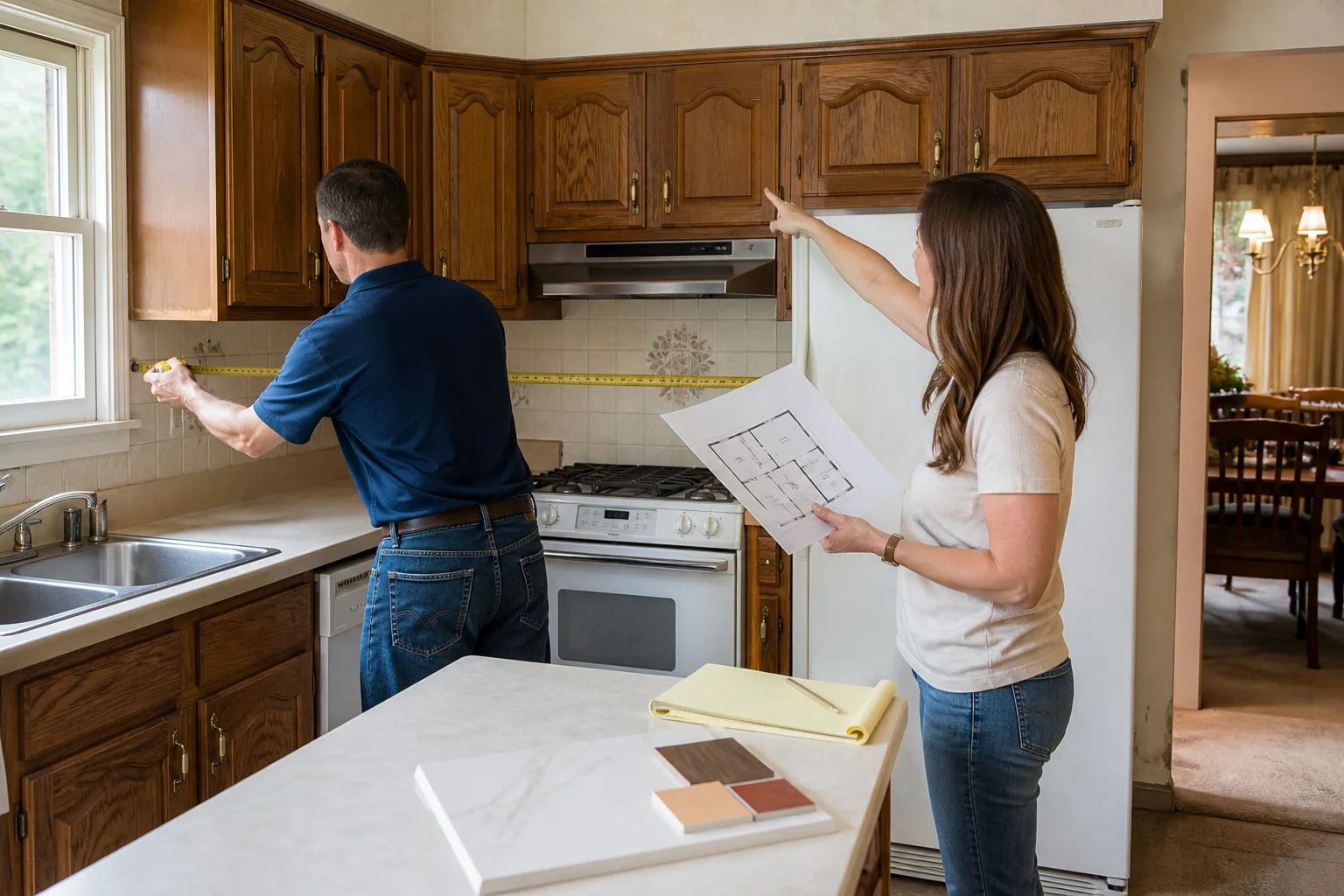
There’s a real difference between a mid-project increase that reflects what was actually behind the drywall and a contractor who bid low to win the job and is now making up the difference. The tell is documentation. A legitimate unforeseen condition comes with photos of the problem, a written change order describing the work, an itemized cost, and a request for your signature before anyone touches it.
Here’s how to sort the two apart:
- Legitimate unforeseen condition: You get photos of the condition, a written description of why it couldn’t be seen before demo, and a written price before work starts. Example: knob-and-tube wiring found behind a kitchen wall in a 1920s Rockridge bungalow that has to be brought to current code before new cabinets go in.
- Low-ball catching up: The increase appears as a verbal request, no photos, no itemization, and the “discovery” is something a competent bidder would have caught – like a missing permit, a floor that was obviously out of level, or a plumbing stack that was visible at the bid walk.
Your contract should say, in plain language, what happens when an unforeseen condition is found: who pays for the exploratory work, how the change is priced, and that no work proceeds without your signed approval. If your contract is silent on this, that’s the first thing to negotiate before signing anything else.
For homeowners in Oakland planning a bigger project, the safest starting point is a written scope and price before the first tool comes out. That’s how a General Contractor in Oakland should operate, and it’s the standard we hold ourselves to.
When the Subcontractor Doesn’t Show and Your GC Stops Calling
This is the moment panic sets in, and the worst moves – yelling, withholding everything, cancelling verbally – usually make it harder to recover. The good news: California gives you a clear escalation path, and it’s mostly written. Work it in order and you keep every option open.
- Put the problem in writing. Send an email or certified letter (email is fine if your contract allows it) that names the missed date, references the schedule in your contract, and asks for a written recovery plan with a new completion date. This creates a record.
- Request proof the sub is licensed. You can look up any subcontractor on the CSLB website. If the sub isn’t licensed, the GC has a problem – and so do you, because unlicensed subs can’t legally collect and their work isn’t covered by the license bond.
- Give a written deadline to cure. State what needs to happen and by when. Ten business days is reasonable for most coordination failures. This is your last communication before escalation.
- Call the CSLB. File a complaint online or by phone. The board can mediate in many cases and will investigate licensing issues. This is also the point where a bond claim may become available.
- Consult an attorney before you withhold large amounts. A construction attorney in Oakland can review your contract for the mediation or arbitration clause your GC agreed to, and tell you whether withholding is safe.
Document every call, text, and email with dates. If a GC is genuinely ghosting you, the written record is what you’ll need at the CSLB and in arbitration.
Documenting Work-Quality Disputes So They Hold Up
A complaint that says “the tile looks bad” goes nowhere. A complaint that says “the tile on the north shower wall has three hollow spots, a cracked grout line, and was installed with no waterproofing membrane behind the cement board, photographed on March 14th and reported in writing on March 15th under Section 4.2 of our contract” – that goes somewhere.
Here’s the documentation routine that holds up:
- Photograph before and after. Take wide shots showing context and close-ups showing the defect. Date-stamped photos on your phone are fine.
- Write a dated notice. Name the specific defect, reference the contract section or industry standard it violates, and request an inspection. Send it in the same channel your contract specifies.
- Keep a written log. Every call, text, email, and site visit gets a line. Times and names matter.
- Get a third-party inspection if it’s structural or safety-related. A licensed inspector’s written report is the strongest evidence you can hand over.
- Reference the warranty in writing. If your contractor issued a written guarantee, cite it by name and date in your notice. This puts the contractor on record as having received a warranty claim, which matters if you eventually have to enforce it.
We’ve seen Oakland homeowners win disputes they’d have lost, purely because they had a photo of a failing window flashing next to a written notice that gave the contractor a chance to fix it. The chance fires the warranty. The photo proves the problem.
Permit Holds vs. Poor Coordination: Reading Schedule Delays
Not all delays are the contractor’s fault, and confusing the two costs homeowners leverage. In Oakland, permit timelines are genuinely unpredictable – the city’s building department handles a heavy volume of older-housing and seismic retrofit reviews, and a delay on a straightforward bathroom remodel permit is not unusual. If your GC documented the submittal date and is following up, that’s a permit hold, not a management failure.
How to tell them apart:
- Permit hold: The GC can show you the submitted date, the permit number, and the city’s current review status. The delay affects everyone on the project, not just your job. Communication from the GC is proactive, not evasive.
- Poor coordination: The GC can’t tell you when the permit was submitted, subs are bumped for other jobs, or your project sits idle while the GC’s crew is clearly working somewhere else. The schedule slips by weeks and the GC’s story keeps changing.
In Oakland specifically, older housing stock triggers more plan-check corrections than newer construction – a 1915 Craftsman in Temescal will often need structural detailing called out that a 1970s ranch house in the Oakland Hills wouldn’t. That’s a real permit delay. But it’s also the GC’s job to have anticipated it at bid time and built the review cycle into the schedule. Ask for the permit timeline in writing before you sign, including the expected city review window.
Withholding Final Payment: When It Works and When It Backfires
Withholding final payment is the homeowner’s biggest single tool, and used wrong it’s the fastest way to convert a fixable problem into a lawsuit. California law does give you some protections – a contractor generally must give you a written notice of the right to cancel or a mechanics lien warning, and the state has rules about payment schedules and prompt payment once work is completed. What the law doesn’t do is let you withhold arbitrary amounts for vague reasons.
When withholding works:
- The work is genuinely incomplete or fails a written punch-list item, and you’ve given the contractor a written chance to cure it.
- You’re withholding a defined, documented amount tied to a specific defect – not the whole final payment.
- Your contract specifies how final payment is released (usually after final inspection, punch-list completion, and delivery of lien releases).
When withholding backfires:
- You’re withholding for “poor communication” or “not liking the finish” without a written defect.
- You’ve blocked the contractor from completing the punch list, then withheld based on incompletion.
- You owe more than the disputed amount and the contractor files a mechanics lien – those can cloud your title and cost more to resolve than the original dispute.
Before you withhold, read your contract’s dispute resolution clause. If it points to mediation, use mediation. It’s cheaper and faster than a lien fight in Alameda County.
The Written Change Order and Why It’s Your Leverage
Every change to scope, price, or schedule during a project should live on a signed change order. This single document is the difference between a fixed-price job and an open-ended one. A change order should show the reason for the change, the work involved, the dollar amount, the impact on the schedule, and a signature line. No signature, no work, no payment.
What your contract should say about change orders:
- No work happens on any change without a signed change order.
- Change order pricing uses the same rates and markup as the original contract, or a defined pricing method.
- If you don’t sign, the contractor stops work on that item and moves on to other scope – the project doesn’t grind to a halt.
- Any “allowance” items have a defined process for what happens if actual costs exceed the allowance.
This is exactly the discipline that separates a written-price job from an estimate that drifts. When we quote a kitchen remodel in Oakland, the written number is the number – and any change to it exists on a signed change order or it doesn’t exist. We install Cambria quartz, for example, which carries its own manufacturer warranty alongside ours, so the countertop decision is locked in writing before the slab is cut.
If you’re planning a larger project and want to see what written documentation looks like before signing anything, our Kitchen Remodeling in Oakland page walks through the process end to end.
Hiring Right the First Time: The Five-Document Test
The best way to troubleshoot a contractor problem is to never have one. Before you sign with any contractor – Penhallow included – ask for these five documents. A serious contractor hands them over without pushback. A contractor who stalls or pushes back on any one of them is telling you something.
- A written, itemized price. Not a range, not a ballpark. Line items by room, material, and trade.
- A written scope of work. What’s included, what’s excluded (paint touch-ups? drywall patching? dumpster fees? permits?), and what counts as a change order.
- A written schedule with major milestones. Demo date, permit submittal date, rough-in dates, inspection dates, finish dates. Not a promise – a plan.
- A written warranty. What’s covered, for how long, and what happens when something fails. Ours is the 365-Day Done Right Promise: if the work fails within a year of completion, we come back and fix it at no charge, and the terms are in writing on every project.
- Proof of license and background-checked crew policy. Ask how technicians are vetted and whether they arrive in uniform. You should know who’s in your home.
One more, above and beyond the five: call the phone number on a Saturday evening and see who answers. We answer 24/7 with a live person, not a voicemail prompt. If your prospective contractor’s phone goes to voicemail at bid time, it’ll go to voicemail at punch-list time too.
Common Mistakes to Avoid
- Accepting a verbal change order over the phone. It’s the single most common way homeowners end up in a CSLB dispute. Insist on a signed document, even for a $200 add.
- Paying a large deposit up front without a defined payment schedule. California law caps deposit amounts on home improvement contracts (typically 10% or $1,000, whichever is less), and a contractor who asks for 50% down before demo is a red flag. Ask for the draw schedule in writing.
- Letting permit work start before the permit is issued. Oakland inspectors can and do red-tag unpermitted work, and the fix cost often exceeds whatever was saved by starting early.
- Trusting a “reputable sub” without checking the license. Look up every subcontractor on the CSLB site. It takes two minutes and it’s the easiest due-diligence step in the whole project.
- Not photographing before demo. The walls behind your cabinets contain facts about your house that no one will remember six weeks later. Take the photos yourself, before anyone touches anything.
- Waiting too long to escalate. If a GC has missed three straight promised dates with no written recovery plan, waiting another month rarely helps. Send the written notice and preserve your options.
- Assuming the permit process works the same in every Oakland neighborhood. A bathroom remodel in the hills can require different structural review than one near the flatlands. Build review time into your schedule before you sign, not after the GC misses a deadline.
See the difference
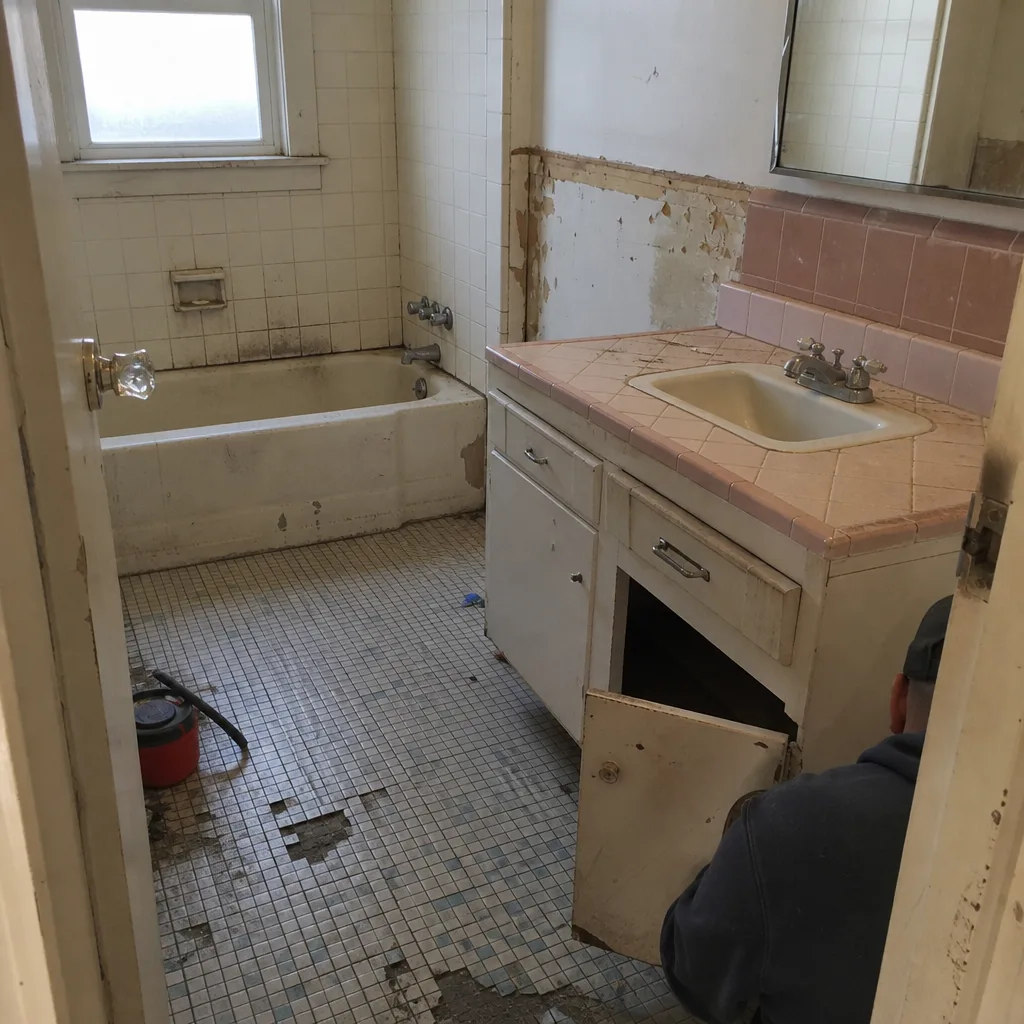 Before
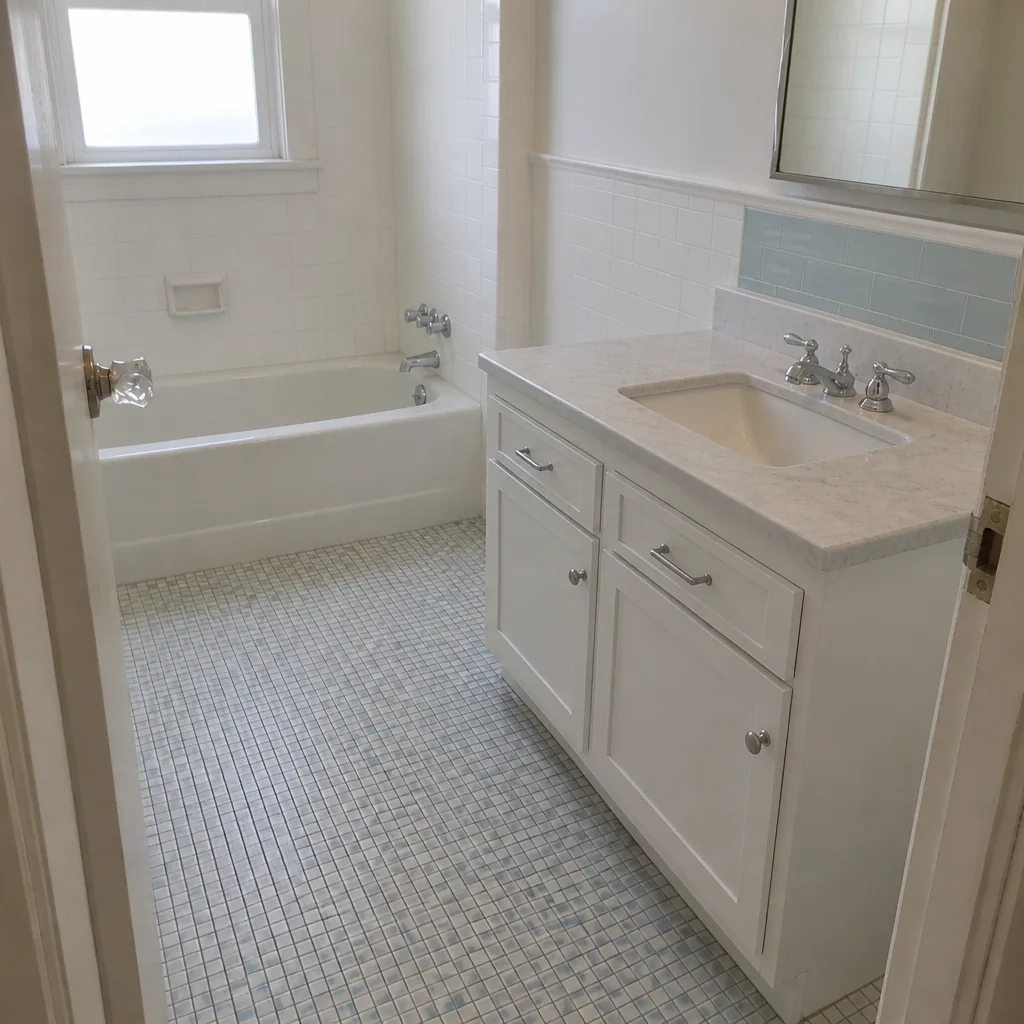 After
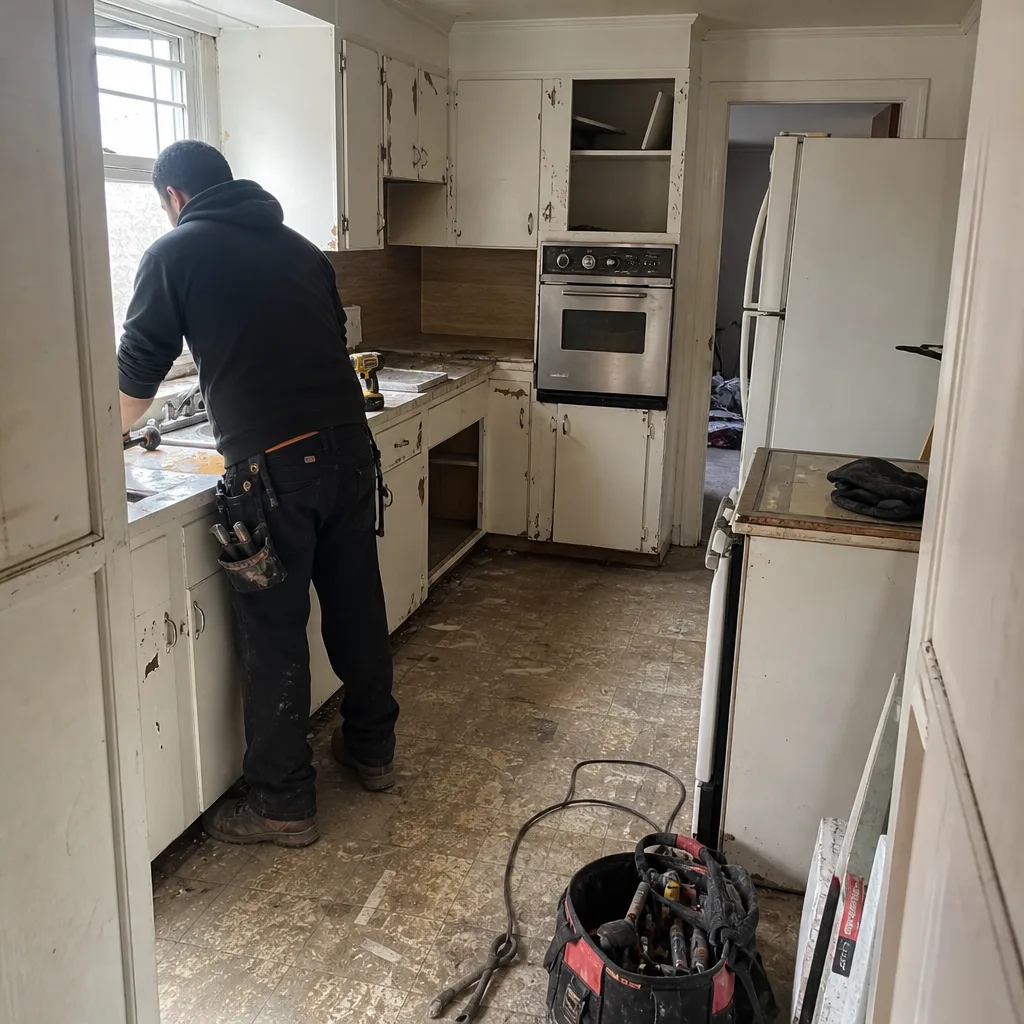 Before
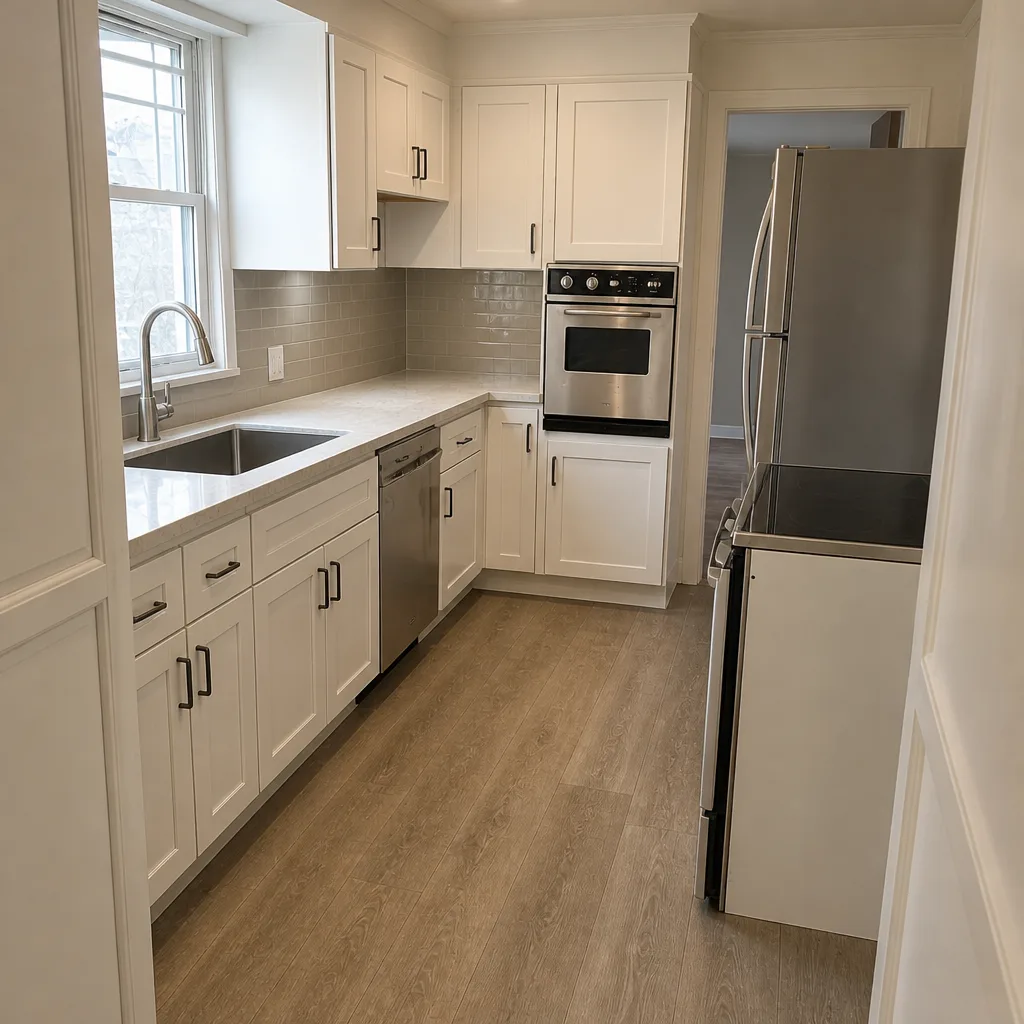 After
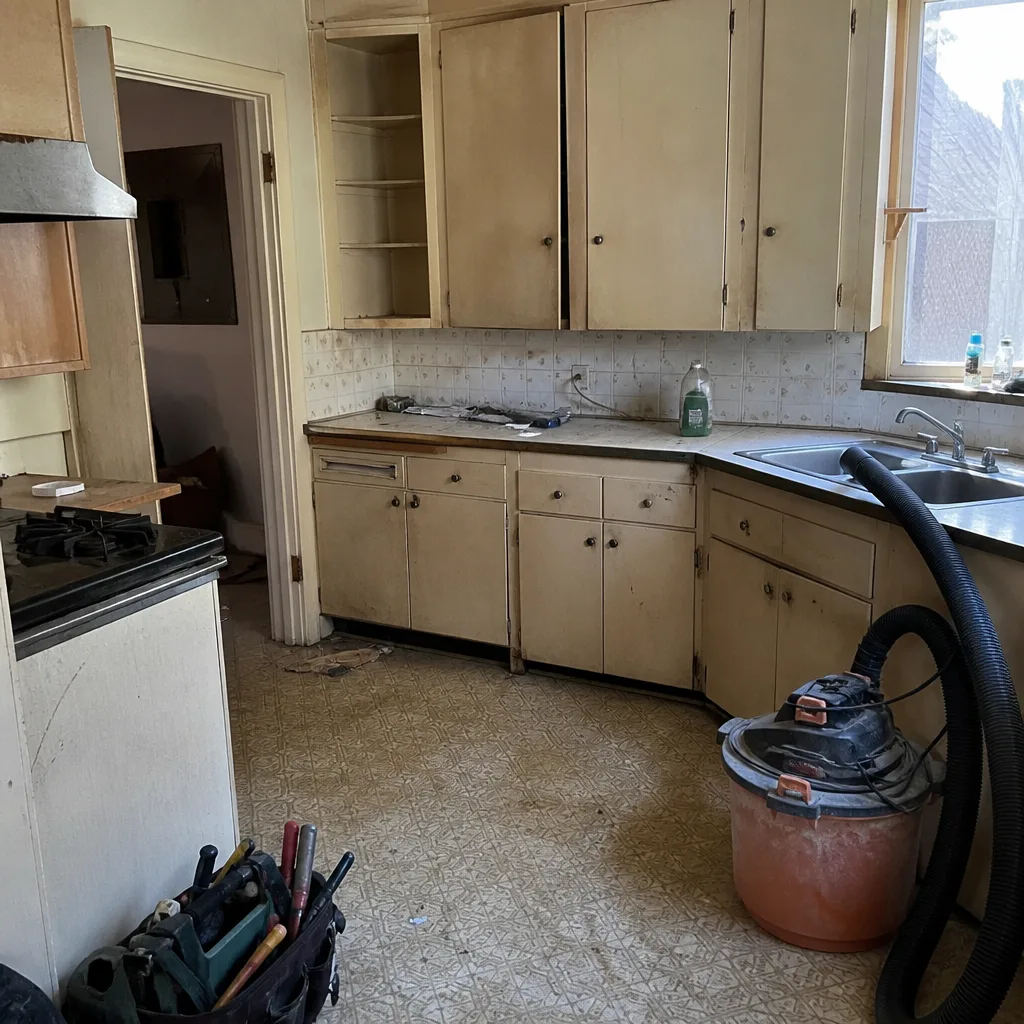 Before
 After
When to Call a Professional
Some problems are paperwork disputes you can resolve yourself with a written notice and a signed change order. Others require a licensed contractor, an inspector, or an attorney, and the earlier you involve them the cheaper the fix. Call a professional contractor when: work is stalled with no written recovery plan, when you suspect unpermitted work or unlicensed subs are on site, when a repair has failed twice in the same spot, or when the amount in dispute exceeds what you’re comfortable losing. For a bathroom remodel in Oakland where the shower pan keeps failing under a warranty claim, that’s a case for a contractor with a written guarantee and a policy of returning to fix it – our Bathroom Remodeling in Oakland page shows what that looks like in practice.
Penhallow Remodeling Oakland offers free estimates in Oakland – call (888) 403-1237 to schedule yours. Every project starts with a written price before any work begins, a defined arrival window, and a written guarantee, so the number on day one is the number on the invoice. If you want to see how we approach whole-home projects before you commit, start at our Penhallow Remodeling Oakland home page.
Frequently Asked Questions

Correcting shoddy work in Oakland typically runs 30% to 100% of the original cost of that scope, because rework includes the removal of the bad work plus the new install. A shower pan that has to be torn out and rebuilt often costs $4,000 to $9,000 to correct, versus $3,500 to $7,000 for the original build. If the mistake is on a warranty-covered project with a written guarantee, the cost to you should be zero – call the contractor first. If they don’t respond, call (888) 403-1237 for a free estimate on the repair.
Yes, but only for a documented, specific amount tied to a written defect or incomplete scope item, and only after you’ve given the contractor a written chance to cure it. Withholding the full final payment for vague reasons can backfire – a mechanics lien in Alameda County costs more to resolve than the dispute. Read your contract’s dispute clause first. Call (888) 403-1237 if you want a second opinion on a written quote before you sign.
File a complaint with the California Contractors State License Board (CSLB) online or by phone, and include your contract, change orders, dated photos, and written notices. The CSLB can mediate and can investigate licensing and bond issues. Gather the paper trail first – complaints with documentation move much faster. For a written second bid before you sign with the next contractor, call (888) 403-1237 – estimates are free.
Usually not, if the contractor submitted on time and is following up on the city’s review. Oakland’s building department has a heavy workload for older housing stock, and plan-check corrections are common. The contractor’s fault is failing to build review time into the schedule in the first place. Ask for the permit timeline in writing before signing. Call (888) 403-1237 to talk through what a realistic Oakland permit timeline looks like for your project.
A written change order should include the reason for the change, a description of the work, the dollar amount, the impact on the schedule, and a signature line – and no work should start without your signed approval. Anything less isn’t a change order. Every project we run follows that rule, in writing. Call (888) 403-1237 if you want to see a sample.
Often yes, though it depends on what was left incomplete and whether permits were pulled correctly. We start by documenting what’s there, confirming permit status, and giving you a written scope and price before touching anything. That means no surprise change orders on the fix job either. Call (888) 403-1237 to schedule a free estimate.
The Bottom Line
Almost every general contractor problem in Oakland – the cost overrun, the no-show sub, the repair that failed twice – traces back to paperwork that was vague or verbal from day one. The fix is not a louder phone call. It’s a written notice, a dated photo record, a signed change order, and a documented referral to the CSLB if the contractor doesn’t respond. Hire on the five-document test: written price, written scope, written schedule, written warranty, proof of license and vetting. Everything else follows. A contractor who won’t put it in writing before demo is telling you exactly what the job will look like when it goes sideways. Call (888) 403-1237 for a free estimate in Oakland – the written price is yours to keep, whether you hire us or not.
Written by the team at Penhallow Remodeling Oakland.