
Last updated November 18, 2026








Free written scope consultation - allowances, timeline, and change-order rules on paper before a single trade is scheduled
Home Remodeling Troubleshooting: Common Problems and How to Fix Them
A door that sticks after a remodel is almost never a door problem. It’s a framing settlement or a humidity issue that the door is simply reporting – and fixing the door without reading that report means the same thing happens to the next door. Most post-remodel complaints we get called about in Oakland cluster around three moments: right after demo, right after drywall closes, and six months after the crew leaves. Each cluster has a different cause, a different responsible party, and a different warranty trail. This guide sorts the mess into a timeline so you know what you’re looking at, who should pay for the fix, and when to push back versus when to call it maintenance.
Quick Answer
Most remodeling problems fall into one of three buckets: workmanship defects that appear within the first 30 days, material acclimation or settling issues that surface between 30 and 180 days, and maintenance or design problems that show up after 180 days. Workmanship defects belong to your contractor and should be covered by the written guarantee. Material defects belong to the manufacturer. Maintenance issues belong to the homeowner. Knowing which bucket you’re in determines who pays, and that’s the whole game.
Styles & brands we work with
- Kitchen remodeling
- Bathroom remodeling
- Home additions & ADU
- Roofing
- Windows & doors
- Driveway & pavers
- Fence
Table of Contents
- The Three-Moment Timeline: When Problems Actually Surface
- Workmanship vs. Material Defect: Who Pays for the Fix
- The Documentation Process That Protects Your Warranty Rights
- Oakland-Specific Issues: Marine Layer, Micro-Seismic Activity, and What Settling Really Looks Like
- When to Bring in a Third-Party Inspector (and When Not To)
- How to Diagnose a Problem Before You Call Anyone
- Common Mistakes to Avoid
- When to Call a Professional
The Three-Moment Timeline: When Problems Actually Surface
Time is the most useful diagnostic tool you have. When a problem first appears tells you more about its cause than the problem itself does. Here’s how we break it down on jobs we manage around Oakland.
First 30 Days: Workmanship
Anything that goes wrong in the first month is almost always installation. A tile that pops loose, a cabinet door that won’t close flush, grout that cracks along a single seam, caulk that pulls away from the tub: these are execution failures, not material failures. The substrate (the layer of cement board or plywood behind your finish surface) may not have been prepped right, the fastener spacing may be off, or the joint wasn’t allowed to cure before it got loaded. On a recent kitchen in the Dimond District, a homeowner called us three weeks post-install about a cabinet that wouldn’t align. We returned, found two screws that had missed the stud, and corrected it under the 365-Day Done Right Promise at no charge. That’s the model. Workmanship defects are the contractor’s bill.
30 to 180 Days: Acclimation and Settlement
This is the gray zone, and it’s where homeowners get the most confused. Hardwood flooring that gaps in month two, a door that starts sticking in month four, drywall seams that show a hairline crack, tile grout that weeps around a perimeter: these are usually acclimation issues (the material responding to the humidity and temperature of your home) or normal settlement. In Oakland, the marine layer makes this window more active than in drier inland markets. Wood swells during fog season and shrinks during warm spells. That’s physics, not a failure. The fix is usually adjustment, not replacement – and the responsible party depends on whether the installer gave the material time to acclimate before installation.
After 180 Days: Maintenance or Design
Six months in, if something goes wrong, it’s usually because the material has outlived its expected cycle for that application, or because the design choice doesn’t suit the house. A bathroom with no exhaust fan will grow mold no matter how well it was tiled. A cabinet line not rated for the humidity of a kitchen near the coast will fail early. These are maintenance and design issues, and they belong to the homeowner. The distinction matters because “the contractor should fix it” and “the contractor is responsible for it” are very different sentences.
Workmanship vs. Material Defect: Who Pays for the Fix
The single most common reason a post-remodel complaint turns into a fight is that nobody agreed upfront who owns what. Here’s the split we use on every project, and it’s the split most reputable contractors should be willing to put in writing.
Workmanship Defects: The Contractor’s Bill
- Tile that lifts, cracks along a grout line within weeks, or was installed over a wet substrate
- Cabinets that don’t plumb, doors that swing open on their own, drawer slides that bind
- Drywall seams that telegraph through paint in a pattern that follows the framing
- Caulk lines that detach from a tub or shower within the first month
- Any leak traced to how a fixture was set, not how it was made
Material Defects: The Manufacturer’s Bill
- A Kohler or Toto toilet that fails internally – the flush valve, the fill valve, the ceramic itself
- Delta or Blanco fixtures that pit or leak from a casting defect
- Cabinet hardware that fails at the hinge or slide, not at the wood
- Countertop material that chips from a slab inclusion (rare but real)
- Paint that peels from a manufacturing batch issue rather than surface prep
The way to tell them apart is usually simple: a material defect follows the product across installations, while a workmanship defect follows the installer across products. If the same hinge fails on all six cabinets, it’s likely the hinge. If it fails on one cabinet and the door is also crooked, it’s the install. We write this split into every project file so the answer isn’t in dispute when the phone call comes – and on the material side, brands like Cambria and Kohler carry their own warranty alongside ours, which is why we name them explicitly to homeowners before the job starts.
The Documentation Process That Protects Your Warranty Rights
If you ever have to make a warranty claim, the difference between getting it fixed for free and getting it fixed at your own expense is almost always paperwork. Here is the process we recommend to every homeowner we work with in Oakland.
- Photograph the problem on the day you notice it. Include a date-stamped wide shot of the whole area and a tight shot of the specific defect. If it’s a crack or a gap, put a coin or a ruler in the frame so the scale is obvious.
- Write down when it started and what changed. Was it after a stretch of rain? After the heat came on? After a heavy truck went by? Context is often the diagnostic.
- Notify the contractor in writing, not by phone. Email or text is fine. Keep the reply. Verbal notification is one step above no notification.
- Send the notice inside the warranty window. Every written guarantee has a claims period. Yours is in the paperwork you got at closeout. Read it before you call, not after.
- Do not attempt a repair yourself before notifying. Any DIY attempt usually voids the workmanship side of the claim. We’ve seen homeowners lose coverage on a $4,000 tile repair because they tried to fix a single popped tile with a tube of adhesive first.
- Keep a running file. Every photo, every email, every receipt. If it goes to a third-party inspector or small claims, that file is the case.
On the Penhallow side, every project file includes a written price before work starts and a written guarantee at closeout. Those two documents are the ground truth of any claim – and if a contractor can’t produce them when you ask, that’s a problem in itself.
Oakland-Specific Issues: Marine Layer, Micro-Seismic Activity, and What Settling Really Looks Like
Generic remodeling guides don’t account for where you live, and Oakland has a specific combination of conditions that produce post-remodel problems a contractor from Phoenix would never see.
The Marine Layer and Paint Adhesion
Oakland sits inside a marine layer for much of the year, and that fog carries moisture against exterior walls. New paint that hasn’t been applied over a properly cleaned and primed surface will fail in this climate faster than it would anywhere inland. If you see blistering or peeling on a south-facing or west-facing wall within the first year, the question is not “why is the paint bad” – it’s “was the substrate clean and dry before it was primed.” We see this constantly in neighborhoods near the water: Rockridge, Temescal, and anything within a mile of the Bay. James Hardie fiber cement siding holds up to this climate better than wood does, which is why we specify it on exteriors where the marine layer is aggressive, but only if the caulk joints and flashing are also correct.
Micro-Seismic Activity and Grout
The East Bay sits on and near active fault lines, and the constant small tremors that most of us never notice do register in tile installations over time. A hairline grout crack along a single line after a year is usually normal settling. A grout crack that runs wall to floor in a continuous line, or one that reappears in the same spot after being repaired, usually means the substrate wasn’t correctly secured or the tile was installed over deflection that should have been corrected first. That’s an installation issue dressed up as a seismic event.
How to Tell Normal Settling from Improper Installation
- Normal settling: hairline cracks, single-location, appears in the first 12-18 months, does not recur after repair
- Improper installation: cracks that follow framing lines, recurring cracks in the same spot, hollow-sounding tile, cracks on tile that shouldn’t move (floor over slab)
- Moisture intrusion: grout that stays dark after a shower, efflorescence (white powder) on grout lines, musty smell in a bathroom with an exhaust fan
When to Bring in a Third-Party Inspector (and When Not To)
A third-party inspector is the escalation step, not the opening move. The general rule: if the contractor has acknowledged the problem in writing and committed to a fix, let them fix it before you spend money on an inspector. If they’ve denied the problem, stopped responding, or the fix has failed twice, the inspector becomes useful.
What an inspector actually changes is the conversation. A written report from a licensed inspector reframes the dispute from “you say, I say” to “here is what a neutral professional found.” That reframing does two things: it forces the contractor to respond in writing, and it creates a document you can hand to a mediator, small claims court, or your homeowner’s insurance. What it does not do is automatically make you right – inspectors call it like they see it, and sometimes they’ll confirm the contractor’s position. That’s the point of hiring one.
For Oakland homeowners, the practical sequence is usually: written notice to the contractor, one attempt at resolution, and only then a call to a licensed inspector. On a project over about $15,000, the cost of an inspection ($500-$900 in the East Bay) is worth it if you’re stuck. On smaller claims, the math usually favors direct resolution. For anything structural – a wall that’s moving, a floor that’s bouncy, water where it shouldn’t be – skip the delay and call a licensed inspector or structural engineer immediately. That’s not a warranty question, that’s a safety question.
How to Diagnose a Problem Before You Call Anyone
Before you pick up the phone, run this sequence. It takes ten minutes and it makes the contractor conversation much faster.
- Locate the problem precisely. Not “the bathroom” – the exact tile, the exact inch of caulk, the exact cabinet door. Take a photo with your phone’s ruler overlay if it has one.
- Check the timing. Did it appear within 30 days (workmanship), 30-180 days (acclimation or settlement), or after 180 days (maintenance or design)?
- Test the extremes. Does it change with the weather? Does it get worse when the shower runs, or when the heat comes on? Note those patterns.
- Check the surrounding area. A single popped tile is usually a single popped tile. Ten popped tiles in a row means the problem is the substrate, not the tile.
- Look at the paperwork. Pull your written guarantee. Confirm the coverage period and the notification method required. Then follow it exactly.
- Write one paragraph. What you see, when you saw it, what you’ve already done. Send that paragraph in writing. One clear paragraph with photos does more than a dozen phone calls.
If you’re not sure which bucket you’re in, that’s fine. Call us and we’ll help you sort it before you spend a dollar on a repair. If the work is ours, we’ll return under the guarantee. If it’s not, we’ll tell you what it looks like and what to ask your contractor.
Common Mistakes to Avoid
- Fixing it yourself before notifying anyone. It almost always voids the workmanship claim, and on a tile or plumbing repair, the DIY damage usually costs more than the original issue would have.
- Relying on a verbal report. In Oakland, we’ve seen homeowners lose real claims because they mentioned a leaking shower verbally at a barbecue and never documented it. Put every issue in writing, even to a contractor you trust.
- Confusing “recently done” with “under warranty.” A written guarantee is a specific document with a specific period. If you can’t find yours, ask for a copy before you have a problem, not after.
- Hiring the cheapest bid for the repair. A repair that fails in six weeks is more expensive than the original job would have been. This is especially true on waterproofing and tile setting, where the labor is the whole value.
- Ignoring humidity and acclimation. Oakland’s marine layer isn’t optional. Wood flooring, solid wood doors, and anything that breathes needs time to acclimate to the house before installation. If your contractor installed on the same day the material arrived, that’s a warning sign.
- Calling an inspector before calling the contractor. Unless there’s a safety issue, the first call goes to the contractor. The inspector is the escalation step.
- Letting a small leak sit until it’s a big leak. Water damage compounds fast. Anything wet where it shouldn’t be is a same-week conversation, not a same-month one.
When to Call a Professional
Some problems are not DIY and not warranty-worthy delay material. Call a licensed contractor or inspector immediately if you see: water where water shouldn’t be (behind a wall, under a cabinet, at a shower curb), a floor that bounces underfoot, a wall that shows a vertical or diagonal crack wider than a hairline, a door or window that suddenly stops closing after years of working fine, or a gas connection or electrical concern anywhere in the remodeled space. Those aren’t warranty troubleshooting – they’re safety issues, and the sequence is professional first, paperwork second. For everything else, the process in this guide applies. We handle kitchen remodels, bathroom remodels, and whole-home renovations across Oakland, and if you’re trying to figure out whether a post-remodel problem is ours to fix, we’ll tell you straight. Penhallow Remodeling Oakland offers free estimates in Oakland – call (888) 403-1237. A live person answers, day or night, and the estimate is written before any work starts.
See the difference
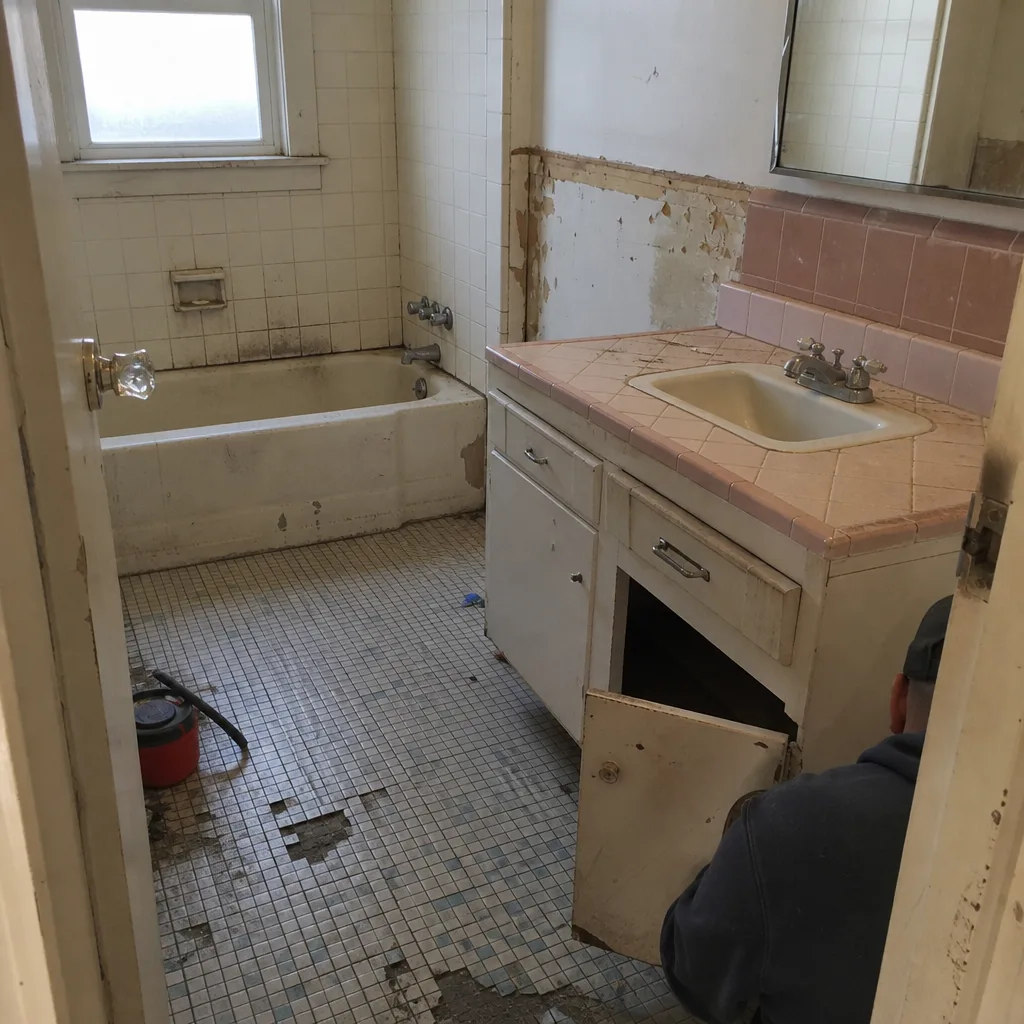 Before
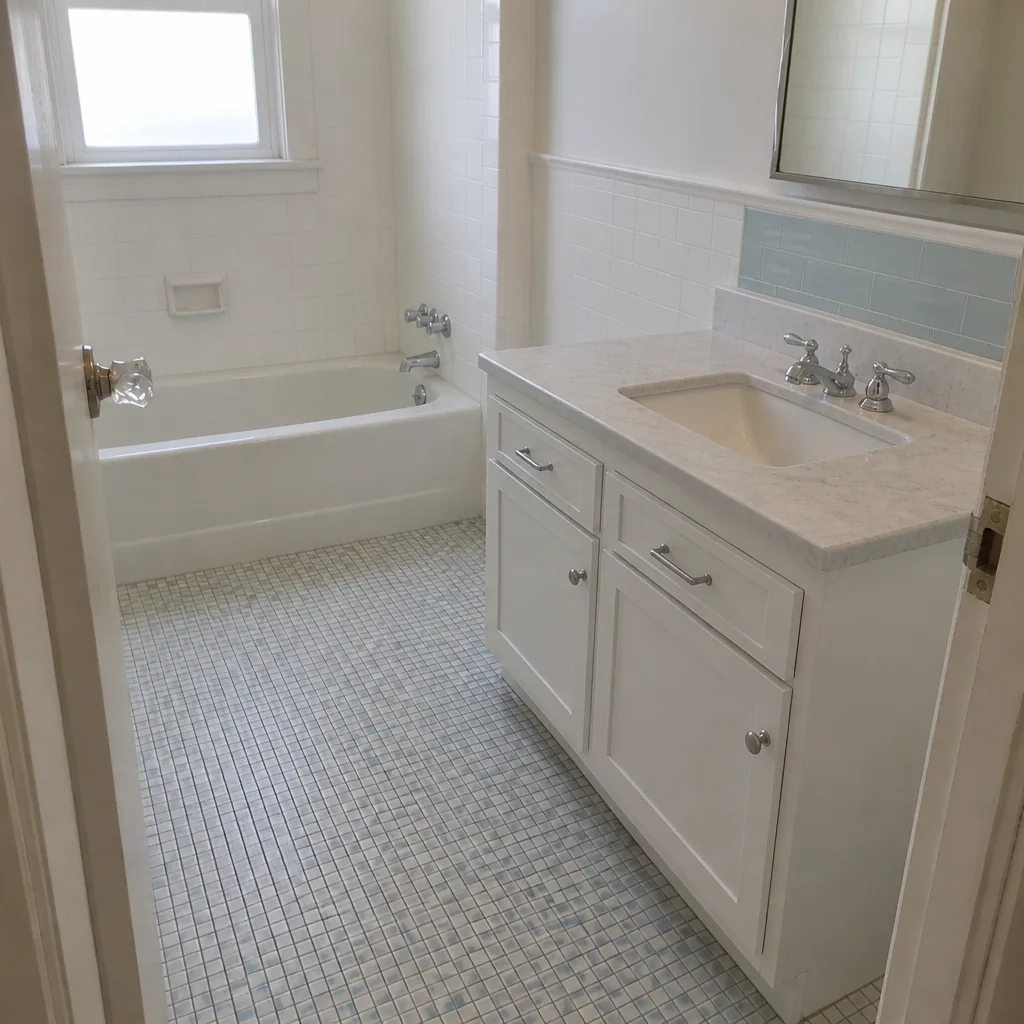 After
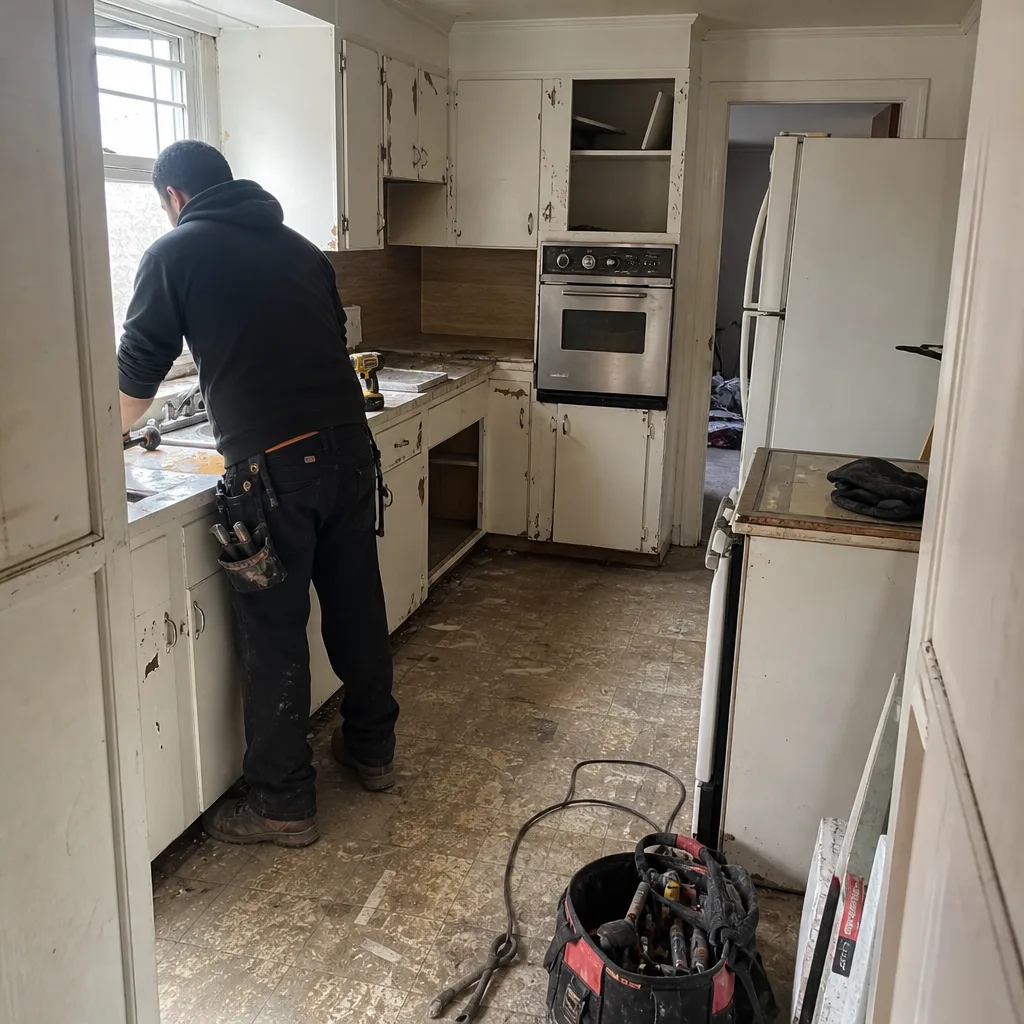 Before
 After
 Before
 After
Frequently Asked Questions

Workmanship warranties in the remodeling trade typically run 12 months, though they vary widely. The 365-Day Done Right Promise covers every Penhallow project for a full year from completion, in writing, and if a covered repair fails during that period, we come back at no charge. Ask any contractor for their warranty in writing before you sign – if they won’t put it in writing, it isn’t real. Call (888) 403-1237 for a free estimate and we’ll walk you through exactly what our guarantee covers.
Usually not by itself, but it’s worth diagnosing. A sticking door in the first 30 days is usually a workmanship issue (hinge set wrong, jamb out of plumb). A door that starts sticking between month two and month six is usually acclimation or settlement – the frame has moved with the season, or the door itself has swelled with humidity. In Oakland, the marine layer makes the month-two-to-six window especially active. If the door sticks and then frees itself with the season, it’s not a problem to fix; if it sticks and stays stuck, get it checked. Call us for an assessment – free estimates on any related work.
The manufacturer, most of the time – but the contractor has to help you make the claim. A Kohler fill valve that fails internally, a Delta cartridge that leaks from a casting defect, a Blanco sink that pits from a factory flaw: those are material defects and they’re covered by the product warranty, not the workmanship warranty. The contractor’s role is to install it correctly and to help route the claim. When you choose your contractor, ask which material warranty they register on your behalf. Call (888) 403-1237 with questions before you buy.
Usually not for a repair, but sometimes yes for certain fixes – replacing a shower pan, altering electrical or gas, or opening a wall often triggers the permit requirement. In Oakland, the permitting threshold is specific and it’s worth a call to the city before you start. We pull permits and pass inspections on every project that requires them, and on repairs we’re happy to advise. Call (888) 403-1237 to schedule a free estimate if a permit-triggering repair is in your future.
It depends on which bucket the problem falls into. A covered workmanship fix under a real warranty should cost you $0. A caulk or grout repair out of warranty typically runs $150-$500 depending on the size of the area. A tile repair that requires demo often runs $400-$1,200. If the problem turns out to be underlying damage (water intrusion, framing), a targeted fix in a bathroom runs $1,500-$6,000 depending on how much has to come out. The only way to know for sure is to have someone look – call (888) 403-1237 and the estimate is free.
Yes, and it’s often the right move. Start with the contractor in writing, then bring in a third-party inspector if they deny the problem, stop responding, or the fix has failed twice. For anything structural or safety-related, skip the delay and call a licensed inspector or structural engineer immediately. Our team is happy to give a free second look on any remodeling issue in Oakland – call (888) 403-1237 and we’ll give you a straight read.
The Bottom Line
Post-remodel problems aren’t random. They cluster around specific windows of time – immediately after demo, right after drywall closes, and again six months out – and knowing which window you’re in tells you who pays for the fix. Workmanship belongs to the contractor. Material defects belong to the manufacturer. Maintenance and design belong to you. Get the split in writing before work starts, document everything, notify in writing, and don’t DIY a warranty claim you’re about to make. For projects big or small in Oakland, the most useful phone call you can make is to a contractor who’ll put the price and the guarantee in writing before picking up a tool. That’s the standard we hold ourselves to on every job.
Whether you’re planning a kitchen remodel, a bathroom remodel, or a whole-home renovation, our team brings up to 22 years of hands-on experience to every project. Learn more about our Kitchen Remodeling in Oakland, our Bathroom Remodeling in Oakland, and our General Contractor in Oakland services, or start at our Penhallow Remodeling Oakland home page. Call (888) 403-1237 for a free estimate – a live person answers 24/7.
Written by the team at Penhallow Remodeling Oakland.