
Last updated November 18, 2026








Free written scope consultation - allowances, timeline, and change-order rules on paper before a single trade is scheduled
Kitchen Remodeling Troubleshooting: Common Problems and How to Fix Them
A kitchen cabinet door that swings open on its own isn’t a hinge problem. It’s almost always racking in the box, meaning the cabinet frame has twisted out of square, and the repair that actually lasts costs more than a hinge adjustment. That condition should have been caught at install, and in our experience the door is just the first symptom you notice. This guide is a symptom-to-cause index for kitchen remodeling problems. We’ll connect what you see to what’s actually wrong, help you tell a warranty call from a wear item, and show you how to document a problem so a contractor’s responsibility is clear. If you’ve already lived through one bad remodel, this is the guide we’d hand you at the kitchen table.
Quick Answer
Most kitchen remodel problems fall into four buckets: substrate and settling issues (cracked grout, cabinet gaps, opening countertop seams), workmanship errors that should be covered under warranty, normal material wear (worn weatherstripping, dulled caulk, tired drawer glides), and problems that look cosmetic but signal something structural. The key is diagnosing the cause before you let anyone patch over it. A grout crack from a flexing subfloor needs a different fix than a crack from the wrong grout. And a cabinet gap from seasonal humidity is a different animal than one from improper shimming.
Styles & brands we work with
- Kitchen remodeling
- Bathroom remodeling
- Home additions & ADU
- Roofing
- Windows & doors
- Driveway & pavers
- Fence
Table of Contents
- Symptom-to-Cause Index
- Why Grout Keeps Cracking (and What It Actually Means)
- Cabinet Gaps and Doors That Won’t Sit Flush
- Countertop Seams Opening Up
- What’s Covered by Workmanship Warranty vs. Normal Wear
- How to Document a Problem for a Warranty Claim
- Cosmetic vs. Structural: Telling the Difference
- When to Fix It Yourself (and When DIY Voids the Warranty)
Symptom-to-Cause Index: Match the Problem to Its Root
Before you call anyone, identify what you’re actually looking at. This index maps the symptoms we hear about most in Oakland to their most likely causes. Use it as a starting point for the conversation, not a final diagnosis.
- Grout cracking in lines: Usually substrate flex beneath the tile, or grout mixed wrong for the application. Sometimes it’s the wrong grout type entirely for a floor that sees heavy traffic.
- Cabinet doors drifting open or misaligned: Racking in the cabinet box, seasonal humidity swings, or a hinge that was hung on an out-of-square frame.
- Visible gap between cabinet and ceiling or wall: Improper shimming, settling, or the cabinet back not scribed to the wall. In older Oakland homes with lath-and-plaster walls, uneven surfaces are common.
- Countertop seams that reopen: Movement in the substrate, poor adhesive application, or the seam wasn’t properly supported at install.
- Drawer that catches on one side: Misaligned glides, or the cabinet box is out of square and the glides were installed to a false line.
- Range hood that never pulls smoke: Undersized ducting, too many elbows in the run, or a hood that’s underpowered for the cooktop.
- Caulk peeling at backsplash: Normal material wear, or the wrong caulk for the joint. Silicone at a movement joint is common, and it does eventually fail.
Every one of those has a different fix, a different cost, and a different answer to “is this a warranty call?” Getting the diagnosis right is the whole game. If you’re in the middle of a project and something feels off, the Kitchen Remodeling in Oakland team can look at photos and tell you whether it’s worth a site visit.
Why Grout Keeps Cracking (and What It Actually Means)
Grout cracks for three reasons, and they aren’t interchangeable. The first is substrate flex: the floor or wall behind the tile moves more than the grout can tolerate. This happens when the subfloor isn’t stiff enough for the tile, when cement board substrate (the moisture-resistant layer behind your tile) was installed without proper fastening, or when a deflection issue was never corrected before tile went down. That’s a structural problem, and re-grouting it will just crack again.
The second is the wrong grout type. Sanded grout in a joint that’s too narrow, or unsanded grout where a floor needs the flexibility of a modified or epoxy grout, will fail on schedule. The third is simple cure error: mixed too wet, cured too fast, or not sealed when it should have been.
Here’s what to do:
- Photograph the crack pattern. A straight crack following a joint line suggests material movement. A spiderweb or stair-step pattern suggests substrate.
- Check adjacent grout. If cracks run along the same wall or floor zone, that’s a substrate signal. Isolated single cracks are more likely a grout issue.
- Test with a straightedge. Run a level or straightedge across the tile field. A visible gap under the straightedge means deflection.
- Report it before you touch it. Re-grouting over a moving substrate is a temporary patch and can complicate a warranty claim.
In Oakland, older homes on pier-and-beam foundations are especially prone to seasonal movement, and we regularly see floor grout crack in late summer after the soil has dried and shifted. That’s the kind of pattern a contractor should recognize on sight. If the crack keeps coming back after a re-grout, the problem was never the grout. Our General Contractor in Oakland team can assess whether the substrate is at fault before you spend money on another patch.
Cabinet Gaps and Doors That Won’t Sit Flush
A gap between a cabinet and the ceiling, or a door that won’t close true, almost always traces back to one of two causes: humidity and settling, or improper shimming at install. In Oakland’s mild, coastal-influenced climate, seasonal humidity swings are real, and wood cabinet boxes do expand and contract with them. A small gap that opens and closes with the seasons is usually normal. A gap that appeared once and hasn’t moved is usually a shimming issue.
There’s a quick way to tell them apart. Mark the edge of a suspicious gap with a light pencil line and note the date. Check again in a few weeks. If the gap has changed dimension, you’re looking at movement. If it’s identical, it’s a fixed installation problem.
Doors that drift open on their own are a different issue. That’s racking, meaning the cabinet box itself is out of square. It happens when a cabinet was installed on an uneven wall without adequate shimming, or when a heavy cabinet was hung without the right blocking behind it. A hinge adjustment buys you a few weeks. Re-shimming and re-attaching to solid blocking is the real fix.
This is exactly the kind of issue that should have been caught at install. If a door is racking six months after a kitchen remodel, it’s worth asking whether the cabinet was installed to square. If you’re planning a renovation and want the cabinets hung right the first time, our team installs KraftMaid and Wellborn cabinetry and sets every box to a plumb line before doors go on. The kitchen remodeling page covers how we handle this.
Countertop Seams Opening Up
An opening seam on a quartz or natural stone countertop is one of the more frustrating problems because it looks dramatic and is usually easy to interpret. Seams open when the substrate beneath the countertop moves or when the adhesive at the seam was applied thin or unevenly. A properly supported, properly glued seam should stay tight for the life of the countertop.
Two quick checks tell you which cause you have:
- Press on the countertop near the seam. If you feel any flex or hear a slight click, the substrate is the problem. The countertop isn’t fully supported.
- Look at the seam line itself. An opening seam with visible adhesive gaps points to a weak glue-up, not movement.
A seam that opens because of movement will reopen after any cosmetic patch unless the substrate is addressed. A seam that opens because of a poor glue-up can usually be re-glued and reset. Cambria, Silestone, and Caesarstone quartz each carry their own manufacturer warranty, but those warranties typically cover material failure, not workmanship. That distinction matters a lot when you’re deciding who to call.
We install Cambria and Silestone quartz on our kitchen projects, and we seam every joint over a supported substrate so the seam has something solid behind it. If you’re seeing a seam open on an active remodel, stop before anyone caulks it over. Caulking a moving seam hides the symptom and makes the eventual diagnosis harder.
What’s Covered by Workmanship Warranty vs. Normal Wear
The line between a warranty call and a wear item is one of the most common sources of friction between homeowners and contractors, and the honest answer is that it depends on what failed and why. Workmanship warranty covers the things the installer controlled: how the cabinet was hung, how the tile was set, whether the substrate was prepped properly, whether the countertop was supported. Normal material wear covers the things that age: drawer glides that loose their spring, caulk at a movement joint, weatherstripping on a door, a finish that dulls over time.
At Penhallow Remodeling, every project comes with our 365-Day Done Right Promise. If something we installed fails within that year, we come back and fix it at no charge. That’s written into the project, not offered as a favor. Here’s how to think about it:
- Likely warranty: A cabinet box that racked, a tile that popped because the substrate wasn’t bonded, a seam that opened because the countertop wasn’t supported, a hood that doesn’t pull because the ducting was undersized.
- Likely wear: A door glide that needs replacing, caulk that’s cured and cracked at a joint, a finish that’s dulled with use.
- Genuinely ambiguous: A grout crack. A small cabinet gap. A door that needs adjusting. These are worth calling about, and a good contractor will tell you honestly which bucket it falls in.
What matters is that the guarantee is in writing, so the answer to “is this covered?” isn’t a negotiation. If your current contractor gave you a verbal guarantee, you don’t actually know what’s covered until something goes wrong. If you want to understand what a written guarantee looks like, Penhallow Remodeling Oakland covers it at the top of every project.
How to Document a Problem for a Warranty Claim
Documentation is what separates a warranty claim that gets resolved from one that turns into an argument. The good news is that a homeowner can do this quickly and come out ahead in almost any conversation. Whether the problem is a cabinet door or a cracked floor tile, the process is the same, and we walk our Oakland clients through it every time a question comes up.
- Take dated photos. Wide shot of the whole area, then a close-up of the problem itself. If the issue is a gap, include a ruler or a coin in the shot for scale.
- Write a plain description. One paragraph: what you see, when you first noticed it, and whether it’s changing. Skip the diagnosis. Describe the symptom, not the cause.
- Record the timeline. Note the install date, the first date you noticed the issue, and any dates it changed or worsened. A timeline makes the question of responsibility much clearer.
- Keep the original paperwork. Your written price, your guarantee, and the product model numbers are what make the claim concrete. If your contractor didn’t give you those documents, that’s worth knowing now.
- Don’t repair it first. Documenting before any patch is critical. Once a seam is caulked or a crack is filled, the evidence is gone.
A written guarantee removes the burden here. When the promise is in writing, the conversation is about facts, not fault. If a repair doesn’t hold, we come back on a free second visit. No service call, no re-inspection fee. That’s what the guarantee means in plain terms.
Cosmetic vs. Structural: Telling the Difference Before You Patch
Some problems look like a cosmetic annoyance and are actually a load issue. The ones to watch are cracks that show up in more than one place at once, gaps that widen over weeks rather than holding steady, and any cabinet or countertop issue that follows a pressure change, like a door that sticks in the winter and frees up in summer. Those patterns point to something structural moving, and a cosmetic patch will hide the evidence without solving the problem.
Use these signals to sort cosmetic from structural:
- Single hairline crack in grout, contains fine dust: usually cosmetic. A grout repair will hold.
- Multiple parallel cracks, or cracks that re-open within weeks of a repair: structural flex. Needs diagnosis, not another patch.
- Cabinet door that’s racking only on one cabinet: likely that box’s install. Racking across several cabinets points to a wall movement or substrate issue.
- Countertop seam that reglues and re-opens within a month or two: movement in the substrate. Cosmetic glue won’t fix it.
- Any gap that’s changing dimension over weeks: treat as structural until ruled out.
In Oakland, homes built before the 1960s sometimes have framing that has moved over decades, and a remodel that doesn’t account for that creates problems later. If a cosmetic fix keeps failing, that’s the signal. A general contractor in Oakland can diagnose substrate and framing before you spend money on another surface fix.
When to Fix It Yourself (and When DIY Voids the Warranty)
Some kitchen remodel problems are genuinely DIY-friendly: a loose drawer glide, a screw that backed out of a cabinet hinge, a caulk joint at a backsplash that needs refreshing. Those are wear and adjustment issues, and handling them yourself is reasonable. Where it gets complicated is when a DIY fix touches work that’s under a warranty.
Here’s a practical rule: fixing a wear item is fine. Fixing a symptom of a covered defect is a problem. If you caulk an opening countertop seam, the contractor can’t evaluate whether the substrate was the cause. If you re-grout a floor and the grout cracks again, you’ve introduced a variable that makes a workmanship claim harder to prove. The safest path is always to document first, then call before you repair.
A few more specifics:
- Safe to handle yourself: a drawer glide swap, a hinge adjustment on a door with no underlying racking, a silicone caulk refresh at a movement joint.
- Worth a call before you touch it: any seam, any crack that’s recurring, any cabinet door that’s racking, any issue that’s spreading.
- Don’t touch it at all: anything involving gas appliance connections, electrical work behind a cabinet, or the hood ducting. Those are trained-professional territory, and both safety and code compliance are at stake.
If you’re not sure which bucket a problem falls in, call us and describe it. Our phone is answered by a real person 24/7, and we’re often able to tell you over the phone whether it’s a warranty issue. If it’s a covered repair that didn’t hold, we come back on a free second visit, no service fee.
Common Mistakes to Avoid
- Fixing the symptom before you know the cause. Re-caulking a seam or re-grouting a crack before diagnosis just resets the clock. The underlying problem is still there and will fail again.
- Accepting a verbal guarantee. A contractor who won’t put the price or the guarantee in writing is telling you something. Every project should come with a written price before work starts and a written guarantee at the end. If it’s not in writing, it isn’t a promise, it’s a conversation.
- Skipping the timeline record. Photos without dates are much weaker evidence in a warranty conversation. Date your photos and keep a short written log from day one.
- Hiring on price alone. The lowest bid on a kitchen in an older Oakland home often skips substrate prep or under-sizes the ducting for the hood. By the time the problems show up, you’ve paid twice.
- Assuming quartz is maintenance-free. Cambria, Silestone, and Caesarstone are dense and stain-resistant, but a seam that opens needs attention. Don’t assume the manufacturer warranty covers a workmanship issue.
- DIY-ing the wrong repair. Anything involving gas, electrical, or structural work is off-limits. A repair that touches adjacent work under warranty can void coverage on that section. Always check before you start.
- Waiting too long to call. In our experience, the longer a problem sits, the harder it is to prove it was a workmanship issue. If something looks wrong, document it and call while the evidence is fresh.
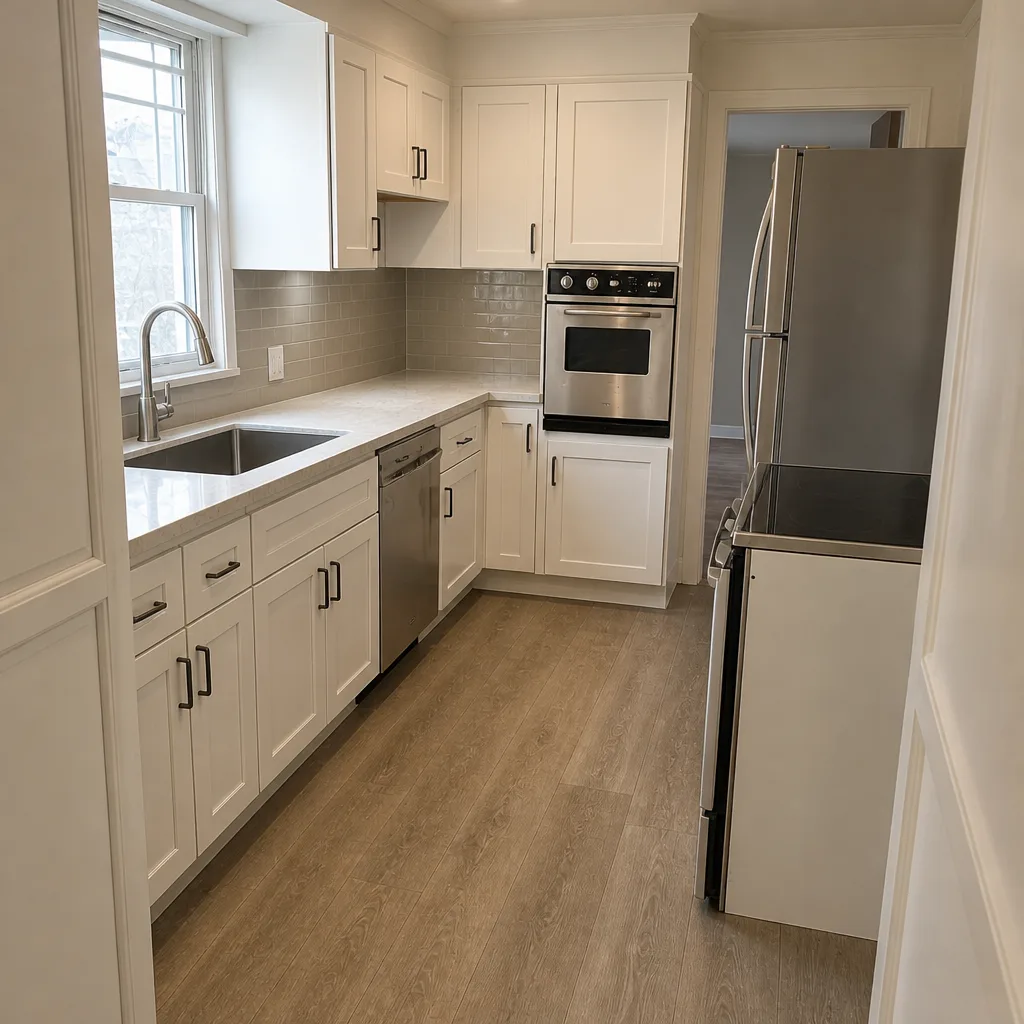
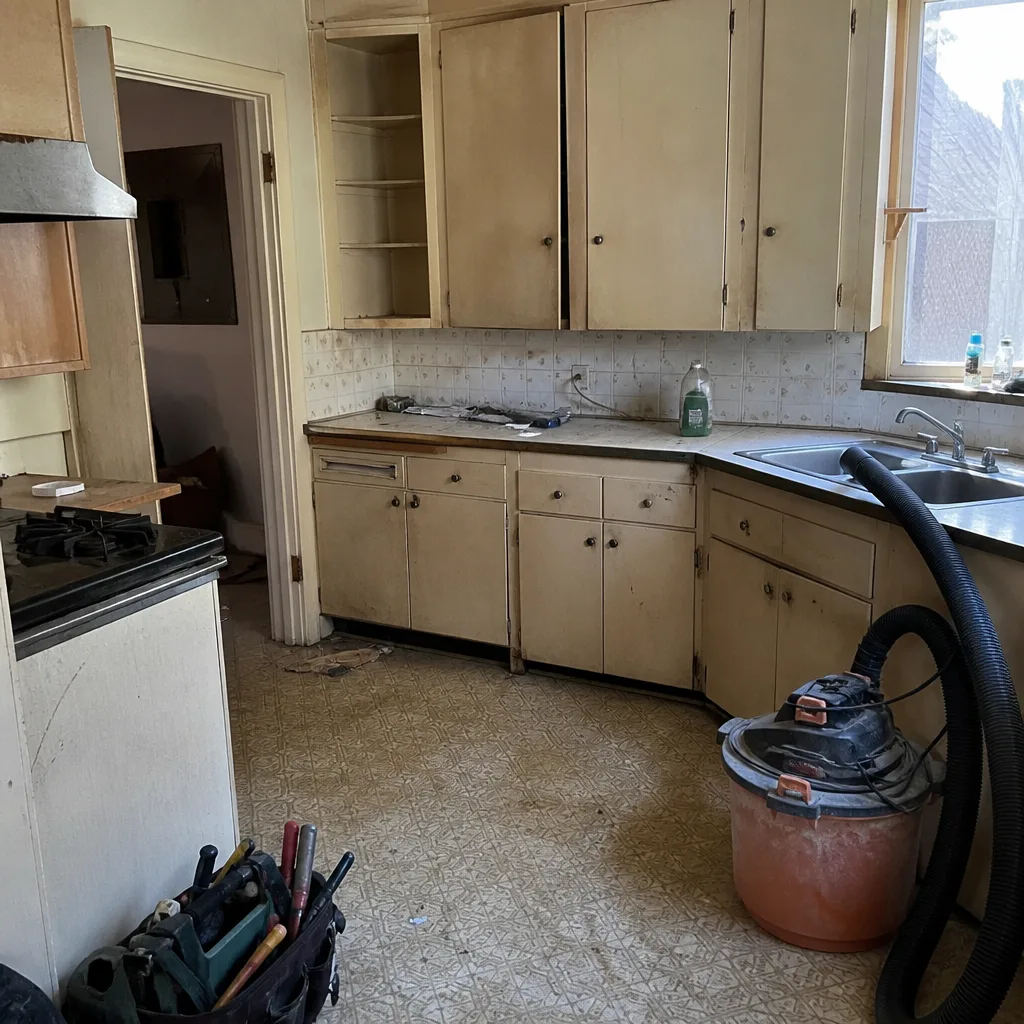
See the difference
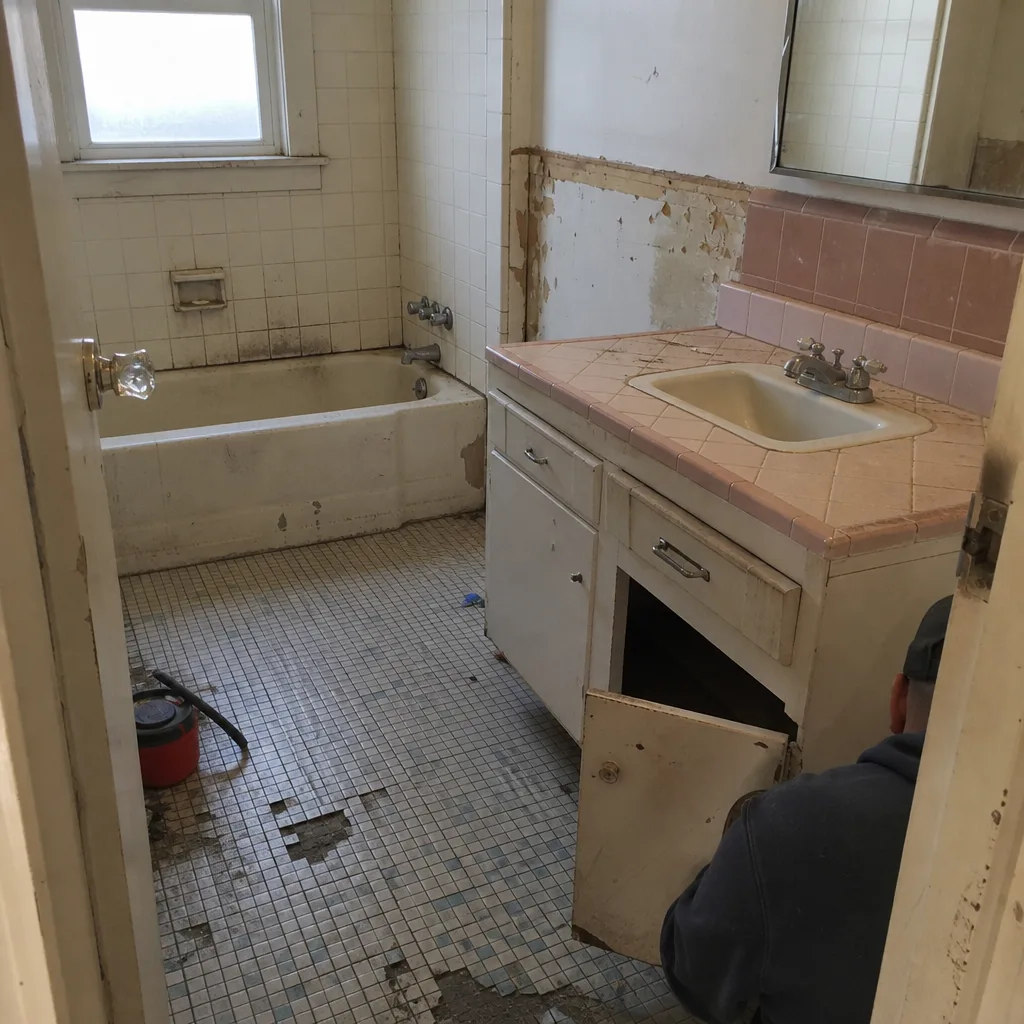 Before
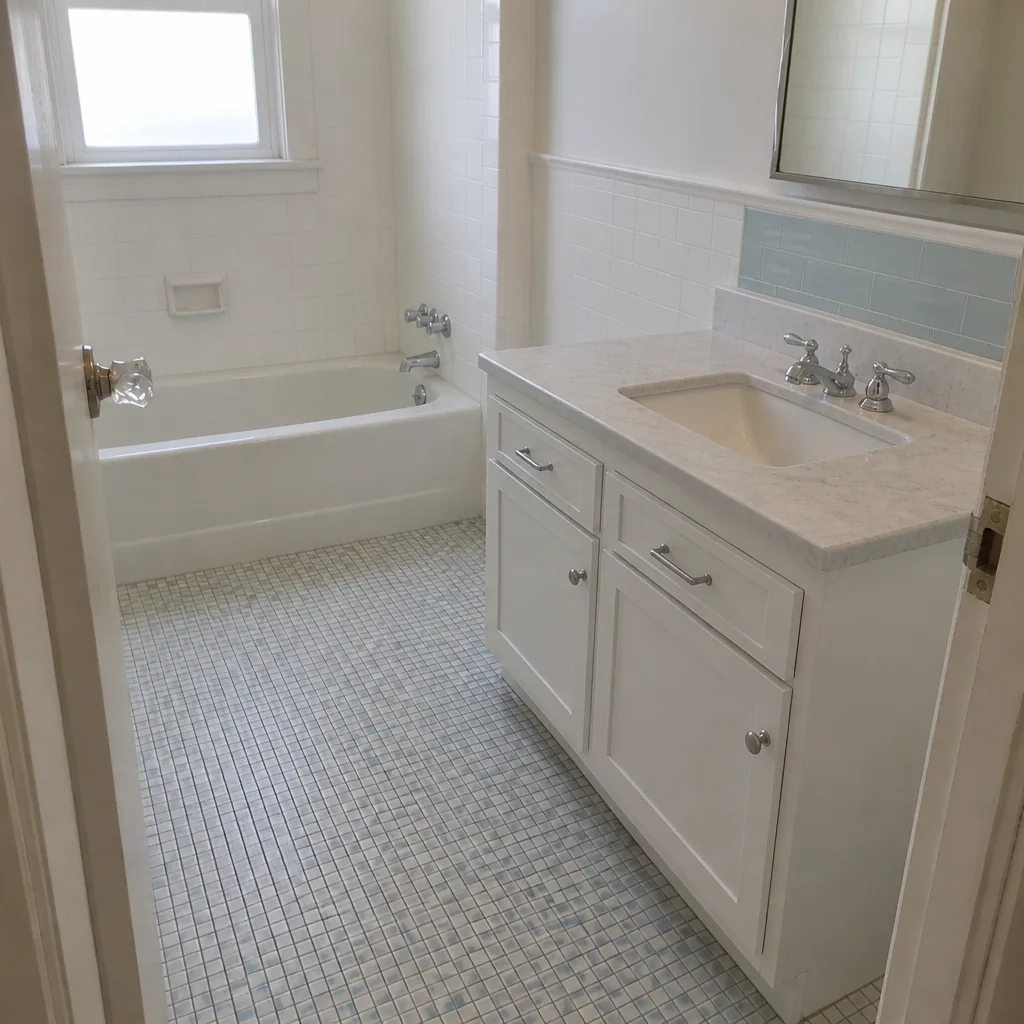 After
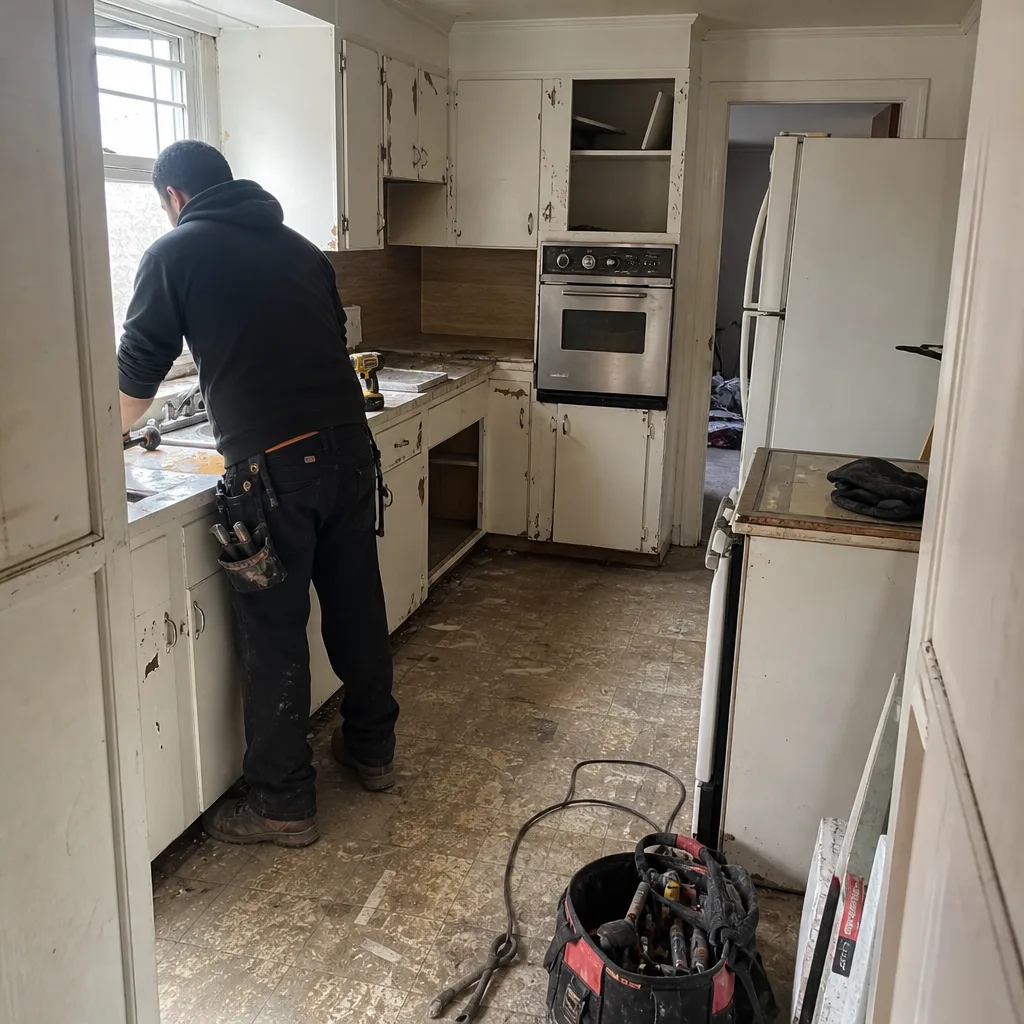 Before
 After
 Before
 After
When to Call a Professional
Call a professional when the symptom is recurring, when it’s spreading, or when it involves anything structural or code-related. Grout cracks that reopen after a repair, cabinet doors racking across more than one box, seams that won’t stay closed, and any question about gas or electrical: those are all calls. The same goes for anything you can’t confidently diagnose on your own. Our technicians have up to 22 years of experience and arrive background-checked and uniformed, so you know exactly who’s coming into your home. We offer free estimates in Oakland and written pricing before any work begins. To schedule a visit, call (888) 403-1237.
Frequently Asked Questions

Sometimes. A single hairline crack in grout is usually a material or cure issue and can be fixed. A crack that follows a straight joint, or that reappears within weeks of a repair, points to substrate flex and needs professional diagnosis. If you’re in an older Oakland home on pier-and-beam, seasonal movement is a common cause. Call (888) 403-1237 and we can help you sort out which you’re looking at.
Look for racking. A door that swings open on its own from a hinge that’s drifted is usually a simple adjustment. A door that won’t sit true because the cabinet box itself is out of square is a workmanship issue. If the cabinet was installed less than a year ago and is racking, call your contractor before you adjust it. If the project was done by us, our 365-Day Done Right Promise covers it in writing.
Workmanship warranty covers how the work was done: substrate prep, cabinet hanging, seam support, ducting. Manufacturer warranty covers the product itself. A Cambria quartz slab carries a manufacturer warranty against material defects, but it doesn’t cover a seam that opened because the substrate wasn’t supported. That’s a workmanship issue. Understanding both is how you know who to call. If you’re not sure, call us at (888) 403-1237 and we can help you figure it out.
It depends on what’s being repaired. A cosmetic grout or caulk repair doesn’t need a permit. Anything that touches framing, electrical, gas, or the ducting for a range hood usually does. A licensed contractor should tell you which side of that line you’re on before any work starts. At Penhallow Remodeling, permits are pulled and inspections passed on every job that requires them, and we write the scope into the price before we start.
Most often the ducting is undersized or the run has too many elbows, which slows the airflow. A hood installed to a duct run that’s too long or too narrow for its rated CFM capacity won’t pull properly no matter how you set the fan. That’s typically a workmanship issue, not a fan problem. Before you buy a bigger hood, have the ducting checked. Call (888) 403-1237 to schedule a look.
Only some of them. Drawer glides, hinge adjustments, and caulk refreshes are reasonable DIY work. Recurring grout cracks, opening countertop seams, and any racking cabinet should be diagnosed first. If the work is under warranty, a DIY repair on a covered defect can make the claim harder to prove. If you’re not sure which category a problem falls in, call us before you touch it.
The Bottom Line
Most kitchen remodeling problems start as a small symptom: a gap, a crack, a door that won’t sit flush. The ones that get expensive are the ones where the symptom got patched without the cause getting diagnosed. Match what you see to what’s actually wrong, document before you touch anything, and know where the workmanship warranty line falls so you know who to call. If you want a kitchen remodel done with a written price before any work starts, a written guarantee at the end, and a real person answering the phone when a question comes up, our team does exactly that. Call (888) 403-1237 for a free estimate.
Contact Penhallow Remodeling Oakland

If you’re troubleshooting a problem in your kitchen, or planning a remodel and want it done right the first time, we’re ready to talk. Our team brings up to 22 years of experience, written pricing before any work, and the 365-Day Done Right Promise on every project. Calls are answered 24/7 by a real person. Call (888) 403-1237 for a free estimate. You can also learn more about our Bathroom Remodeling in Oakland services if you’re considering work in more than one room.
Written by the team at Penhallow Remodeling Oakland.