Last updated November 18, 2026





Free written scope consultation - allowances, timeline, and change-order rules on paper before a single trade is scheduled
Choosing the Right Construction Brand: A Buyer’s Guide for Oakland
Here’s a fact that surprises most homeowners: the engineered hardwood floor that performed beautifully in your contractor’s Walnut Creek showroom can buckle inside 18 months in a Rockridge Craftsman with a vented crawl space. Not because the product is bad. Because nobody specified it for that moisture profile. In Oakland, material selection is a performance-in-context decision, not a brand loyalty one. The marine layer, the seismic movement, and the substrate conditions under older homes eliminate options that work fine in drier markets. This guide walks you through how to read materials, warranties, and installation specs against Oakland’s real conditions: flooring, tile, stone, exterior cladding, paint, and caulk. By the end, you’ll know which questions to ask before you sign a material spec sheet, and why the brand is usually the least important part of the decision.
Quick Answer
In Oakland, the “best” construction material is the one specified for the specific moisture and movement conditions of your home, not the one with the biggest brand name. Three things drive that: the marine layer’s humidity cycling, seismic flexibility requirements for rigid finishes like tile and stone, and the substrate conditions underneath older Oakland housing stock. Get those three right and a mid-tier brand will outperform a premium brand specified wrong every time.
Styles & brands we work with
- Kitchen remodeling
- Bathroom remodeling
- Home additions & ADU
- Roofing
- Windows & doors
- Driveway & pavers
- Fence
Table of Contents
- Why Oakland’s Climate Rewrites the Rulebook
- Flooring: What Performs and What Gets Oversold
- Tile and Stone: Seismic Flexibility and Crack Isolation
- Exterior Cladding and Paint: Specifying for the Marine Layer
- How to Read a Material Warranty Against Oakland’s Climate
- Installation Spec Beats Brand Every Time
- Questions to Ask Your Contractor
- Common Mistakes to Avoid
Why Oakland’s Climate Rewrites the Rulebook
Oakland sits in a moisture band that most product test data doesn’t fully address. The marine layer rolls in from the Bay most summer mornings and burns off by noon, which means the relative humidity in a typical Oakland home swings between roughly 60% and 85% daily during summer, then settles into a wetter, colder pattern from November through March. Add to that the vented crawl spaces found under most pre-1950 bungalows from Rockridge through Temescal, and you get a moisture profile that is genuinely different from the inland East Bay suburbs that many material spec sheets are written around.
Two more things stack on top of the humidity story:
- Seismic movement. The Hayward Fault runs along Oakland’s eastern edge through neighborhoods like Millsmont and the Oakland Hills. That matters for rigid finishes: tile, stone, and anything that doesn’t flex will crack at stress points unless the installation includes the right membranes and movement joints.
- Aging substrate. The housing stock across Fruitvale, West Oakland, and the Dimond District is old enough that original subfloors, framing, and exterior sheathing have been through decades of moisture cycling. What’s underneath the finish matters as much as the finish itself.
So when a homeowner asks us which brand of flooring or siding is “best,” the honest answer is that the question is premature. The first question is what conditions the material will live in. That’s how we approach general contractor work in Oakland: figure out the environment first, then spec the material.
Flooring: What Performs and What Gets Oversold
Flooring is where we see the most money spent on the wrong product. Here’s the honest category-by-category breakdown for Oakland conditions:
- Engineered hardwood (multiply core) over a vented crawl space: This is the sensible choice for most Oakland bungalows, provided you specify a moisture-stable core (not the thin 3-ply variety) and follow a proper vapor barrier and acclimation schedule. The thicker the core, the more dimensional stability it holds through humidity swings. What we see go wrong: a premium brand engineered product specified for a dry climate, installed without a vapor barrier, buckling at 18 months. The brand wasn’t the problem. The spec was.
- Solid hardwood: Beautiful in the right home. In a vented-crawl-space bungalow with daily humidity swings, solid oak or maple will cup, gap, and telegraph movement at every seam. It can work in a home with a conditioned crawl space and stable indoor humidity. It rarely works over an unconditioned vented one.
- Luxury vinyl plank (LVP): Genuinely good in Oakland bathrooms, laundry rooms, and ground-level rooms where moisture is more variable. Oversold when a salesperson uses it as a swap for hardwood in a living room where dimensional stability was never the actual issue.
- Large-format porcelain tile: Excellent in kitchens and entries in older Oakland homes because it tolerates moisture cycling. The failure point isn’t the tile; it’s the substrate underneath. See the tile section below.
One more note on what gets oversold in the local market: laminate flooring with a high “water-resistant” rating. It’s fine in a powder room. It’s not fine in a Rockridge kitchen with a dishwasher leak you don’t find for three days. For actual kitchen and bathroom remodels, we generally push homeowners toward tile, LVP, or a properly-specified engineered product. For an expanded look at how we sequence these decisions inside a kitchen remodeling project in Oakland, that page breaks the material workflow down step by step.
Tile and Stone: Seismic Flexibility and Crack Isolation
Tile and stone are the categories where the material selection question is most often answered correctly while the installation specification quietly ruins the job. Rigid finishes in Oakland need three things in the install spec that a homeowner rarely sees on the bid:
- A crack-isolation membrane (an uncoupling layer between the tile and the substrate that absorbs small movements so the tile doesn’t take the stress). In an older Oakland home, especially over a wood-framed floor or a slab with original control joints, most tile manufacturers will require one to honor their warranty. Ask if the bid includes it.
- Movement joints at the perimeter, over any substrate change, and at the intervals the manufacturer specifies (often every 20 – 25 feet indoors, more often outdoors). These are not “expansion joints you can skip.” They’re a warranty condition.
- The right mortar and substrate for the tile format. Large-format porcelain (anything over 15 inches) needs a modified thinset rated for it and a flat substrate, not a spot-bonded install. Stone needs a substrate with no movement at all under it, or you’ll get hairline cracks along veining within a year.
In our experience across Oakland bathrooms and kitchens, the Houston-style open-web truss floor assemblies you’ll find in newer East Oakland builds and the solid-dimension framing under pre-war homes behave completely differently under tile. A tile that would be a lifetime install on one floor assembly is a three-year crack problem on another. The tile brand is rarely the variable. The substrate and membrane system is.
For a deeper look at how tile and stone get sequenced inside an Oakland bathroom, the bathroom remodeling service in Oakland page walks through the waterproofing and substrate steps that protect the finish.
Exterior Cladding and Paint: Specifying for the Marine Layer
Cladding
Oakland’s exterior walls take a specific beating: high morning humidity from the marine layer, then UV exposure on clear afternoons, then rain from November through March, in a repeating cycle that fails poorly-installed materials at their seams and fasteners before the field of the material itself. Fiber cement siding (from established brands like James Hardie, GAF’s siding lines, or CertainTeed) performs well here because it doesn’t swell or rot at the exposure, provided the install follows the manufacturer’s clearance requirements (typically 6 inches above grade, 1 – 2 inches from roof-to-wall transitions) and the fasteners are the specified corrosion-resistant type. The failure we see most often isn’t the siding. It’s the lack of a properly lapped weather-resistive barrier behind it, or fasteners that were “close enough” from a generic box.
Wood siding can be beautiful in the right Oakland home, but only with a maintenance schedule that matches the exposure: annual inspection and touch-up, full repaint on a 5 – 7 year cycle in the more exposed Hills neighborhoods. Skipping that schedule is what turns a wood-sided home into a re-sheathing job.
Paint and Caulk
This is where the “premium” label actively misleads people. On the marine-layer side of Oakland, the two specs that determine whether paint lasts 3 years or 10 are sheen level and substrate prep. Here’s what that means in plain terms:
- Sheen level: Satin or low-lustre on the body of the house, semi-gloss on trim. Flat exterior paint is for dry climates and covered porches. On a west-facing Oakland wall it chalks and fades fast. Higher sheen resists moisture penetration and cleans up better, which matters on north-facing walls that stay damp longer.
- Substrate prep: The single biggest factor. Paint manufacturers specify surface prep for warranty eligibility: washing, sanding, priming bare wood, feathering failed edges. A “premium” paint over poorly-prepped siding will fail at the same rate as a mid-tier paint. Ask what prep steps are in the bid, not what paint brand.
- Caulk: Use a paintable elastomeric or siliconized acrylic caulk rated for exterior use, not a basic painter’s caulk. The joints on an Oakland home move seasonally; a rigid caulk will crack at the joint over one winter.
If the exterior is being opened up for a larger project, that’s the moment to get this right. A full Penhallow Remodeling Oakland home remodel that touches the exterior envelope is the right time to correct the weather barrier and flashing.
How to Read a Material Warranty Against Oakland’s Climate
Material warranties are written for a national market, which means they use language that quietly carves out Oakland’s actual conditions. Three phrases to look for and what they mean for your project:
- “Interior use only”: Sounds obvious. What it actually excludes is exposure to elevated humidity, which many manufacturers define as anything above a specific relative-humidity threshold. A product labeled interior-only is disqualified for a bathroom, laundry room, or a ground-floor room over a vented crawl space where humidity climbs higher than the manufacturer’s threshold. Read the fine print before you assume an “interior” flooring product is a fit for your Oakland bathroom.
- “Below-grade exclusion”: This appears on a lot of tile, stone, and engineered flooring warranties. It means the product isn’t warranted for use below the grade line, which is a problem in Oakland homes with finished basements or daylight-basement conversions in the Hills and Rockridge. If your project involves a below-grade room, this clause matters.
- “Substrate preparation required”: This phrase is the manufacturer’s warranty trigger. It means the warranty is conditional on you (or your installer) following a specific prep spec (moisture content, flatness tolerance, primer, membrane). If the spec isn’t met, the warranty is void, whether or not the product itself is defective. This is why “which brand” is often the wrong question: the warranty you’re paying for is conditional on the installation, not the label.
Ask your contractor for the actual manufacturer warranty document (not a marketing summary) before approving a material spec, and have them highlight the clauses that apply to your room’s conditions. A tireless concern for the fine print is one of the few places where premium price is genuinely justified.
Installation Spec Beats Brand Every Time
Here’s the ranking of what actually determines whether a material holds up in an Oakland home, in order of impact:
- Moisture assessment and control. Was the crawl space vapor barrier corrected? Was the substrate moisture content measured before install? Was the material acclimated to the space? These three steps decide more outcomes than the brand ever will.
- Substrate preparation. The flatness tolerance, the primer, the membrane, the fasteners. If any of these are skipped, the finish fails regardless of label.
- Installation sequencing. Material staged at the site (not delivered the morning of), installed in the specified ambient conditions, protected after install. A premium product installed in the wrong sequence fails as fast as a budget one.
- The product itself. Yes, it matters. It’s just fourth on the list, not first. A well-specified mid-tier product will outperform a poorly-specified premium one every single time.
This is why we put a written price and a written installation specification in front of every homeowner before the first cabinet is pulled or the first tile is set. The number on day one is the number on the invoice because the specification was locked down first. That’s part of The Kingswell Way: say the price before the work, show up in the window we gave, leave the place cleaner than we found it.
Questions to Ask Your Contractor
Any one of these questions will tell you more about whether your material selection is right than the brand name on the box:
- How did you measure the moisture content of the substrate, and what were the readings?
- What crack-isolation membrane and movement-joint layout are you specifying, and why?
- Which manufacturer warranty document will you provide me with, and which exclusions apply to my room’s conditions?
- What’s the acclimation schedule for the material, and where will it be staged?
- Which caulk and paint sheen are you specifying on each exterior elevation, and why?
- If something fails within a year, what does your warranty cover and who returns to fix it?
Our answer to that last question is the 365-Day Done Right Promise: if the work fails inside the guarantee period, we come back and fix it at no charge, and it’s covered in writing on every project. Materials from recognized trade brands (KraftMaid and Wellborn cabinetry, Cambria, Silestone and Caesarstone countertops, Kohler and Moen fixtures, James Hardie siding) give us a strong base, but the guarantee is what we’re actually selling. You can reach us on the phone any hour, and a live person answers.
Common Mistakes to Avoid
- Specifying by brand instead of by condition. Choosing the same flooring your neighbor installed in their Walnut Creek new build for your Rockridge bungalow ignores the moisture and substrate differences that decide the outcome.
- Skipping the crawl space vapor barrier before the flooring goes down. No flooring product on the market will hold its dimensional stability over an open, wet crawl space. Correct the moisture control first.
- Assuming “waterproof” means waterproof in your room. “Water-resistant” laminate and most “waterproof” LVP products have use limitations (temperature swings, standing water, room-specific exclusions) that will void the warranty in an Oakland bathroom if you assumed the marketing language was the warranty language.
- Not asking for the tile crack-isolation membrane in writing. In our experience, this is the single most-skipped line on a tile bid, and it’s the one that voids the tile manufacturer’s warranty in a seismically active state like California.
- Buying “premium” paint without specifying sheen and prep. The label is not the guarantee. Prep steps are.
- Reading the warranty summary, not the warranty document. Marketing summaries of material warranties leave out the exclusions (below-grade, interior-only, substrate prep) that actually determine whether you’re covered.
- Approving a verbal ballpark instead of a written spec and written price. A verbal ballpark gives you nothing to hold the contractor to when the material fails, or when the invoice comes in higher than the estimate.
See the difference
 Before
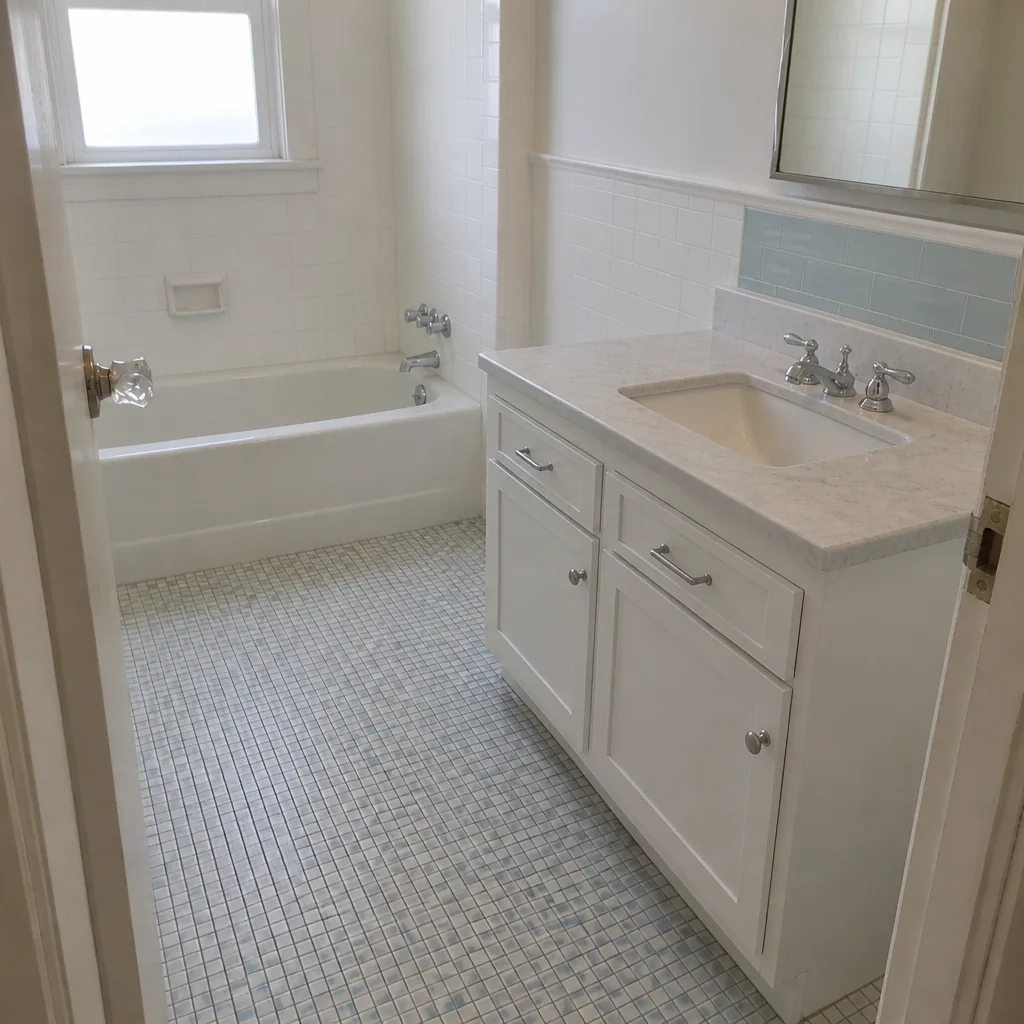 After
 Before
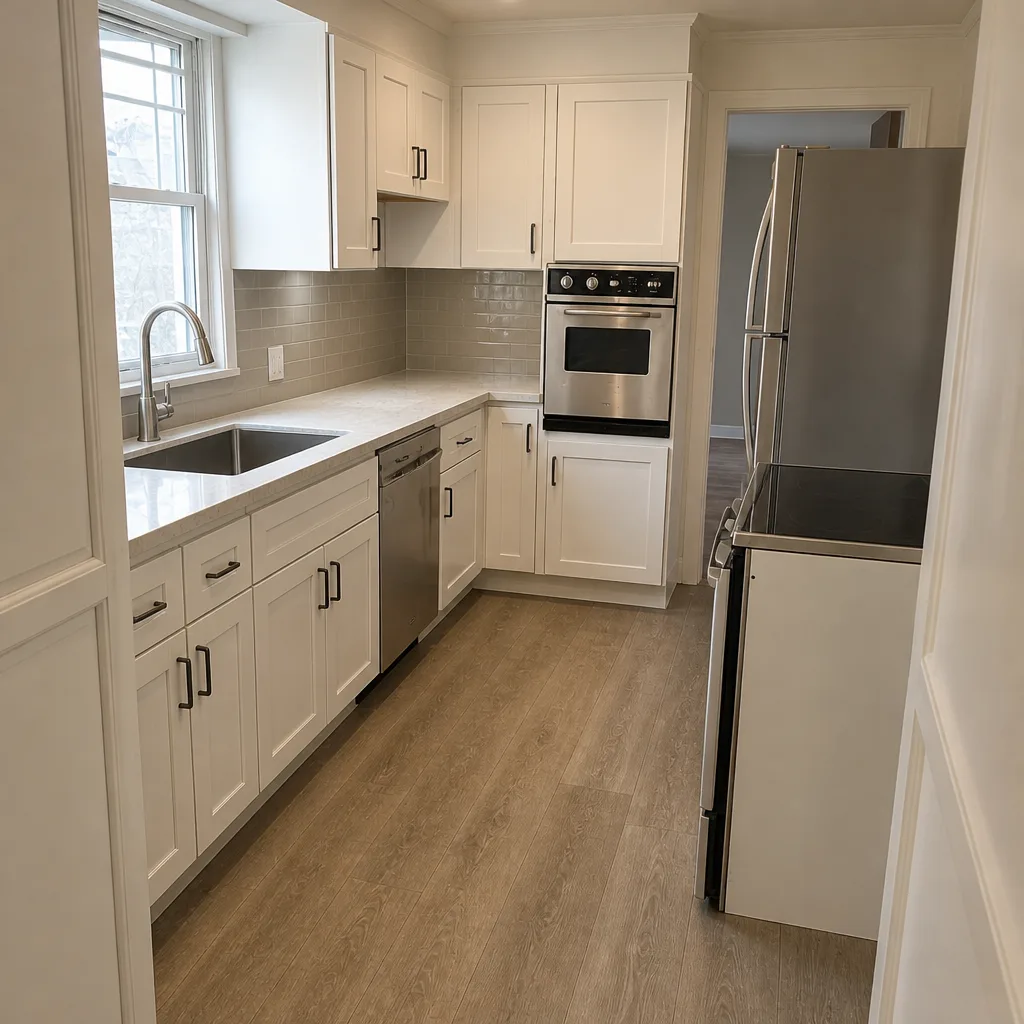 After
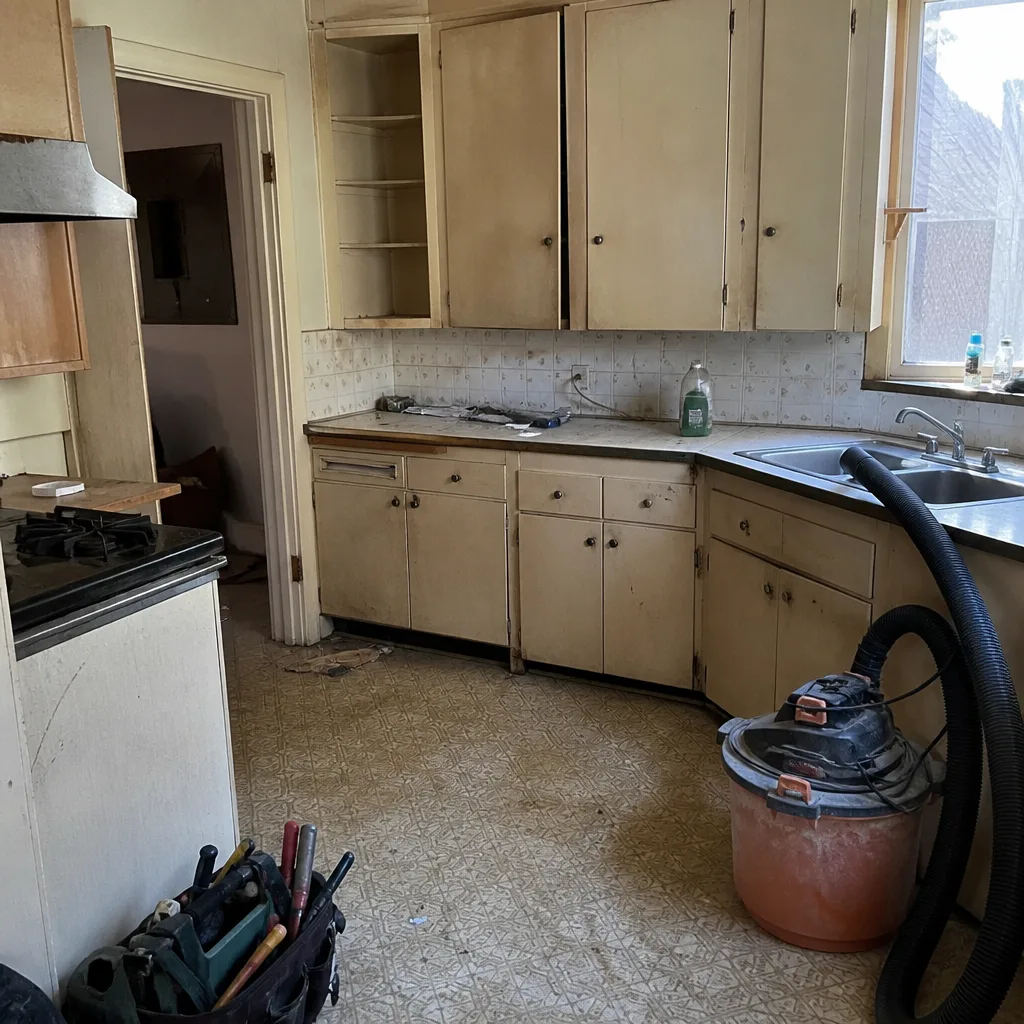 Before
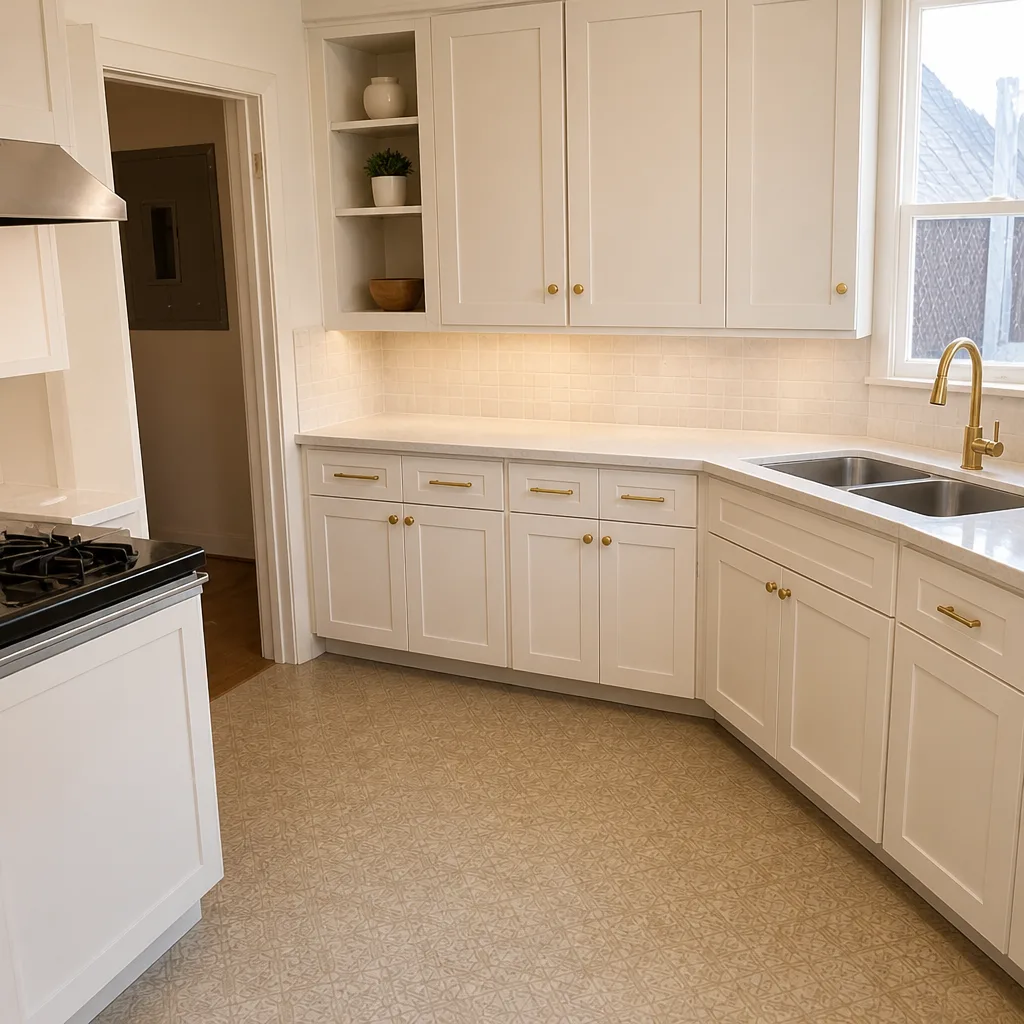 After
When to Call a Professional
Material specification without a professional read is genuinely risky in Oakland, and not just because it’s technical. It’s because the moisture profile of a specific home (not the neighborhood, not the zip code, the home) has to be measured before a material is specified for it. If you’re looking at a bathroom, kitchen, or whole-home remodel, if the crawl space is vented and unlined, if the home was built before 1950, or if the exterior envelope is going to be opened up for any reason, that’s the moment to bring in a professional assessment. Trying to correct substrate conditions mid-install, after you’ve already purchased materials and demo is complete, is where the cost blows up. Penhallow Remodeling Oakland offers free estimates in Oakland. Call (888) 403-1237 to schedule yours, and we’ll write down the price and the specification before anything else moves.
Frequently Asked Questions
Kitchen remodels in Oakland typically run $55,000 – $120,000 depending on the cabinet line (KraftMaid or Wellborn are our standard range; premium custom lines push above that), countertop material (Cambria quartz versus Silestone or Caesarstone), and whether the layout changes require plumbing or electrical relocation. Bathroom remodels typically run $28,000 – $60,000 depending on tile rate, fixture selection (Kohler and Moen are standard), and whether the substrate has to be replaced. The two factors that shift the number most are the state of the substrate underneath and whether the room is being reconfigured. Call (888) 403-1237 for an exact quote; estimates are free and we put the written price in your hand before work starts.
Only if the premium brand’s specification matches your home’s conditions. In our experience, a mid-tier tile installed over a proper crack-isolation membrane in an older Oakland home will outlast a premium tile installed without one, every time. Spend the money on the system, not the label. Call (888) 403-1237 if you want a second opinion on a spec.
Yes, in nearly all tile and stone installations over wood-framed floors and over slabs with original control joints. Oakland’s Hayward Fault proximity means small seismic movements are a real condition, and most manufacturers require a membrane and movement joints to honor their warranty in California. Skip it and the tile manufacturer’s warranty is void.
Satin or low-lustre on the body of the house and semi-gloss on the trim. Flat paint on an exposed Oakland elevation will chalk and fade faster under UV than higher-sheen options, and it doesn’t clean up as well on north-facing walls that stay damp longer.
Not with us. Every homeowner receives a written price before any work starts, so the number on day one is the number on the invoice. If a change order is genuinely required because a hidden condition surfaces after demo, it gets written up and approved before work continues. Call (888) 403-1237 to get your written price.
Yes. Oakland projects that touch structural, plumbing, electrical, or envelope work require permits and inspections, and we pull them and pass inspections as part of the job. Skipping the permit on a bathroom or kitchen project is the kind of thing that surfaces at resale and gets expensive fast.
A bathroom remodel typically runs 4 – 6 weeks. A kitchen remodel typically runs 8 – 12 weeks. Whole-home remodels run longer, depending on scope and permit timelines. We put a written schedule in your hands before the first day on site so you’re not guessing.
The Bottom Line

Material selection in Oakland is a performance decision, not a brand decision. The best material for your home is the one specified for your home’s actual moisture profile, movement conditions, and substrate state. That’s what determines whether the finish holds for 20 years or fails in 18 months. Read the warranty document, not the summary. Ask about the membrane and the moisture assessment. Demand a written installation specification before you approve a material. And if you want the whole thing evaluated by someone who’s specified materials in Oakland housing stock for years, call (888) 403-1237 for a free estimate. We’ll write down the price and the spec before anything moves, and we back it with the 365-Day Done Right Promise.
Written by the team at Penhallow Remodeling Oakland.