
Last updated November 18, 2026








Free written scope consultation - allowances, timeline, and change-order rules on paper before a single trade is scheduled
Bathroom Remodeling Troubleshooting: Common Problems and How to Fix Them
A hairline crack in the grout along a tub surround in the first year isn’t necessarily bad workmanship. Tile moves, substrates settle, and houses flex. But that same crack coming back after a repair, or a faint brown ring appearing on the ceiling below your bathroom, is a waterproofing failure, and it gets more expensive every month you wait. Most of the trouble we see in Oakland bathrooms clusters into two windows: right after demo, when hidden conditions show themselves, and six to eighteen months after the last tile goes up, when water finds its way. This guide walks you through how to tell normal settling from genuine defective work, what to do about a rocking vanity or a weak exhaust fan, and how to document a problem so a warranty claim holds up.
Quick Answer
Most post-renovation bathroom problems fall into two groups: settling issues (minor grout cracks, a slight tile lip) that are usually cosmetic and fixable, and installation failures (recurring cracks, water staining, efflorescence, a toilet rocking on a soft floor) that point to defective waterproofing or substrate and need a professional return visit. The test is recurrence and moisture: if a problem comes back after repair or shows up as dampness, it’s not settling.
Styles & brands we work with
- Kitchen remodeling
- Bathroom remodeling
- Home additions & ADU
- Roofing
- Windows & doors
- Driveway & pavers
- Fence
Table of Contents
- Normal Settling vs. Waterproofing Failure
- Visual Tests You Can Do Yourself
- When a Vanity or Toilet Starts Rocking
- Exhaust Fan Performance Problems
- Hidden Conditions Found After Demo
- Documenting a Warranty Claim
- When It’s Really a Building Problem
- Common Mistakes to Avoid
Normal Settling vs. Waterproofing Failure
Tile assemblies are built in layers: framing, then cement board substrate (the moisture-resistant layer behind your tile), then a waterproofing membrane, then thin-set, then tile. Each layer moves at a slightly different rate as a house goes through its first heating and cooling cycles after construction. That differential movement shows up as hairline grout cracks, especially at inside corners and where wall meets floor. This is normal, and in many cases we re-grout with a flexible sealant and the joint stays put.
What isn’t normal is a crack that returns to the same spot within weeks of a repair, or a crack accompanied by one of these signals:
- Dark or discolored grout lines that stay dark even after cleaning
- A chalky white crust (efflorescence) on grout or stone, which is salt pushed out by moisture moving through the assembly
- Soft spots or bubbling paint on the ceiling directly below the bathroom
- A musty smell that doesn’t clear with ventilation
- Tile that sounds hollow when you tap it, especially around a drain or valve
Any one of those points to water getting behind the tile, which means the waterproofing layer was installed incorrectly, breached, or skipped. Oakland’s older housing stock, much of it built before modern waterproofing standards, makes this a frequent call. Recurring cracks and moisture staining are not settling. They get worse.
Visual Tests You Can Do Yourself
You don’t need to pull tile to gather useful information. A few simple checks tell you whether to relax or call.
- The tap test. Tap along the wall tile with the handle of a screwdriver, moving in a grid. A solid, dull thud means tile is bonded to substrate. A hollow ring means a void behind the tile, which can mean a failed thin-set bond or water damage.
- The corner-and-caulk check. Look at the inside corners and the joint where wall meets tub or floor. Those should be sealed with a flexible sealant, not rigid grout. Rigid grout there cracks as the assembly moves.
- The drain-pan test (visually, not by flooding). Look at the grout and caulk immediately around the shower drain. Cracking or separation there lets water straight into the pan. If you spot it, stop using the shower until it’s inspected.
- The drywall-and-ceiling check. On the wall or ceiling below the bathroom, look for a water ring, bubbling paint, or a soft spot. Press gently. Any give means moisture has traveled.
- The smell test. A persistent musty odor in a bathroom that’s cleaned regularly is a moisture signal, not a cleaning problem.
Write down what you find and where. That record is the start of the documentation you’ll want if you file a claim.
When a Vanity or Toilet Starts Rocking
A rocking toilet or a vanity that shifts when you lean on it is one of the most common calls six to twelve months after a remodel. The fix depends on the cause, and the cause matters for whether it’s covered.
A toilet rocks for two reasons: the flange (the collar the toilet bolts to, set into the floor) is set too high or too low, or the subfloor underneath has softened. A vanity rocks because it wasn’t shimmed and anchored to the wall studs, or because the floor isn’t level, common in older Oakland homes where floors have settled.
Here’s the sequence a trained crew uses:
- Pull the toilet or detach the vanity so you can see the flange and floor.
- Check the subfloor for softness by pressing and probing. If it’s soft, the cause is water damage and the repair is larger than a re-shim.
- If the floor is sound, re-set the fixture on new shims, re-secure it to the wall studs or flange, and re-caulk the base with a flexible sealant.
- Verify no wobble over a week of normal use.
Is it a workmanship issue? Usually yes, if the fixture was improperly anchored at install. That’s exactly the kind of thing a written guarantee should cover. Under the Penhallow Remodeling Oakland home standard, we return and fix faulty anchoring at no charge, and the free return visit applies if a repair fails.
Exhaust Fan Performance Problems
A bathroom that fogs up even with the fan running has a duct problem, not usually a fan problem. The fan is rated in CFM (cubic feet per minute of air moved), and the duct has to match it. A common mistake is connecting a fan rated well above the duct’s capacity, or running the duct a long, bendy route that kills airflow.
How to tell if the duct was run correctly:
- Listen and feel. A correctly ducted fan has steady suction. Hold a tissue to the grille; it should pull and hold. Weak pull means restricted airflow.
- Check where the air goes. Duct should terminate at the roof or an exterior wall, never in the attic. If moisture is dumped into an attic, you get condensation and eventually rot.
- Count the route. Long runs with sharp elbows, or flexible duct bunched and sagging, cut airflow dramatically. Rigid or semi-rigid duct with gentle elbows and the shortest possible run performs best.
- Look for backdraft. A flapper or damper that sticks open lets cold, damp air back in. The damper should close when the fan is off.
Oakland’s mild, damp winters make this matter more than people expect. A bathroom that stays humid after a shower grows mold in corners within months, and that’s a problem the fan should have solved.
Hidden Conditions Found After Demo
The moment tile comes off and the old vanity is pulled, surprises appear. This is normal even on well-planned jobs. Knowing which ones are normal and which change the price helps you respond calmly.
Common post-demo finds in Oakland bathrooms:
- Water damage in the subfloor around the toilet or tub, sometimes rot that wasn’t visible before
- No waterproofing layer at all behind old tile, common in bathrooms built before membrane standards
- Out-of-square framing or floors out of level from decades of settling
- Old galvanized or polybutylene supply lines that should be replaced while the wall is open
- A surprise tee or drain line that forces a layout adjustment
Here’s the key principle: a written price before work starts means those surprises are handled as change orders you approve in writing, not as vague additions to the invoice at the end. Legitimate hidden conditions are a line-item you sign off on, with the price stated before the work is done. If a contractor hands you a large, unexplained bill after demo, that’s the difference between a written price and a verbal estimate that changed at the door. When you’re planning ahead, the Bathroom Remodeling in Oakland page lays out what a proper pre-demo walk-through covers.
Documenting a Warranty Claim
If a genuine defect shows up, the strength of your claim comes down to documentation. The homeowners who get a fast resolution are the ones who gathered evidence early. Here’s what gives you the strongest position.
- Photographs, dated. Take wide shots showing the whole area, then close-ups of the specific problem. Include a common object for scale. Note the date and the time.
- A written notice to the contractor. Email or a written letter is better than a phone call, because it creates a record. Describe the problem, when you first noticed it, and what you’ve observed since.
- A timeline. When was the work completed? When did the problem first appear? When did it recur after a repair? Write it down in order.
- Keep your paperwork. The written price, the written guarantee, and any change orders. The guarantee is what defines what’s covered and for how long.
- Don’t attempt a repair yourself. Pulling tile or re-caulking a failed joint before the contractor sees it can complicate the claim.
Under the 365-Day Done Right Promise, if the work fails inside the guarantee period, we come back and fix it at no charge, and there’s no re-inspection fee. The point of a written timeline and photos is to make that process move quickly instead of turning into a he-said-she-said.
When It’s Really a Building Problem
Some bathroom problems aren’t bathroom problems. They’re symptoms of something in the structure that a remodeling contractor can’t cure, and knowing the difference saves you money and time.
Watch for these signals that point outside the bathroom:
- Repeating cracks at the same wall or floor line across a room suggest foundation movement. A bathroom remodel won’t fix a moving foundation, and re-tiling it just masks the problem. That’s a structural or foundation specialist’s job.
- Water stains spreading down a ceiling or wall from above point to a roof leak or a plumbing leak in the story above. Pouring money into a bathroom ceiling that keeps getting wet is wasted until the source is found.
- A persistent damp smell with no bathroom source can trace to a crawl space or a slab moisture issue, which means the fix lives in the building envelope, not the vanity.
When we walk a job and find one of these, we say so plainly and recommend the right specialist. Referral to a different trade costs us a job and keeps you from spending five figures redoing a bathroom over a problem that will simply come back.
Common Mistakes to Avoid
- Ignoring a returning crack. A grout crack that gets re-grouted once and returns is a moisture signal. Re-grouting it a second time without investigating the cause hides the problem until the subfloor rots.
- Caulking over a wet joint. Sealing a damp corner traps moisture behind the caulk and speeds up the damage. The joint needs to be dry first, which usually means fixing the leak.
- Assuming a rocking toilet is cosmetic. A wobble means a broken seal at the base, and every flush pushes water toward the subfloor. Left long enough, the floor turns soft.
- Venting a fan into the attic. A common shortcut that dumps moisture into a cold space. In Oakland’s damp months this leads to condensation, mold, and eventually rot. The duct must go outside.
- Treating a written estimate like a written price. They aren’t the same. One is a range; the other is a number you can hold the contractor to. Ask which one you’re getting.
- Repairing a bathroom over a live building problem. Re-tiling a wall with a foundation crack or a roof leak above only repeats the failure. Find the true source first.
See the difference
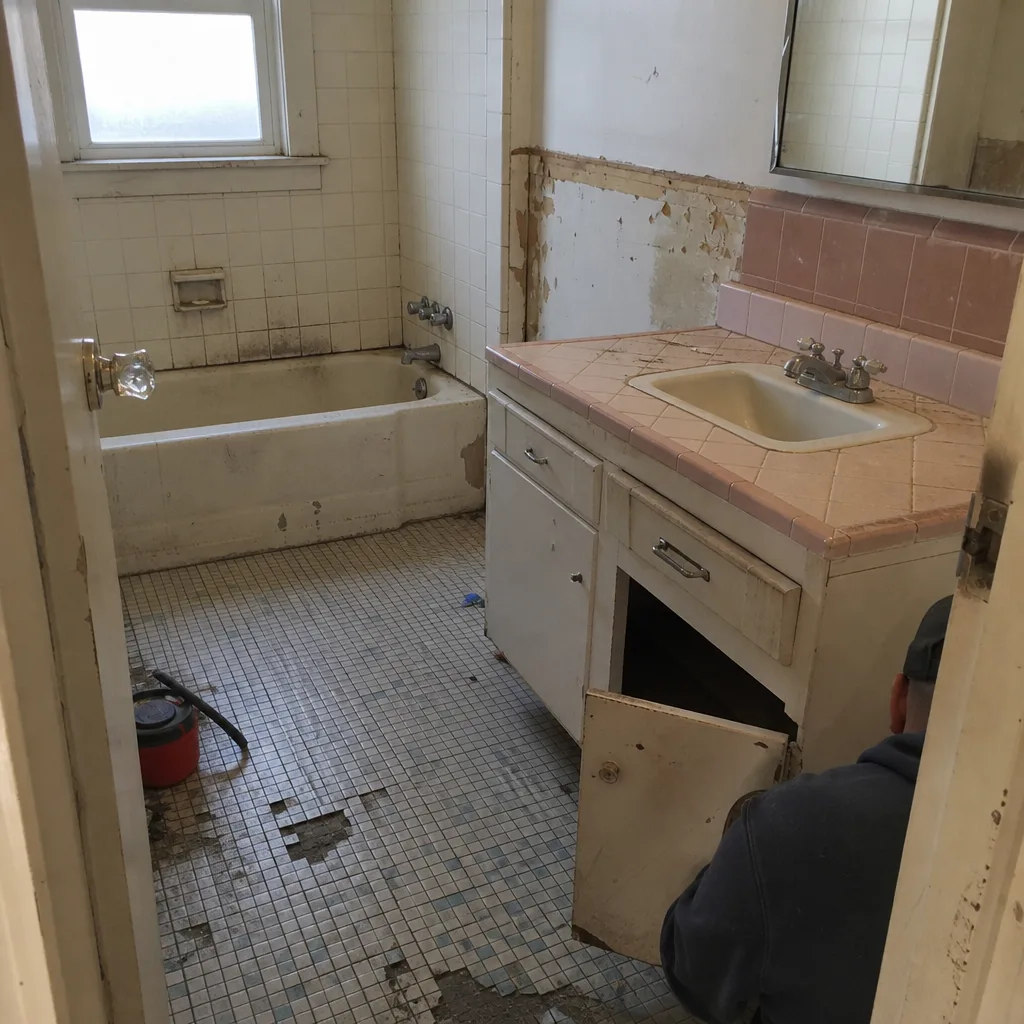 Before
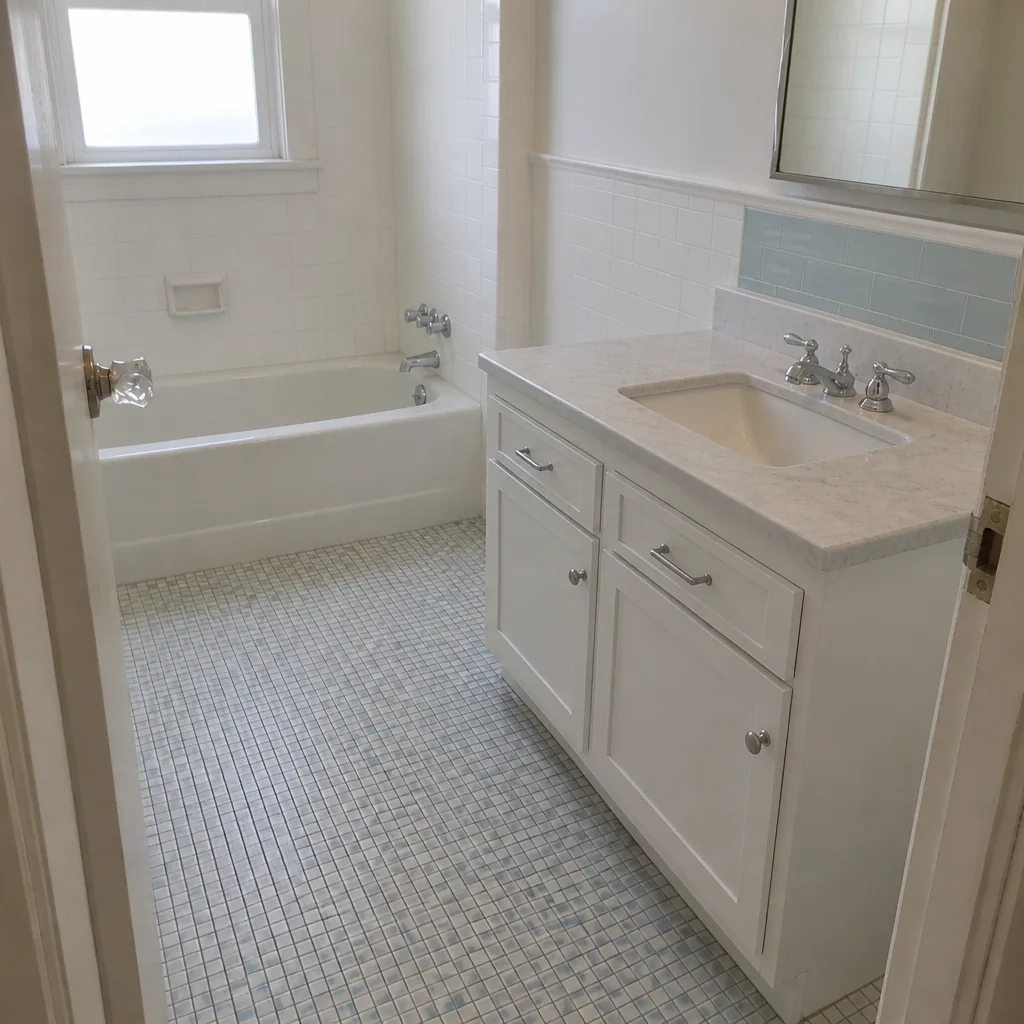 After
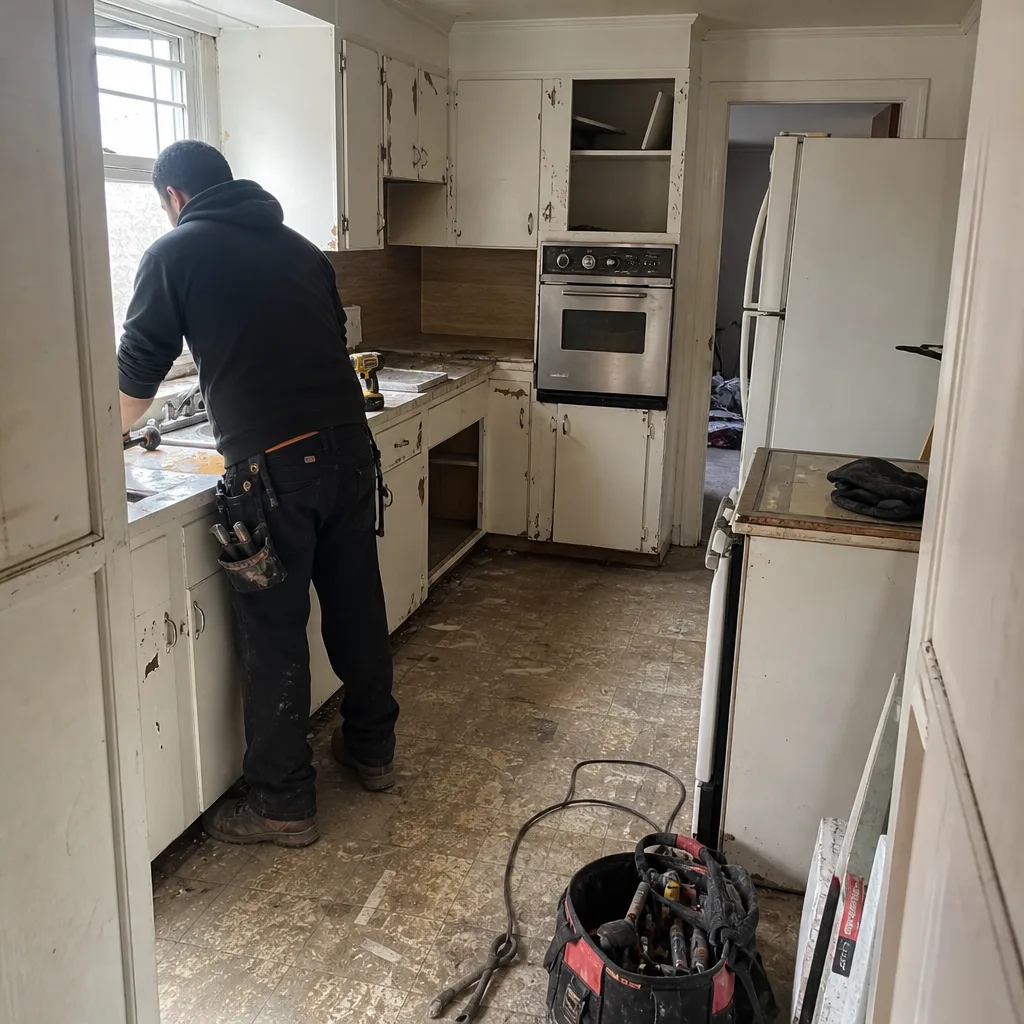 Before
 After
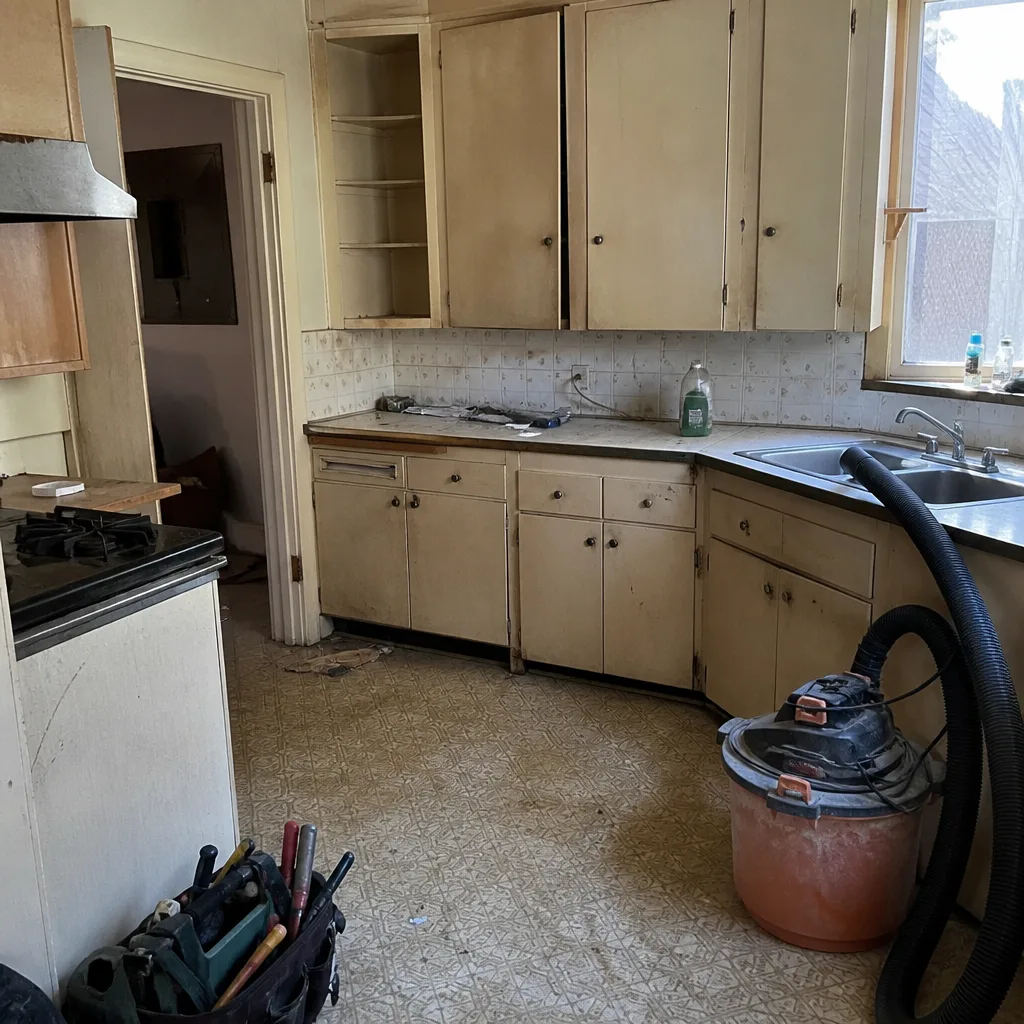 Before
 After
When to Call a Professional
Call a professional when you can’t tell normal settling from a failure, when a problem returns after a repair, or when you see moisture signs like ceiling staining or efflorescence. Also call if a toilet or vanity won’t stay put after one attempt to reseat it, if a fan’s duct runs into an attic, or if a structural signal shows up (cracks across a room, leaks from above). These aren’t tasks to solve by trial and error – each month a moisture problem sits, the repair gets larger. Penhallow Remodeling Oakland offers free estimates in Oakland – call (888) 403-1237, and a real person answers, including outside business hours. We’ll tell you honestly whether it’s a workmanship issue to fix, or a building problem that needs a different trade.
Frequently Asked Questions
A single hairline crack that appears in the first year and stays put is usually normal settling as the assembly moves, but a crack that returns after repair or shows up with moisture staining is a waterproofing failure. Either way, don’t ignore it – photograph it, note the date, and call us for a free look.
A rocking fixture is usually a workmanship issue that counts as a fixable anchoring mistake, so it’s generally covered under a written guarantee that includes a return visit. We document everything up front so the coverage is clear from day one; call (888) 403-1237 and we’ll walk through what your guarantee covers.
Humidity with the fan running almost always means the duct was undersized, run too long, or terminated in the attic instead of outside. The fan can’t move air it can’t exhaust. A quick inspection of the duct route tells you whether it needs re-running – estimates are free.
Repeating cracks at the same wall or floor line point to foundation movement, and leaks from above point to a roof or plumbing source; both are outside the bathroom. In those cases the fix belongs to a structural, roof, or plumbing specialist, not a remodeling contractor.
Once a claim is documented and approved, the repair is scheduled with a defined arrival window, not an open-ended callback. Gathering photos and a written timeline speeds it up, and there’s no re-inspection fee or service call fee on a covered return visit.
Take dated wide shots of the whole area and close-ups of the specific problem, include a scaling object, and record where and when it first appeared. Keep your written price and written guarantee together with the photos – that bundle gives you the strongest position for a fast resolution.
The Bottom Line
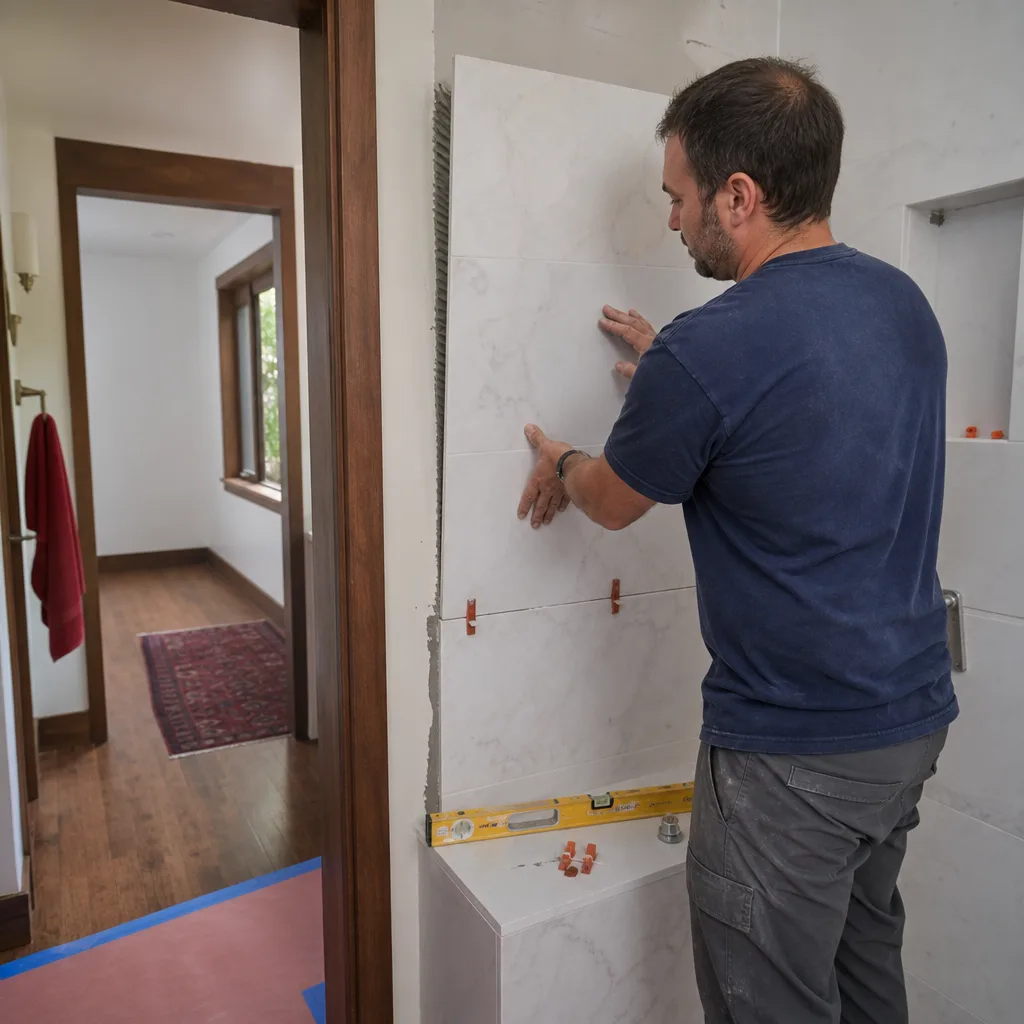
Bathroom remodel problems fall into two piles: the normal settling that tile assemblies do in their first year, and genuine waterproofing or installation failures that get worse. You can tell them apart with a few simple checks – the tap test, the corner-and-caulk look, the ceiling-below check – and by watching for moisture signs like efflorescence or staining. Document what you find, keep your written price and written guarantee, and don’t re-caulk over a wet joint. If the problem returns or a building structural signal shows up, get a trained eye on it before you spend another dollar. A written price up front and a written 365-day promise are what make a problem fixable.
If your bathroom is showing any of these signs, call Penhallow Remodeling Oakland at (888) 403-1237 to schedule a free estimate. A live person answers 24/7, our technicians are background-checked and arrive in uniform, and every job gets a written price before work starts plus the 365-Day Done Right Promise in writing. Whether it’s a post-renovation repair or a fresh Bathroom Remodeling in Oakland you’re planning, we’ll give you the number up front and stand behind it. If your project stretches into other rooms, our General Contractor in Oakland page covers whole-home work, and the Kitchen Remodeling in Oakland page shows how we approach the room that shares your plumbing wall.
Written by the team at Penhallow Remodeling Oakland.