

Last updated November 18, 2026








Free written scope consultation - allowances, timeline, and change-order rules on paper before a single trade is scheduled
Home Remodeling Maintenance Schedule: What to Do and When
A cracked bead of caulk on a foggy Oakland morning can let enough moisture into a window frame that by summer you’re replacing the sill. A $12 tube of caulk becomes a $900 repair, and it happens because no one told you to check that seam in October. Oakland doesn’t get the weather most national maintenance guides are written for. We get marine fog that soaks into north-facing walls, dry summers that pull caulk away from trim, and enough seismic movement to crack grout lines that looked fine in spring. This guide builds a maintenance calendar around the weather Oakland actually has, so small issues get caught before they turn into remodel-sized problems.
Quick Answer
An Oakland home needs a seasonal maintenance walk-through four times a year, with the most important checks landing in October (before fog season), March (after the rainy season), and August (before the dry season bakes out caulk and paint). The tasks that matter most are the ones that stop water intrusion, subfloor rot, and tile cracking from foundation movement, because those three problems drive more Oakland remodel projects than anything else. Most of the work is a homeowner’s to do; a handful of tasks, like roof and structural checks, belong to a licensed contractor.
Styles & brands we work with
- Kitchen remodeling
- Bathroom remodeling
- Home additions & ADU
- Roofing
- Windows & doors
- Driveway & pavers
- Fence
Table of Contents
- Why Oakland Homes Need Their Own Maintenance Calendar
- Fog Season Checks (October to November)
- Post-Rainy-Season Drainage Review (March to April)
- Dry-Season Paint and Caulk Inspection (August to September)
- The Three Remodel Triggers: Water, Rot, and Movement
- Task and Consequence: What Goes Wrong If You Skip It
- What You Can Self-Certify vs. What Needs a Contractor
- How to Document Maintenance for Warranty and Estimates
Why Oakland Homes Need Their Own Maintenance Calendar
National maintenance guides assume four seasons and a hard freeze. Oakland runs on something closer to two wet-ish seasons and a long dry stretch, wrapped in marine fog that rolls through the flats and up into the hills on a schedule of its own. That fog is the whole story. It deposits moisture on surfaces for weeks at a time without ever producing rain you’d notice, so wood trim, window frames, and exterior caulk stay damp far longer than a homeowner expects.
The housing stock makes it worse. Oakland has a deep bench of pre-war bungalows, Victorians, and mid-century ranch homes, many with original wood siding, single-pane windows, and crawl spaces that were never designed for modern drainage. In neighborhoods like Rockridge, Temescal, and the Dimond District, we regularly see window frames that rotted from the outside in because a caulk joint failed two winters back and no one looked. Out toward the Oakland Hills, the same fog combines with steep lots and heavy runoff, and drainage becomes the thing that decides whether a retaining wall or a foundation holds.
Then there’s the ground itself. Oakland sits near active faults, and the clay soils in parts of the city expand and contract with the wet-dry cycle. That movement is slow and mostly invisible, but it shows up in tile grout, drywall corners, and door frames that suddenly don’t latch. None of this means your home is falling down. It means the maintenance calendar needs to be tuned to this city, not copied from a guide written for Ohio. Building that calendar is the whole point of this piece.
One more reason to take it seriously: maintenance is the cheapest form of remodeling. A homeowner who keeps up with the schedule below spends a few hundred dollars a year and avoids the five-figure surprises. That’s a better return than any upgrade you can buy. For context on what the bigger jobs actually cost when maintenance fails, our general contractor in Oakland page lays out real project ranges.
Fog Season Checks (October to November)
October and November are when the marine layer settles in for its long stay. This is the window to seal everything up before the moisture has weeks to work its way in. Do these checks while the weather is still mild and you can get a ladder out safely.
- Walk the exterior caulk lines. Check every joint where trim meets siding, where window frames meet walls, and around door openings. Look for gaps, cracks, or caulk that’s pulled away. North-facing walls take the worst of it. Re-caulk anything that’s failed before the fog gets in.
- Inspect window frames and sills inside and out. Press a screwdriver tip gently into the wood at the lower corners of window frames. If it sinks in easily, the wood is soft and moisture is already inside. Failed sills are one of the most common things we replace on Oakland homes, and the fix grows fast once rot reaches the framing.
- Check weatherstripping and door sweeps. Fog finds every gap. Worn weatherstripping on exterior doors lets damp air into the wall cavity and lets heat out. It’s a cheap fix that pays for itself in a season.
- Clear gutters and downspouts before the rain. The first real storm of the year tests your drainage. Leaves from the dry season will be sitting in the gutters, and clogged downspouts push water against the foundation. Clear them now, not in December.
- Look at attic and crawl space ventilation. Trapped moisture condenses where you can’t see it. Confirm vents are open and unobstructed so the house can breathe through the damp months.
We’ve seen a $12 caulk failure turn into a $900 sill replacement more times than we’d like. The October check is the single highest-value hour a homeowner spends all year. If you find rot that’s already spread into the framing, that’s a contractor job, and our bathroom remodeling in Oakland team sees the same failure pattern around tubs and showers where caulk joints age out.
Post-Rainy-Season Drainage Review (March to April)
By March, Oakland has taken its rain and the ground is as saturated as it gets. This is the moment to find out what the water did, because problems are still visible and you have months of dry weather to fix them before the next wet season.
- Check the ground line against the foundation. Soil should slope away from the house for at least the first several feet. If it’s flat or sloping back toward the wall, water is pooling at the foundation and finding its way into the crawl space. Build up the grade or add drainage if needed.
- Inspect the crawl space for standing water or damp. Get a flashlight and look. Water under the house is the start of subfloor rot, and subfloor rot is one of the three triggers behind most of the remodel work we do.
- Look for water stains on ceilings and walls. Stains that appeared over the winter point to a roof or flashing leak. Brown rings on a ceiling are never cosmetic; they’re telling you where the water went.
- Re-check gutters and downspout extensions. Confirm water is being carried well away from the foundation, not dumped right at the corner.
- Probe window sills and exterior trim again. The same softness check from October, now after moisture has had a season to sit. Any new soft spots mean the seal failed somewhere.
Drainage is where Oakland’s steep lots reward attention. Homes in the hills and on sloped streets need the runoff handled deliberately, because gravity concentrates it. If your yard slopes toward the house or a retaining wall is bulging, that’s not something to put off until fall.
Dry-Season Paint and Caulk Inspection (August to September)
By late summer, Oakland has been dry for months and the sun has done its work. Caulk shrinks and pulls away from joints, paint fades and blisters, and gaps open back up. This is the check that catches the damage before the next fog season drives moisture in through it.
- Inspect paint for blistering, peeling, and fading. Blistering paint on siding or trim usually means moisture got behind it. Peeling paint on a wood surface means the wood is exposed and needs protection before fall.
- Re-caulk any joints that opened over summer. The gaps you sealed in spring may have pulled apart in the dry heat. This is normal for exterior sealant, and the fall check is your last clean shot before the damp returns.
- Check the roof for cracked or lifted shingles. The dry season bakes shingles and seals; the first rain finds the weak spots. A quick look now, or a contractor inspection, saves a much bigger repair later.
- Look at decks and wood porches. Seal or stain bare wood before the wet season. Deck boards that go into winter unprotected take on moisture and start to rot from the top down.
- Keep the area against the house clear of dry vegetation. Beyond fire defense in the East Bay hills, dry brush against siding holds moisture and hides problems.
Exterior doors and windows are the front line here. If you’re replacing a worn exterior door as part of a bigger project, materials matter: we install Therma-Tru doors and use Mr-Glass for glass and window work, because the products behind a guarantee have to be as solid as the promise. Good hardware doesn’t replace maintenance, but it makes the maintenance easier to keep up with.
The Three Remodel Triggers: Water, Rot, and Movement
Nearly every major remodel we’re called to in Oakland traces back to one of three problems, and all three are visible early if you know where to look. Catch them at the small stage and you’re doing maintenance. Miss them and you’re doing a remodel.
Water intrusion. It starts with a failed caulk joint, a clogged gutter, or a roof flashing detail. It shows up as a stain, a soft spot, or a musty smell. The cost compounds the longer it runs: a tube of caulk today, a sill tomorrow, framing and subfloor after that. Keep water moving away from the house and you starve this problem before it starts.
Subfloor rot. Under the house or under the floor in a bathroom, prolonged moisture feeds wood decay. In our experience, the tell is a soft, spongy feeling underfoot or a spring in the floor near a tub or exterior wall. Subfloor rot sits under tile, flooring, and cabinets, so repairing it means pulling those up. That’s why it jumps the maintenance line into remodel territory.
Cracked tile from foundation movement. Oakland’s clay soils swell and shrink with the wet-dry cycle, and near the faults there’s a little more movement than most cities bargain for. Tile and grout cracks that reappear in the same spot are the house telling you the slab or foundation is shifting. A cracked grout line isn’t an emergency, but if it keeps coming back, get it looked at before the substrate underneath fails.
Keep these three in view and your whole schedule becomes simpler: moisture out, drainage right, movement watched. Everything else in this guide is in service of those.
Task and Consequence: What Goes Wrong If You Skip It
Maintenance gets skipped because the payoff is invisible until you’ve paid the price. Here’s the two-column version: the task, and what skipping it costs.
- Re-caulk exterior joints (Oct, Aug): skip it and moisture enters the wall cavity, rotting sill and framing. A few dollars of caulk versus a sill and frame repair.
- Clear gutters and downspouts (Oct, Mar): skip it and water backs up and pools at the foundation, feeding subfloor rot and basement damp.
- Slope soil away from the foundation (Mar): skip it and every rain drives water into the crawl space, which is how rot starts under your floor.
- Probe window sills and trim for softness (Oct, Mar): skip it and rot spreads into framing while you can still see a solid-looking exterior.
- Inspect the roof before the wet season (Sep): skip it and the first storm finds a cracked shingle or lifted flashing, staining ceilings and soaking insulation.
- Watch recurring tile and grout cracks (year-round): skip it and movement you could have tracked turns into a failed substrate and a re-tiled floor.
- Check the crawl space for damp (Mar): skip it and you become the last to know about water under the house, which is exactly where the most expensive repairs hide.
- Protect exterior wood with paint and sealant (Aug): skip it and bare wood soaks up fog, which starts the rot cycle.
The pattern is the same every time: the skip is cheap, the catch-up is expensive. That’s the argument for the calendar. For the real costs on Oakland remodels when maintenance has fallen behind, see our kitchen remodeling in Oakland page for a sense of how water and rot damage translate into project scope. Kitchen remodels typically run $18,000 to $55,000 depending on layout, cabinet line, and countertop material, and water damage found under cabinets is one of the things that pushes a project toward the top of that range.
What You Can Self-Certify vs. What Needs a Contractor
We’d rather you do the small things yourself than skip them waiting for a professional. But there’s an honest line between what a homeowner can check and what needs trained eyes. Here’s where we draw it.
You can self-certify
- Clearing gutters and checking downspout drainage
- Re-caulking exterior joints and window seams
- Probing for soft wood at window sills and trim
- Checking weatherstripping and door sweeps
- Looking for water stains on ceilings and walls
- Re-sloping soil or adding a splash block at the foundation
- Noting recurring tile cracks and keeping a photo log
Call a contractor for
- Any sign of rot that’s spread into framing or structure
- Roof inspection, flashing repair, or anything at height
- Cracks in the foundation or slab, or a door frame that’s gone out of square
- Water getting into the crawl space faster than grading can fix
- Tile that fails in the same place more than once, suggesting substrate movement
- Any repair that involves opening a wall or a floor
If you’re not sure which side a task falls on, err toward a professional look. The cost of an inspection is small next to the cost of a repair found late. Reading our Penhallow Remodeling Oakland home page is a quick way to see how we handle diagnostics before we ever quote a bigger job.
How to Document Maintenance for Warranty and Estimates
A paper trail is worth real money when it comes time to file a warranty claim or get an estimate. Contractors price work differently when they can see the home has been maintained, and a warranty claim goes much faster when you can show what was checked and when.
- Keep a simple maintenance log. Date, task, and a one-line note on what you found. A spreadsheet or a notebook both work. The point is that it exists and it’s current.
- Photograph what you check. One photo of a caulk line or a window sill per season, dated, gives you a before-and-after record. If a repair ever fails, those photos are evidence.
- Save receipts for materials and professional visits. Sealant, paint, and any contractor inspection receipts all support the story of a maintained home.
- Note recurring problems in one place. If the same tile cracks or the same corner stains come back, a written record turns a mystery into a pattern a contractor can act on.
- Keep the warranty paperwork with the log. If work we’ve done fails inside the guarantee period, a dated log plus photos gets the fix scheduled fast. That’s part of why our 365-Day Done Right Promise is backed in writing: if it’s not done right, we make it right, and a clean record makes that straightforward.
Documentation also helps you hold any contractor to a fair standard. A written price before work starts, and a written guarantee after, are the two documents that matter most. Our written price is the number on day one and the number on the invoice, and the log just makes the conversation easier.
Common Mistakes to Avoid
- Waiting for a problem to announce itself. Water intrusion and rot are quiet until they’re expensive. The whole point of a calendar is to look before you have a reason to.
- Re-caulking over wet wood. Sealing moisture in is worse than leaving it to dry. If the wood reads damp when you caulk, the joint will fail again next season.
- Clearing gutters in November instead of October. In Oakland, the first real storm of the year often lands before you’ve cleaned them, which turns a routine chore into a flooded crawl space.
- Ignoring a recurring tile crack. A hairline crack that comes back in the same spot is a signal about movement, not a cosmetic nuisance. Watch it, log it, and get it looked at if it keeps returning.
- Skipping the crawl space because it’s unpleasant. The musty smell under a house is often the first sign of the most costly repair. It’s a flashlight and fifteen minutes, twice a year.
- Replacing a worn exterior door without checking the frame. A new door installed over a rotted frame fails fast. Match the door to the opening condition, not just the style.
- Treating the maintenance log as optional. Without dates and photos, a warranty claim or an estimate negotiation becomes your word against the calendar.
See the difference
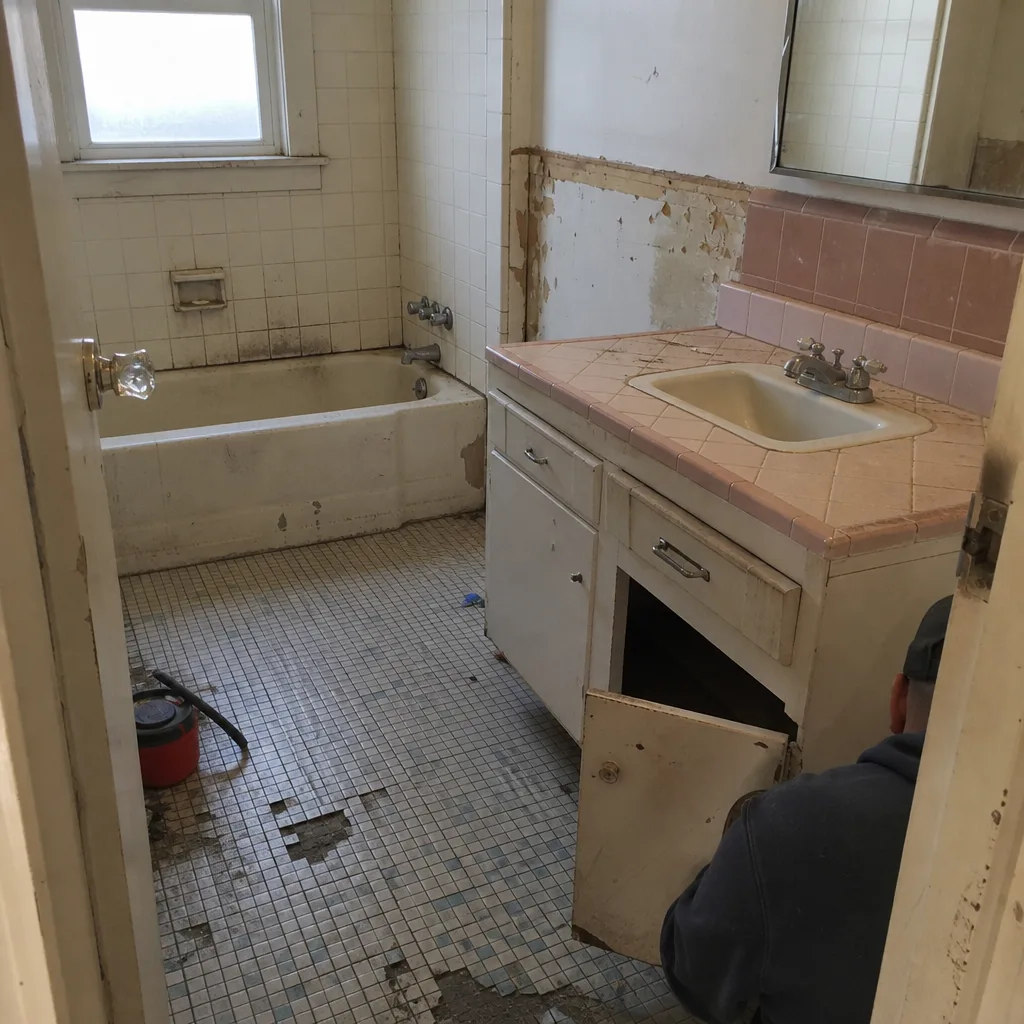 Before
 After
 Before
 After
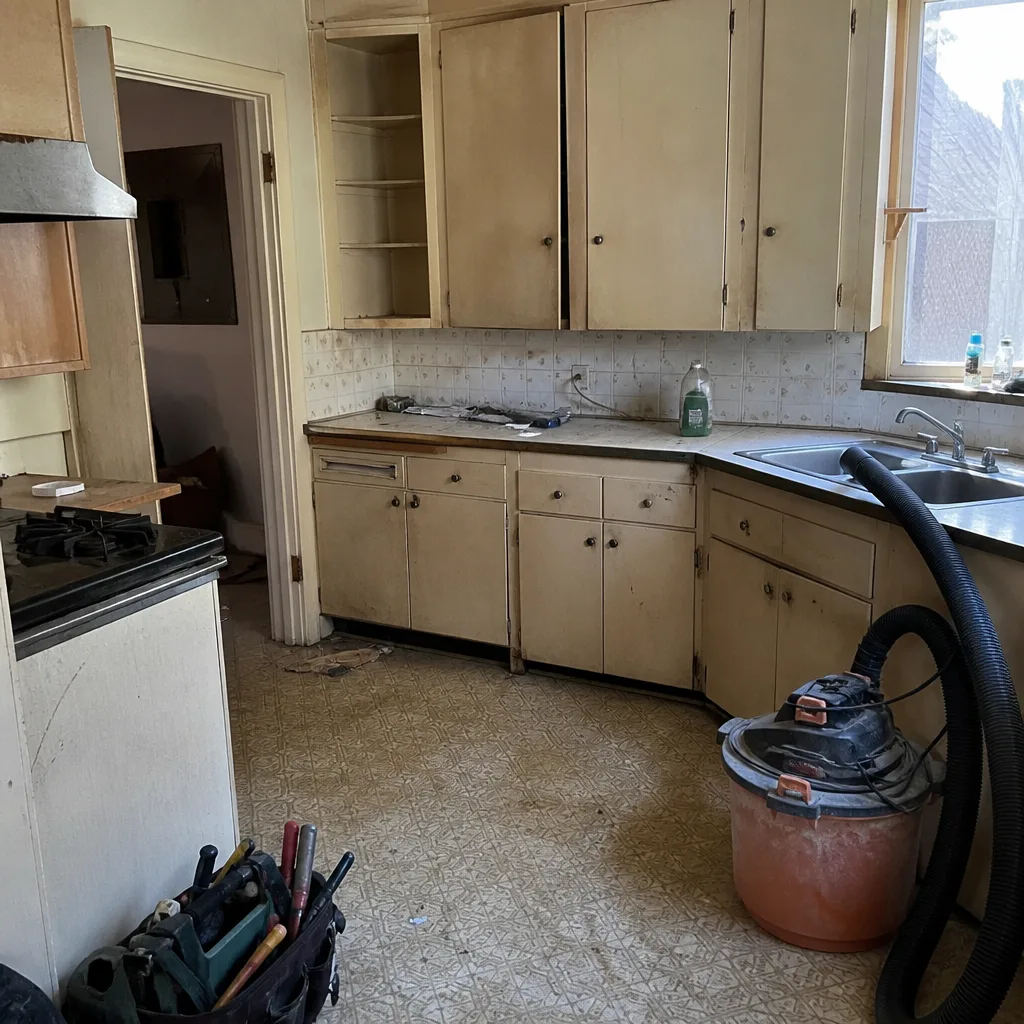 Before
 After
When to Call a Professional
Call us when maintenance turns up something you can’t handle safely: rot that’s spread into framing, water reaching the crawl space faster than grading fixes it, a roof or flashing leak, or tile that keeps failing in the same place. Those are the jobs where a professional look saves you from a bigger one. We’ve seen enough Oakland homes to know which small symptoms point to which big problems, and our technicians have up to 22 years of experience reading exactly these signs.
When we quote a job, you get a written price before any work starts, not a verbal ballpark that changes at the door. Background-checked, uniformed technicians do the work, and every project carries our 365-Day Done Right Promise in writing. Penhallow Remodeling Oakland offers free estimates in Oakland. Call (888) 403-1237, and a live person answers around the clock.
Frequently Asked Questions

Four times a year, with the most important checks in October, March, and August. Oakland’s fog, wet season, and dry season each put different stress on the house, so a seasonal rhythm catches problems while they’re still small. A quick walk-through each season is enough for most homes.
Re-caulking exterior joints before fog season arrives in October. A failed caulk line is how moisture enters window frames and walls, and it’s the origin of the water intrusion and rot we see most often. If you do one task a year, do that one.
Look for soft wood at window sills and corners, water stains on ceilings or walls, a musty smell, and standing water in the crawl space. Press a screwdriver gently into suspect wood; if it sinks in, moisture has been there a while. When in doubt, get it inspected before it spreads.
Recurring cracks in the same place usually mean movement underneath, often from Oakland’s clay soils expanding and contracting with the wet-dry cycle. A single crack may be minor, but one that keeps returning is worth a professional look. It can indicate the substrate is failing, which is a repair, not a cosmetic fix.
Yes. Contractors price hidden damage into their estimates, and a maintained home with records shows less risk. Clean drainage, intact caulk, and a written maintenance log reduce the chance of rot found during demo, which is exactly what pushes a project toward the top of its range.
No, a homeowner can look with a flashlight and log what’s there. You need a contractor when you find standing water, soft or spongy floors, or damage you can’t explain. A professional look turns a concerning crawl space into a clear plan before it becomes a repair.
The Bottom Line
Oakland homes don’t fail from one big event; they fail slowly, through fog-sealed caulk, clogged gutters, and movement nobody tracked. The fix is a calendar tuned to this city: seal in October, review drainage in March, inspect paint and caulk in August, and watch water, rot, and movement all year. Document what you do. Handle the small things yourself, and call a professional for the ones that involve structure, roofs, or repeated failures. Done consistently, maintenance is the cheapest remodeling you’ll ever do, and it keeps the big jobs from finding you first.
When maintenance turns up something you’d rather have a professional look at, we’re here. Call Penhallow Remodeling Oakland at (888) 403-1237 for a free estimate, with a written price before any work starts and our 365-Day Done Right Promise behind every job.
Written by the team at Penhallow Remodeling Oakland.