Last updated November 18, 2026






Free written scope consultation - allowances, timeline, and change-order rules on paper before a single trade is scheduled
DIY vs Professional Home Remodeling: What’s Safe to Do Yourself
Oakland’s unpermitted work rate is high enough that real estate attorneys have a shorthand for it: “seller’s surprise.” A bathroom tile job done without a permit for a wet-wall reconfiguration can stall escrow or force a full re-inspection at the worst possible moment. We’ve walked into Oakland homes where a previous owner’s weekend project turned into a $9,000 fix three days before closing. The question isn’t whether you’re handy enough to swing a hammer. It’s whether the work requires a permit, touches a system, or creates liability that follows the house when you sell. This guide draws that line clearly so a Saturday project doesn’t become a disclosure problem.
Quick Answer

If the work requires a City of Oakland permit, touches electrical, plumbing, or structural systems, or will be visible to a future buyer’s inspector, hire a licensed professional. Painting, swapping cabinet hardware, replacing a faucet, and installing a backsplash over sound existing substrate are genuinely safe to do yourself. Everything else carries risk that either hurts you physically or transfers to whoever buys the house.
Key Takeaways:
- Permits are the clearest single test. If Oakland requires one, the job is professional territory.
- The risk splits into two buckets: risk to your body, and risk to your resale.
- DIY demo often costs more than it saves once a contractor has to re-sequence around it.
- A written contractor estimate lets you compare against your own time honestly, not just materials.
Styles & brands we work with
- Kitchen remodeling
- Bathroom remodeling
- Home additions & ADU
- Roofing
- Windows & doors
- Driveway & pavers
- Fence
Table of Contents
- The Permit Line: Oakland’s Clearest Go/No-Go Test
- What’s Genuinely Safe to Do Yourself
- When the Risk Transfers to the Next Buyer
- The Hidden Cost of DIY Mistakes
- Doing Your Own Demo: What It Actually Saves
- Comparing a Written Estimate Against Your Own Time
- Oakland-Specific Hurdles: Climate, Code, and Old Housing Stock
- Common Mistakes to Avoid
The Permit Line: Oakland’s Clearest Go/No-Go Test
We tell every homeowner the same thing: the permit question settles most of the debate before it starts. The City of Oakland’s Building Services division requires permits for work that changes a structure’s footprint or load path, alters electrical or plumbing systems, or affects fire safety and egress. If your project lands on that list, no amount of YouTube confidence makes it a DIY job.
Work that typically requires a City of Oakland permit:
- Moving or removing any interior wall, whether or not you think it’s load-bearing
- Adding, relocating, or extending electrical circuits, outlets, or panel work
- Any plumbing rough-in: moving a drain, adding a fixture, or rerouting supply lines
- Bathroom and kitchen remodels that reconfigure the wet wall or change fixture locations
- Window and door replacements that change the rough opening size
- Decks over 30 inches above grade, and any new structural framing
- Water heater replacement and any gas line work
- Roof replacement and re-roofing
Work that generally does not require a permit:
- Interior paint, trim repair, and cosmetic drywall patching
- Replacing a faucet, toilet, or light fixture in the same location (with caveats below)
- Cabinet hardware, shelving, and non-structural fixture swaps
- Tile over existing sound substrate in a dry area
- Exterior paint and landscaping not affecting drainage or grading
The list isn’t perfect. Oakland’s permit office has discretion, and inspectors sometimes interpret scope differently than the counter clerk. When you’re not sure, call the permit desk before you start. Fifteen minutes on the phone beats a red tag on your front door.
For work that does cross into permit territory, a licensed general contractor in Oakland pulls the permits, schedules inspections, and takes responsibility for passing them. That last part matters when you sell.
What’s Genuinely Safe to Do Yourself
Not every project is a hazard. Plenty of remodeling tasks carry personal risk you can manage and no resale risk at all. The good news: a lot of the work that makes a room feel new is in this category.
Genuinely DIY-safe projects, ranked roughly by effort:
- Interior painting. Prep work, tape, primer, and two coats. The worst-case outcome is a drippy line and a do-over.
- Cabinet hardware. New pulls and knobs on existing boxes. Measure twice, drill once. Nobody’s inspector will ever ask about it.
- Replacing a faucet or toilet in the same location. Shut off the supply, swap the fixture, check for leaks. No permit required if the rough-in doesn’t move.
- Backsplash tile over existing substrate. If the wall behind is solid and dry, you can set tile yourself. This is where a lot of homeowners surprise themselves.
- Shelving, closet systems, and trim. Anchored into studs, no structural impact.
- Light fixture swaps. If the box and wiring are already there and you turn off the breaker first, most fixture swaps are within reach. If you see aluminum wiring, cloth-insulated wire, or any scorching, stop and call an electrician.
- Exterior paint and minor landscaping. No permit, no systems touched.
Note what’s missing: anything that opens a wall, changes a wet wall, or adds a circuit. Those aren’t on the list because they’re not safe to do without a licensed tradesperson, even if the video makes them look easy.
When the Risk Transfers to the Next Buyer
This is the part most homeowners don’t think about until they’re sitting at a closing table. Some DIY mistakes hurt you and only you. Others sit quietly in the walls for years and then become someone else’s problem, which means they become a legal problem with your name on it.
Work where the risk is yours alone:
- Paint that peeled in a bathroom because you didn’t prime
- Caulk that failed around a tub surround
- Hardware that loosened because you used the wrong anchors
These are annoyances. You fix them or you live with them. No resale consequence.
Work where the risk transfers to the next buyer:
- Unpermitted bathroom tile over a re-routed wet wall. The next owner’s inspector can’t see a bad shower pan, but they can see it was never permitted. That triggers a full re-inspection and a scramble.
- An added outlet or a swapped light fixture wired wrong, which a home inspector will catch and flag for an electrician’s review.
- A removed wall that turned out to be load-bearing, now showing a sagging ceiling line in a future inspection report.
- A tile job set over unbacked drywall, which fails within a year and becomes a documented defect.
- Unpermitted deck framing that an appraiser won’t count toward square footage, killing the buyer’s financing.
Oakland has a lot of 1920s and 1940s housing stock, which raises the odds that any given wall has a story behind it. In neighborhoods like Rockridge and Temescal, where original character homes change hands for serious money and buyers bring careful inspectors, an unpermitted remodel gets noticed. Two of the most common seller’s-surprise categories in Oakland are unpermitted bathroom reconfigurations and added electrical outlets that don’t trace back to a permit record.
The safest rule: if future-you might need to disclose it, present-you shouldn’t do it without a permit and a licensed professional.
The Hidden Cost of DIY Mistakes
Most homeowners budget for the visible cost of a project. What they don’t budget for is what we call the undo cost, which is what a contractor has to charge to rip out a failed DIY effort before they can start the real job. It’s often more expensive than doing it right the first time.
The undo costs we see most often in Oakland:
- Demo that damaged a load-bearing element. A homeowner pulled a wall they assumed was decorative. It wasn’t. Now there’s a structural engineer’s report, temporary shoring, and a framing repair before the actual remodel can start.
- Tile set on unbacked drywall. Not just time to strip it. The drywall behind is often wet and needs replacement, plus cement board substrate installation, before new tile goes down.
- Electrical work that failed inspection. A homeowner-added outlet made it through visually but failed the inspector’s review when the panel got opened. Now an electrician has to trace and correct the circuit before anything else can get signed off.
- Plumbing that leaks behind a finished wall. The best-case result is a small drywall patch and a re-do. The worst case is mold remediation, which in Oakland’s damp winter climate runs into the thousands.
- Paint over unprimed patching compound. Re-scraping, re-patching, and re-painting, which doubles the labor on a job that should have taken an afternoon.
On a bathroom remodel, the undo cost of a failed tile job over unbacked drywall can run $2,500 to $5,000 before new work starts. That’s material cost for the failed attempt plus the demo of it plus the correct substrate plus the labor for the redo. The original saved cost of doing it yourself was probably closer to $3,000. The math doesn’t hold up.
If you want to understand what a properly sequenced bathroom job looks like, our page on bathroom remodeling in Oakland covers the order of operations from demo through wet-wall rough-in, and it’s the step-by-step that almost always matters when the undo cost comes up.
Doing Your Own Demo: What It Actually Saves
We hear this one constantly: “I’ll save money if I do the demo myself.” Sometimes that’s true. Often it isn’t, and here’s why.
What DIY demo genuinely can save:
- Labor for tear-out of finish materials: tile, flooring, cabinetry, drywall that’s clearly non-structural
- Dumpster rental is often still yours to arrange, which eats into the savings
- Time on small jobs where a contractor’s crew would otherwise charge minimum hours
What DIY demo usually costs, in ways homeowners don’t anticipate:
- The re-sequencing cost. A general contractor’s crew is scheduled for a specific window. If demo finishes late because the homeowner hit a snag (asbestos in old tile, water damage under the old floor, a wall that wasn’t what it looked like), the crew can’t be redirected. They either wait, at your cost, or move to another job and come back later, which pushes the whole timeline.
- The inspection gap. Some scopes work better when the crew does demo so they see what’s there before estimating. A homeowner who demos first and then reveals structural surprises often gets a change order that wipes out the savings.
- The substrate question. A lot of the value of professional demo is in the judgment: what’s staying, what’s going, and what the next layer down actually looks like. That judgment is part of what you’re paying for.
- The cleanup. If the demo is done to the contractor’s standard (dust control, protection of salvage materials, dumpster staging), the crew walks in ready to work. If not, the first day is often un-doing the demo before the real work can begin.
Our honest advice: on a full kitchen remodel in Oakland, where the sequence is tight and the substrate matters, let the crew handle demo. On a smaller cosmetic project where finish materials don’t hide surprises, do it yourself and put the savings toward better cabinets or counters.
Comparing a Written Estimate Against Your Own Time
Homeowners compare contractor quotes to material costs. That’s the wrong comparison. A fair ROI analysis compares the written estimate to materials plus your actual time, valued at what you’d otherwise earn or do with it, plus the risk-adjusted cost of anything you might have to redo.
Here’s a simple framework:
- Materials only: the wrong floor. This makes every contractor price look inflated.
- Materials plus your time: multiply hours by your real hourly value. A painting job sounds worth DIY until you value 20 hours of paint prep at $60/hour and realize the labor number isn’t so outrageous.
- Materials plus time plus redo risk: the honest comparison. Multiply the probability of a failed attempt by the undo cost. Even a 25% chance of a $4,000 redo adds $1,000 to the DIY side of the ledger.
A written contractor estimate is what makes this comparison honest, because it puts a real number on the professional side of the ledger. Verbal estimates shift. A written price before any work starts is the only version you can actually compare against your own effort, materials, and time.
We see the framework change minds most on tile and cabinetry work. The professional side isn’t just labor. It’s the substrate prep, the sequencing, and the warranty on top of it. Cameria and Wellborn cabinets, for instance, carry their own manufacturer warranty that pairs with ours. A homeowner who installed the boxes themselves backs the work alone.
Oakland-Specific Hurdles: Climate, Code, and Old Housing Stock
Oakland isn’t a generic remodeling market. The climate and the housing stock together raise the stakes on a lot of DIY decisions that might be safer elsewhere.
What to know about Oakland specifically:
- Winter moisture. Oakland gets more rainy days than most of California. Wet-wall drywall that was already vulnerable in a bathroom becomes much more likely to fail in a poorly sealed shower. A DIY tile job with a compromised vapor barrier often shows up as popping tile or a soft wall within two winters.
- Pre-war housing stock. Homes in Rockridge, Temescal, and the Dimond often have original knob-and-tube wiring, galvanized plumbing, and old plaster over wood lath. These change the risk calculus: fixture swaps get riskier, tile over old plaster is trickier, and adding a circuit is genuinely a licensed-electrician job.
- Hillside foundations. Homes in the Oakland Hills often sit on unpermitted additions or pads from decades past. A homeowner who plans to add a room or expand a deck runs into permit questions about the underlying structure almost immediately.
- Wildfire construction requirements. The Wildland-Urban Interface zones in the Oakland Hills carry stricter exterior material requirements than a homeowner may realize. Roofing and exterior siding aren’t just cosmetic swaps in those areas, and material choice is regulated. We use products like Owens Corning and James Hardie siding where the requirement dictates it.
- Permit timelines. Oakland’s permit office has stretches where review takes longer than expected. A homeowner who assumes the project moves at a predictable pace is often caught short by a review-queue delay.
None of this makes Oakland a bad place to remodel. It makes Oakland a place where the question “is this safe to do myself?” deserves a stricter answer than a homeowner’s gut says. If your home was built before 1960, in a hillside zone, or has visible original wiring, the DIY line is further back than you think.
Common Mistakes to Avoid
- Assuming an interior wall is decorative. In an Oakland home, it’s often not. Any wall removal should be assumed structural until a professional confirms otherwise, and in a 1920s home that confirmation should come before the sledgehammer comes out.
- Setting tile over drywall in a wet area. Unbacked drywall in a shower or tub surround will fail within a year or two, especially with Oakland’s rainy winters. The substrate (the moisture-resistant layer behind your tile) is what protects the whole job.
- Swapping fixtures without a permit when a rough-in moves. Replacing a faucet in the same spot is fine. Moving a supply line two feet over is not. Oakland requires a permit for any plumbing rough-in, and inspectors will look for the permit record when the next owner buys the house.
- Doing demo before the estimate is written. A contractor who quotes a scope before demo has less information, not more. Demoing first often triggers a change order when surprises come up. Get the written price before anything gets torn out.
- Assuming a verbal estimate locks the price. Verbal estimates shift. If the number on day one isn’t in writing, it isn’t the number on day 60, and a homeowner who’s been burned once already knows the difference.
- Ignoring the disclosure risk on small unpermitted work. In Oakland, buyers and their inspectors look. If the work required a permit and there isn’t one, expect it to show up in the transaction. A quick check with the permit desk before starting is worth the phone call.
- Doing electrical work without verifying the existing wiring type first. An outlet swap sounds simple until you find no ground wire, aluminum branch wiring, or evidence of an overload downstream. That’s a stop-and-call moment, not a press-on moment.
When to Call a Professional

Call a licensed professional the moment the project requires a permit, touches a system (electrical, plumbing, structural), or involves anything a future buyer’s inspector will see. That covers wall removals, wet-wall work, panel or circuit additions, roof and siding work in the Oakland Hills WUI zones, and any layout change that moves a drain or a supply line. It also covers the projects where the surface looks simple but the substrate or surprise under the floor isn’t.
Our technicians have up to 22 years of experience walking into exactly these situations and finding the surprises before the sledgehammer does. For the projects that need a professional, Penhallow Remodeling Oakland offers free estimates with a written price before any work starts and the 365-Day Done Right Promise behind it. Call (888) 403-1237 and we’ll talk through the scope, the permit picture, and what the honest number is.
See the difference
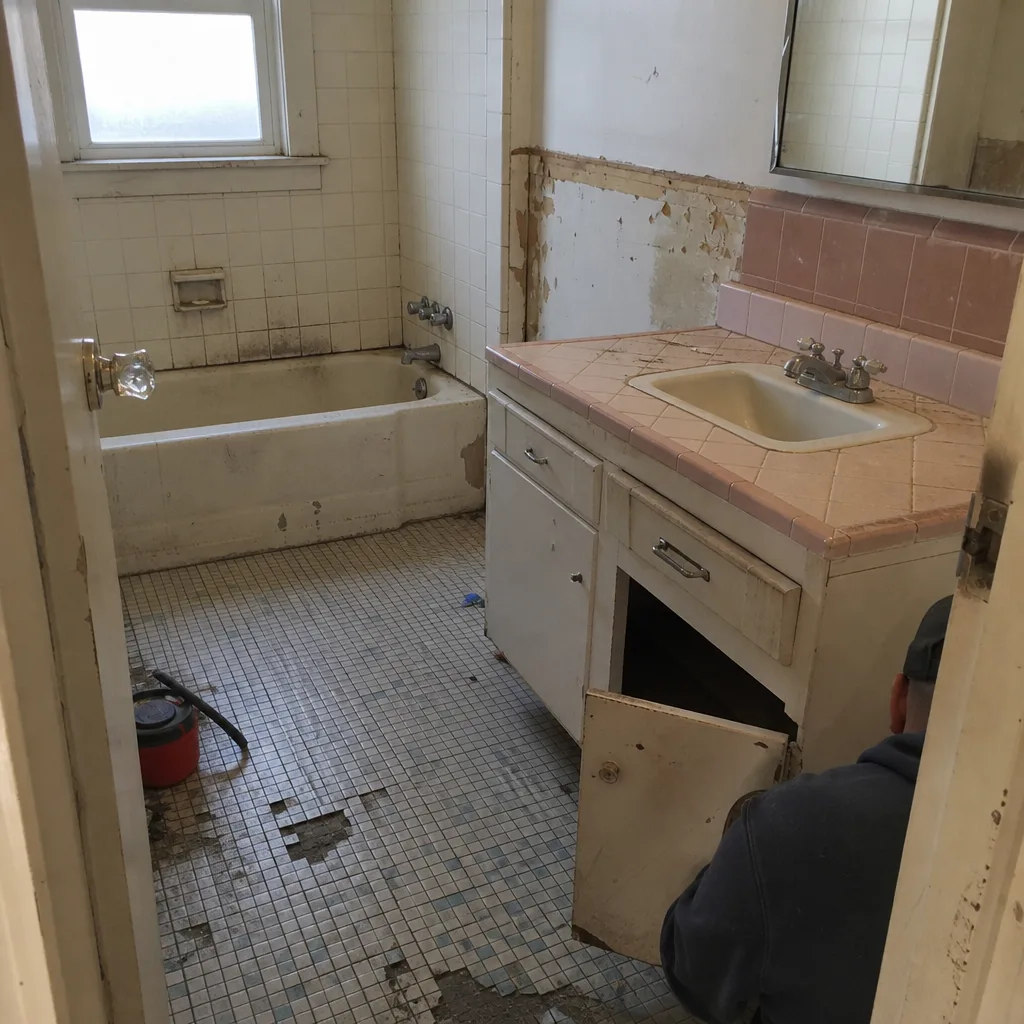 Before
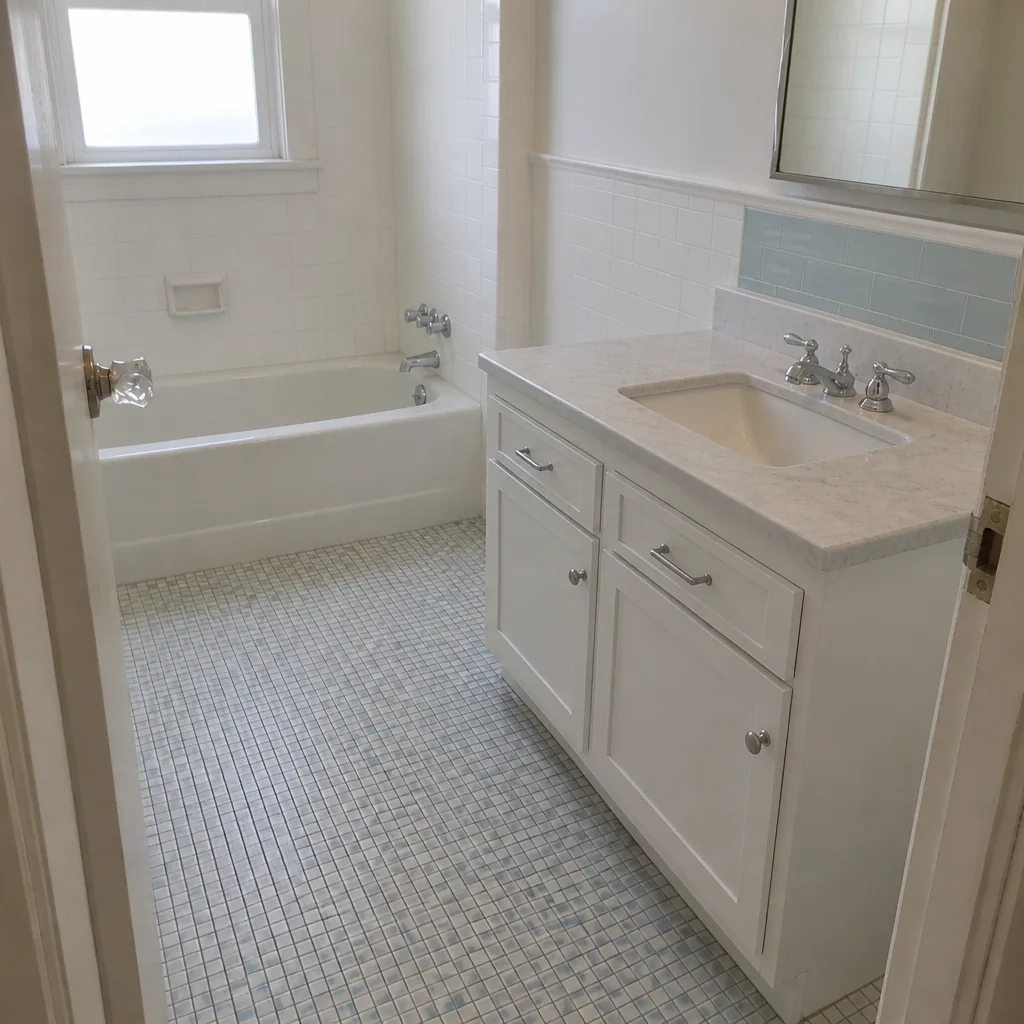 After
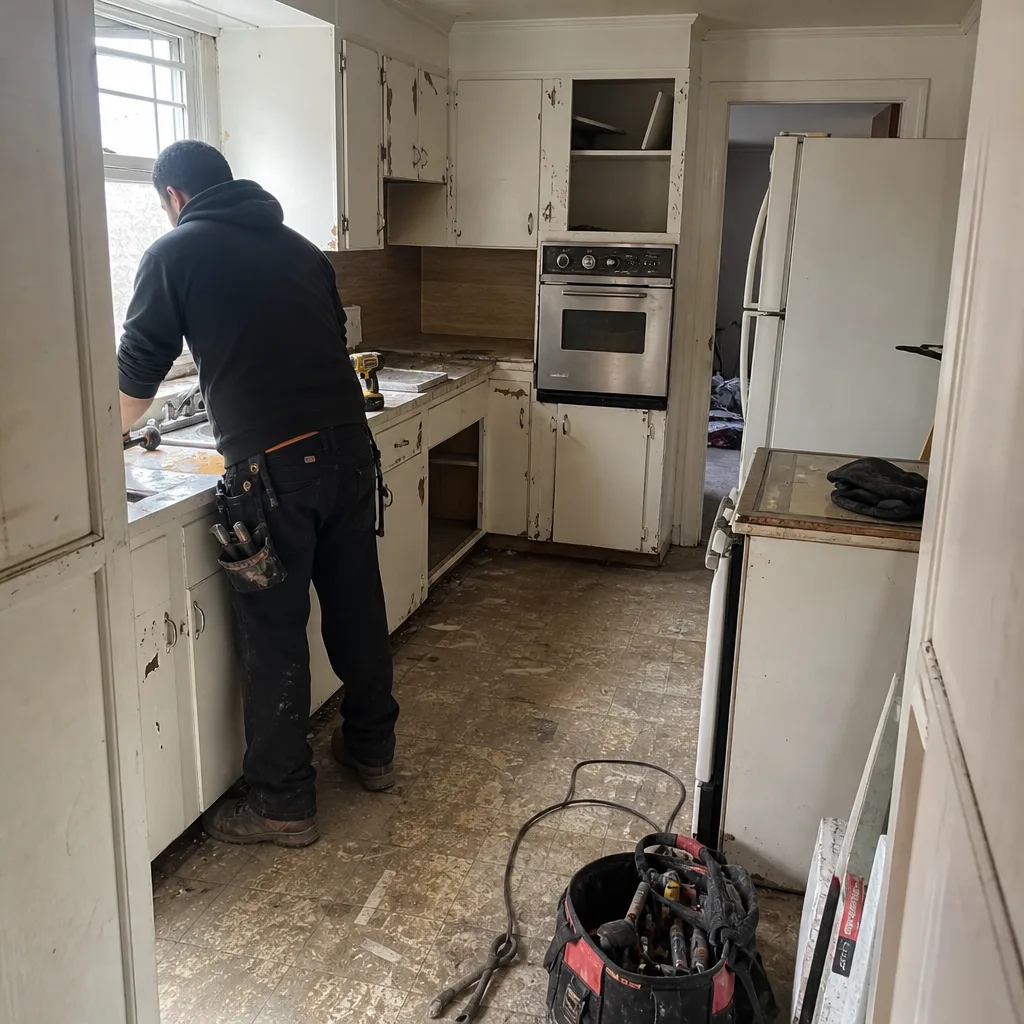 Before
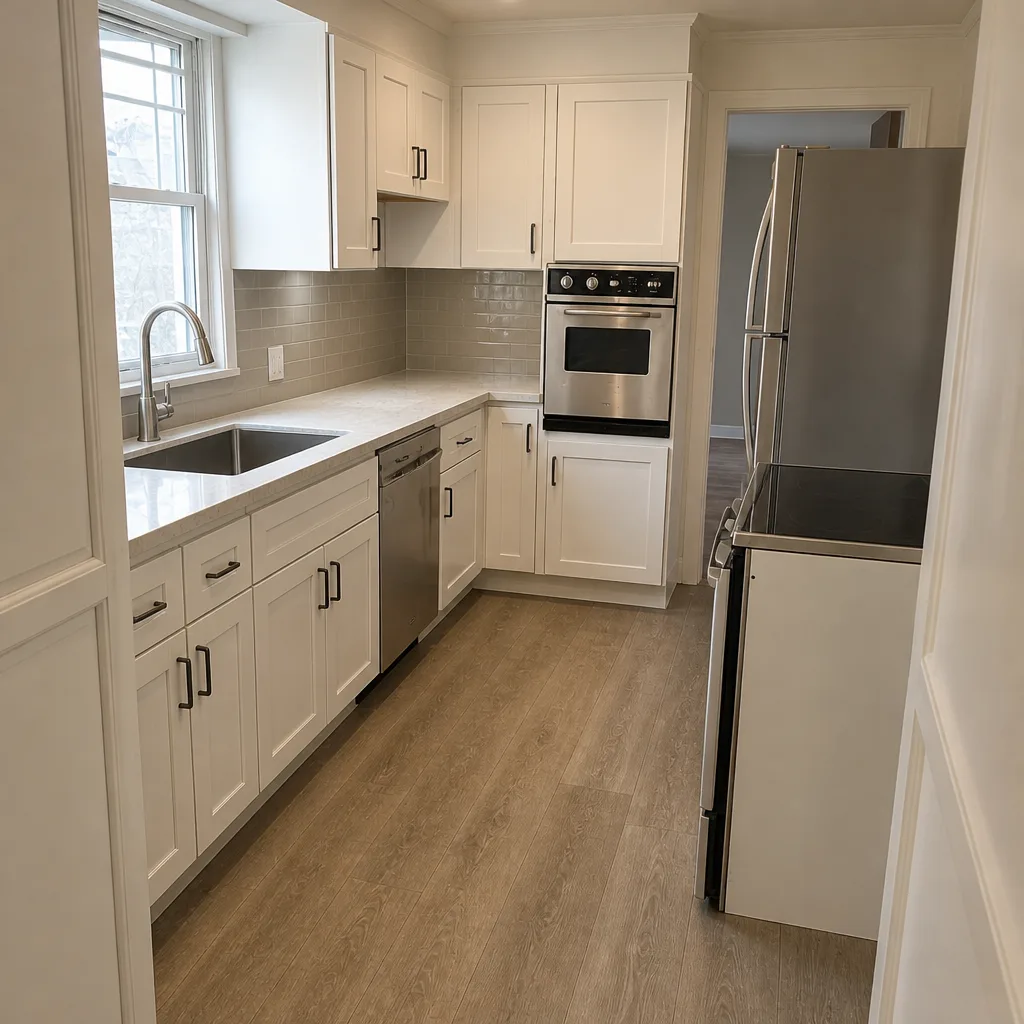 After
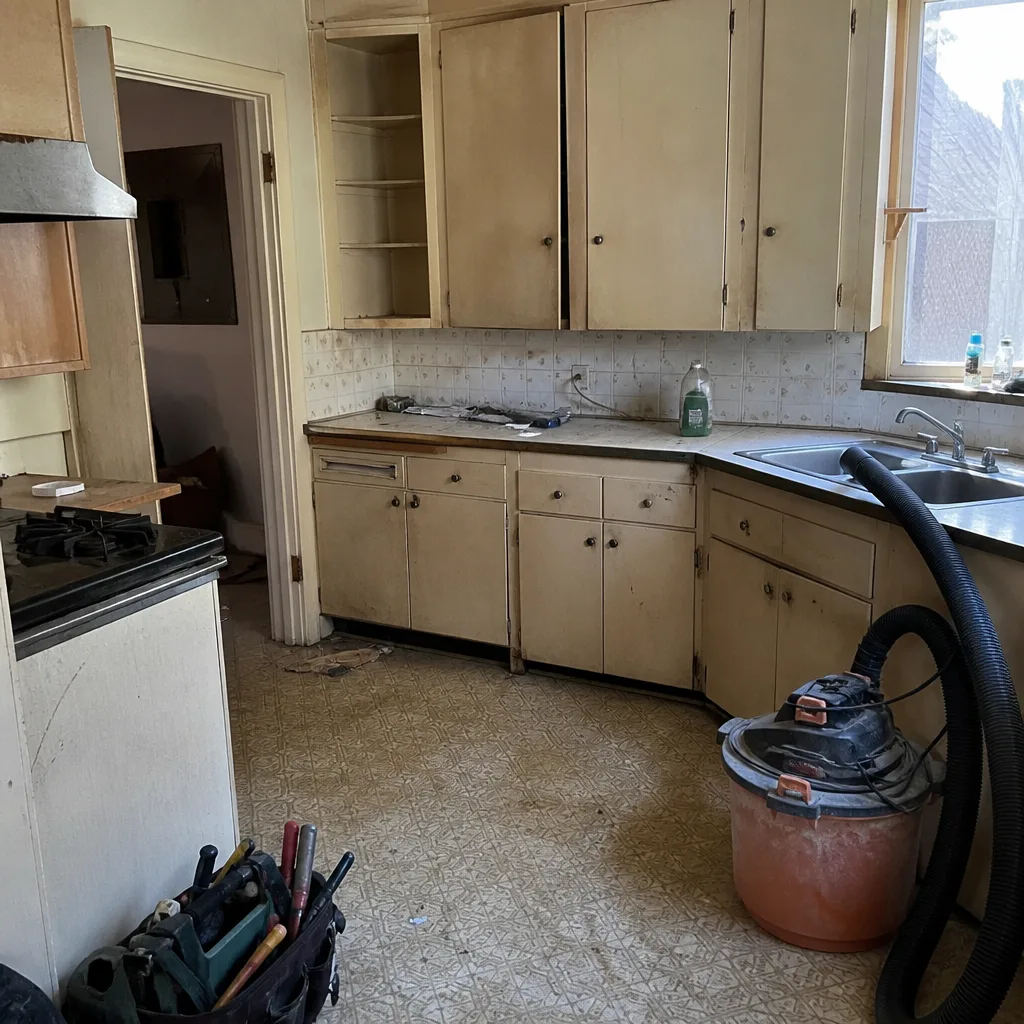 Before
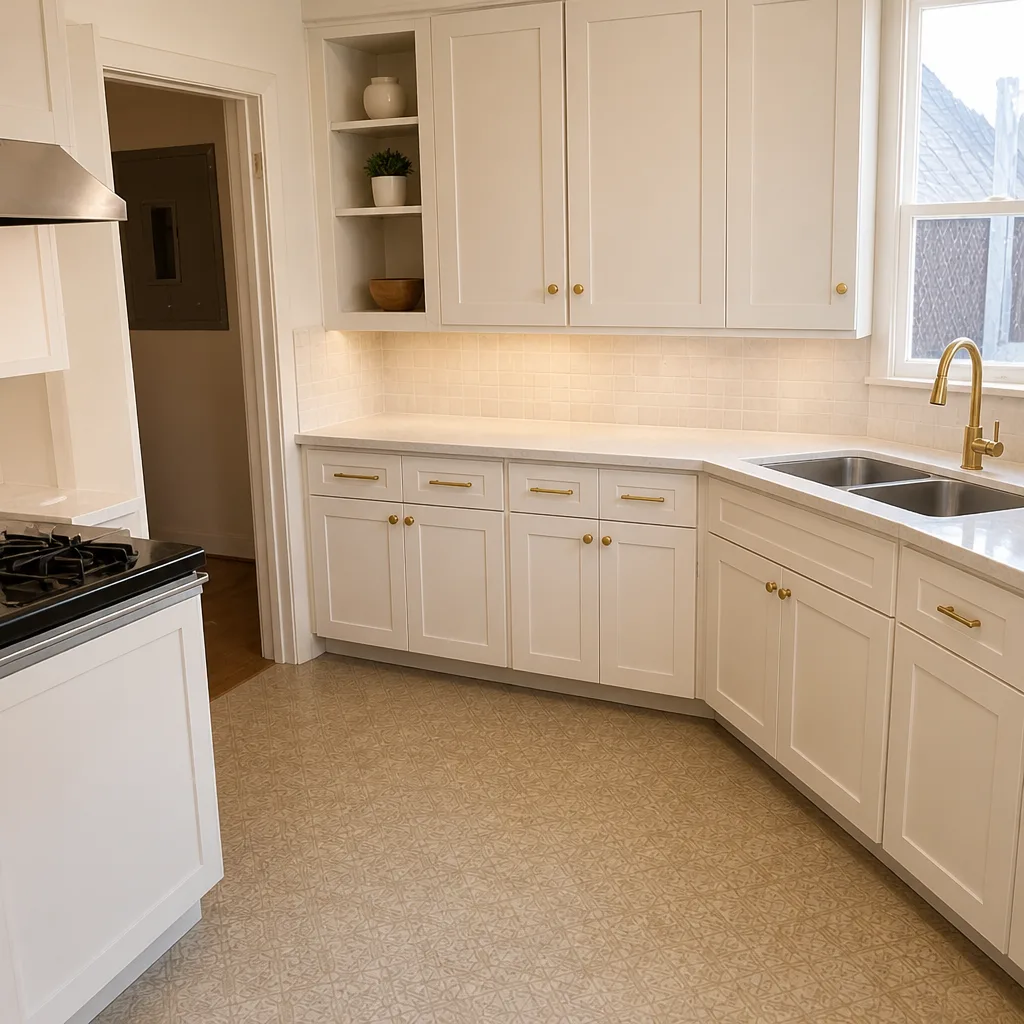 After
Frequently Asked Questions
Sometimes. On cosmetic projects where finish materials hide no surprises, DIY demo saves real labor cost. On full kitchen or bathroom remodels, DIY demo often costs more than it saves once you account for the crew’s re-sequencing, change orders, and the risk of uncovering problems that push the timeline. If your contractor hasn’t done demo yet, they haven’t seen enough to give you a firm written price. For an exact quote on your specific project, call (888) 403-1237.
If the remodel reconfigures the wet wall, moves a fixture, adds a circuit, or changes the layout, yes. Cosmetic updates that leave the plumbing rough-in and electrical in place (new paint, new tile over sound substrate, a same-location faucet swap) generally don’t. The clearest test is whether an inspector will want to see it. If your answer is yes, a permit is required, and a licensed contractor should handle it. Call (888) 403-1237 to talk through your specific scope and get a written estimate.
Painting, cabinet hardware, backsplash tile over sound existing substrate, same-location fixture swaps (with care), shelving, trim, and exterior paint are all in the safely-doable range for a homeowner with some confidence. Anything requiring a permit, any electrical panel work, any plumbing rough-in, and any structural change is not. California’s permit requirements apply in every city, and the rules are clear once you check with the local building department. For a written estimate on the professional side of that line, call (888) 403-1237.
Often yes. Oakland’s inspectors and buyers’ agents are attentive, and unpermitted work on the disclosure documents or in the permit record can stall escrow, trigger a re-inspection, or force the seller into a negotiated credit. The seller’s-surprise problems usually trace back to bathroom reconfigurations, added circuits, or wall removals that weren’t permitted. A written contractor estimate and a permit record are the safest long-term move. Call (888) 403-1237 for a free estimate on any scope that needs one.
Compare the written estimate against materials, plus your actual time (hours times what your time is worth), plus the risk-adjusted cost of a redo. The third item is the one homeowners skip. If there’s a 25% chance you’ll have to undo and redo a piece of the job at $4,000, that’s $1,000 you should add to the DIY side of the ledger. A written estimate is the only way to make the comparison honest, because a verbal number shifts. Call (888) 403-1237 for a written number you can hold us to.
With a written price before any work starts, the number on day one is the number on the invoice. Change orders only happen for scope changes you approve in writing, not surprise increases after demo. A verbal ballpark is not the same as a written estimate, and homeowners who’ve been burned once know the difference. Call (888) 403-1237 to schedule a free estimate and see what a written number looks like.
The Bottom Line

The DIY question is really a permit question, a systems question, and a disclosure question. If the work requires a City of Oakland permit, touches electrical, plumbing, or structural systems, or will show up in a future buyer’s inspection, hire a professional. If the work is cosmetic and the surprise risk is low (paint, hardware, backsplash over sound substrate, same-location fixture swaps), do it yourself and put the savings toward better materials. Where DIY demo looks tempting, do the math on time, sequencing, and redo risk before you pick up a hammer. And when the work crosses the line, get a written price before it starts. That’s the number you can compare, plan around, and hold a company to.
For projects anywhere in Oakland that need a licensed general contractor behind them, the Penhallow Remodeling Oakland home page is the place to start. Our general contractor in Oakland team handles the permit picture and the project sequence, and our bathroom remodeling and kitchen remodeling services cover the two rooms where DIY decisions cause the most resale headaches.
Get a Free Estimate
Call (888) 403-1237 for a free estimate on any project that crosses the professional line. A live person answers the phone 24/7, no voicemail maze, and every estimate comes with a written price before any work starts. We arrive in a defined window, we leave the job site cleaner than we found it, and the 365-Day Done Right Promise is written into every project. Background-checked, uniformed technicians on every job. The number on day one is the number on the invoice.
Written by the team at Penhallow Remodeling Oakland.